Barcelona Cathedral tickets: what the visit includes and the 13 cloister geese
The Cathedral of the Holy Cross and Saint Eulalia is the great Gothic church of the Gothic Quarter — and no, it is not the Sagrada Família. Here's what the cultural visit costs, what it includes (rooftop and choir too), when entry is free, and what not to miss inside.
ⓘ Note: this is not the official website This is not the official Barcelona Cathedral website. We are an independent guide: prices and opening hours quoted here come from catedralbcn.org, and bookings are processed by authorised partners such as GetYourGuide.Tickets and tours to book
24 options · Prices checked on 18 October 2026
No options match these filters.
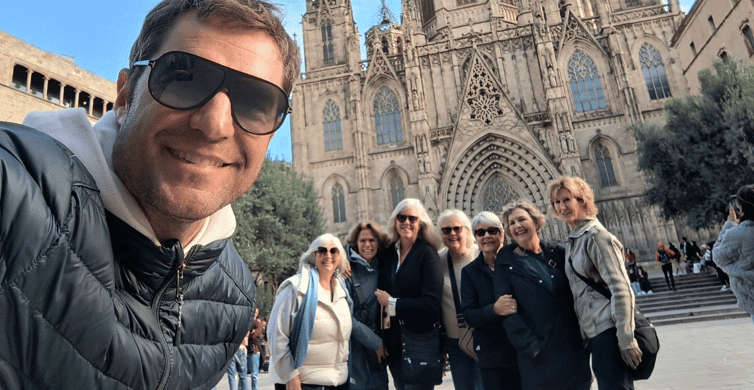
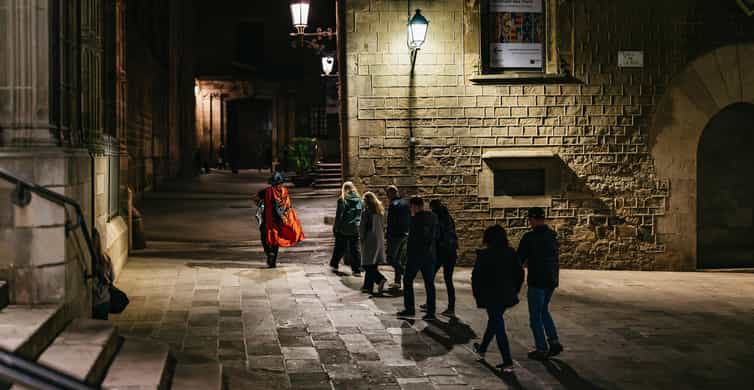
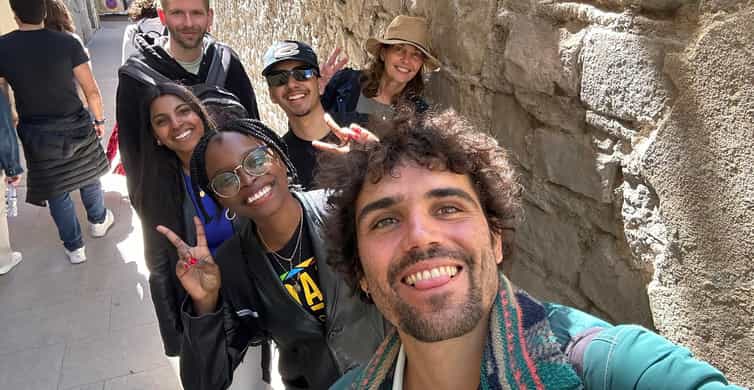
Barcelona: Gothic Quarter Ghosts and Legends Walking Tour
4.7 (1,651 reviews)
from €13.30Check dates

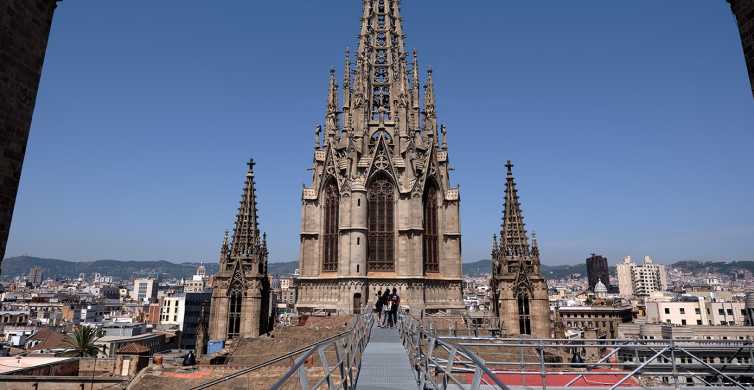
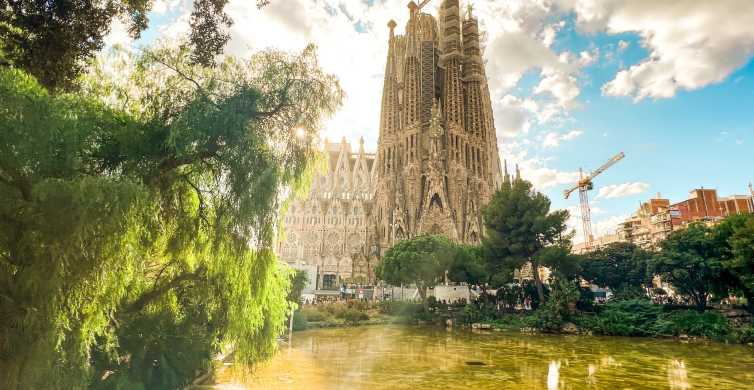
Barcelona: Sagrada Familia, Park Güell & Gothic Quarter Tour
4.7 (1,334 reviews)
from €66.75Check dates
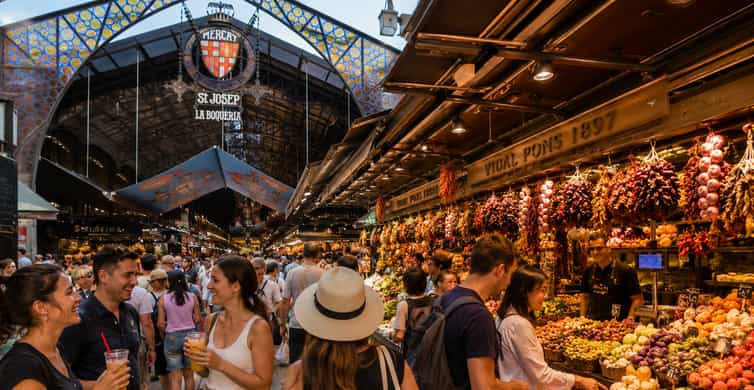
Barcelona: Sightseeing Tour of Las Ramblas, La Boqueria, and the Gothic Quarter
4.6 (157 reviews)
from €14Check dates
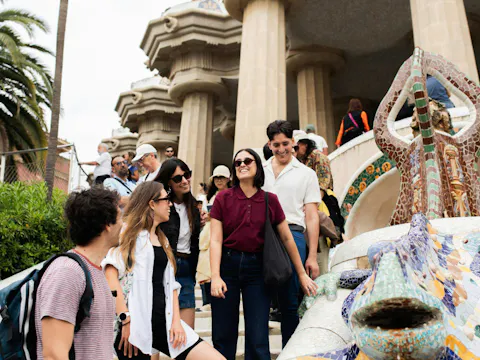
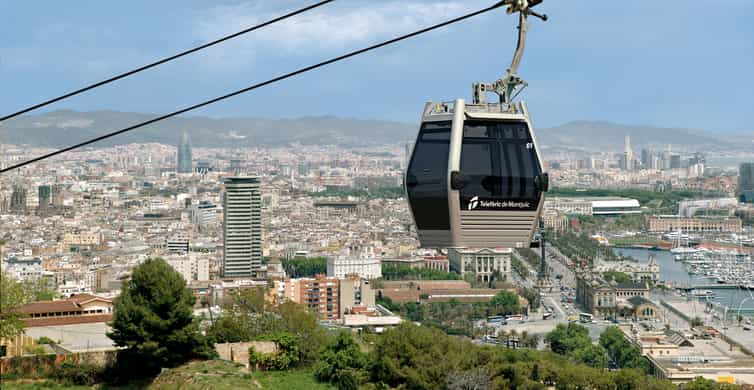
Best of Barcelona: Sagrada Familia, Park Güell, Montjuic & Gothic Quarter Guided Tour
4.6 (44 reviews)
from €109Check dates



The essentials in 20 seconds
| Price from | €16 cultural visit (rooftop and choir included) · €14 reduced |
|---|---|
| Tourist hours | Mon–Fri 9:30–18:30 (last entry 17:45) · Sat & vigils 9:30–17:15 · Sun & holidays 14:00–17:00 only |
| Advance booking? | Recommended in high season; walk-up tickets also sold, with variable queues |
| Time needed | 1–1.5 h (cathedral + cloister + choir + rooftops) |
| Metro | Jaume I (L4 yellow), a 3-minute walk · Liceu (L3) and Urquinaona (L1/L4) about 8 minutes |
| Fun fact | 13 white geese live in the cloister, one for each year of Saint Eulalia's life |
No, this is not the Sagrada Família (and mixing them up costs money)
Every day, visitors buy tickets for "the Barcelona cathedral" while picturing Gaudí's towers — or turn up at the Pla de la Seu with a Sagrada Família ticket on their phone. They are two completely different churches:
- Barcelona Cathedral (this page): the Cathedral of the Holy Cross and Saint Eulalia, seat of the archbishop. Gothic, built between the 13th and 15th centuries, in the heart of the Gothic Quarter. Entry from €16.
- Sagrada Família: Antoni Gaudí's basilica, begun in 1882 and still under construction, about 2.5 km away in the Eixample. Online sales only and slots sell out — it has its own guide here.
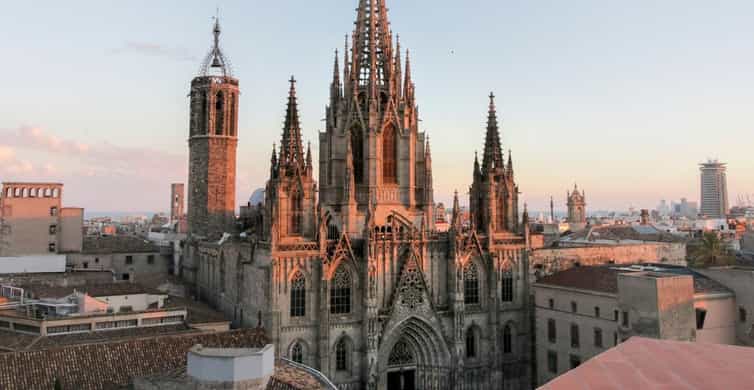
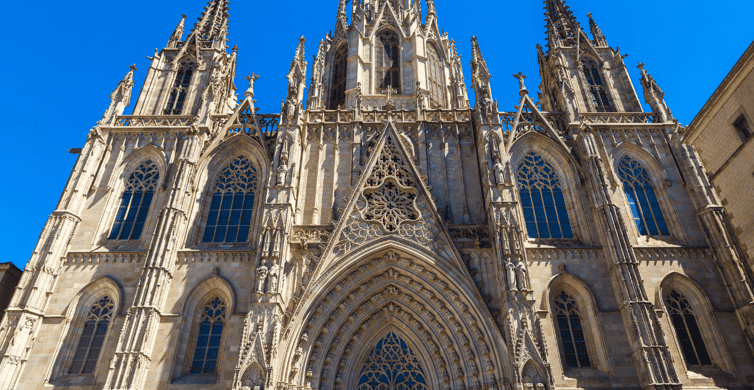
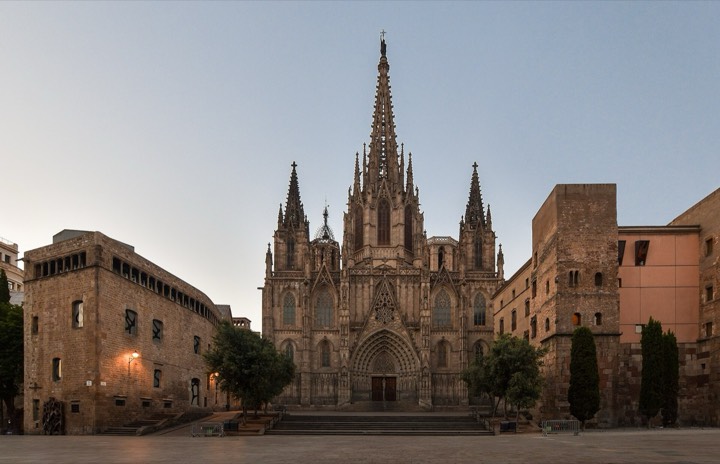
Quick rule: if the photo shows cranes and colourful towers, it's the Sagrada Família; if it shows gargoyles, dark stone and a rose window over a medieval square, it's the cathedral. You can easily see both in one day (metro L4 plus L2 or L5, about 20 minutes) — but each needs its own ticket.
Which ticket to choose: cultural visit, guided tour or free worship entry
Unlike the Sagrada Família, you can buy at the door here — but there's a catch: the cathedral runs on two regimes, a paid cultural visit with access to everything, and free worship hours with access limited to prayer.
| Type | Approx. price | Includes | Best for |
|---|---|---|---|
| Cultural visit | €16 | Cathedral, cloister, choir, Chapter Hall and the lift to the rooftops | A full first visit at your own pace. This is the standard official ticket. |
| Reduced cultural visit | €14 | Same access, for students up to 25 and large or single-parent families | Anyone who can show a valid card or family certificate. |
| Gothic Quarter tour + entry | varies by operator | Guided walk through the Gothic Quarter plus cathedral entry | Context lovers: the cathedral makes far more sense with its neighbourhood. |
| Ticket + guide and virtual reality | varies by operator | Guided visit of the interior with VR headsets | Seeing the medieval church and the Roman city beneath your feet. |
| Worship hours | Free | Access for mass or prayer; no cloister, choir or rooftops | Attending a service, or seeing the nave in its real use. |
Official rates per catedralbcn.org (free for visitors with a disability of 33% or more and ICOM members; groups of 8+, €8 per person). Third-party tours vary by language and group size.
What to see inside: geese, crypt, choir and rooftops
The cultural visit opens up the whole complex. These four stops are what justify the ticket:
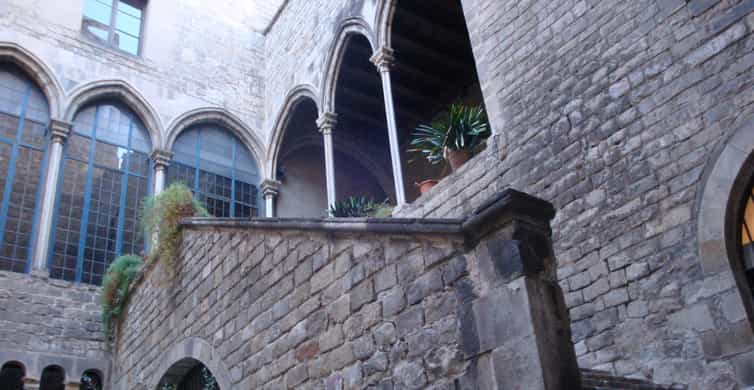
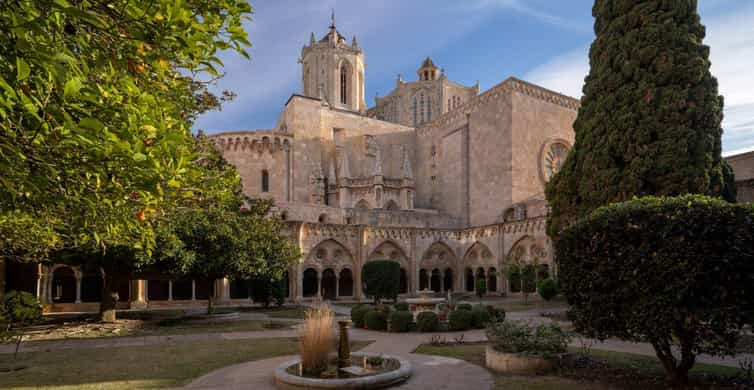
- The cloister and its 13 geese. A Gothic courtyard with palms, magnolias and a pond that is home to 13 white geese — one for each year of Saint Eulalia, the girl martyred by the Romans around the year 303 according to tradition. They've been here for centuries and doubled as an alarm system: they honk when a stranger walks in.
- The crypt of Saint Eulalia. Beneath the high altar, a 14th-century alabaster sarcophagus holds the remains of Barcelona's co-patron saint. Walk down the steps: almost everyone peers from above and misses the carved reliefs.
- The choir. Carved stalls right in the middle of the nave, painted with the coats of arms of the Knights of the Golden Fleece: Emperor Charles V convened the order's chapter here in 1519. It's the most "European" detail in the building.
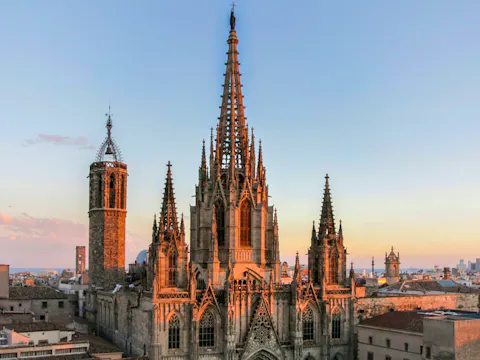
- The rooftops. A lift beside the chapel of the Holy Innocents takes you up to the roofs: Gothic Quarter rooftops, the two towers, the lantern tower and, in the distance, the Sagrada Família for comparison. There's almost never a queue.
The chapel of the Holy Christ of Lepanto — with the crucifix that, according to tradition, sailed on the royal galley at the 1571 battle — is reserved for worship: you may enter to pray, not to take photos.
When to go: early hours, the Sunday catch and sardanas
- 9:30–11:00 on weekdays. The quietest window: tour groups and cruise crowds arrive mid-morning. The Gothic nave with few people and low light is a different experience.
- Careful with Sundays: the tourist visit only runs from 14:00 to 17:00 (mornings are for mass). If Sunday is your only day, come early in the afternoon — or attend a morning service instead.
- Late afternoon. The westering sun hits the façade and rose window head-on: good light for photos from the Pla de la Seu and fewer groups inside.
- Sardanas on the square. Catalonia's traditional circle dance has been performed in front of the cathedral on Sundays around midday for decades. The schedule has become less regular in recent years: if you're going specifically for it, check the City Council's cultural calendar.
How to save on your visit
- Worship hours: access for mass or prayer is free (weekday masses at 9:00, 11:00, 12:00 and 19:15, among others). Access is limited: no sightseeing circuit, cloister, choir or rooftops.
- €14 reduced rate for students up to 25 and large or single-parent families — bring the card or certificate that proves it.
- Free entry for visitors with a disability of 33% or more and ICOM members, per the official website.
- Travelling as 8 or more? The group rate drops to €8 per person.
- City passes: before buying separate tickets for several monuments, check whether a pass works out cheaper — we break it down in our city passes comparison.
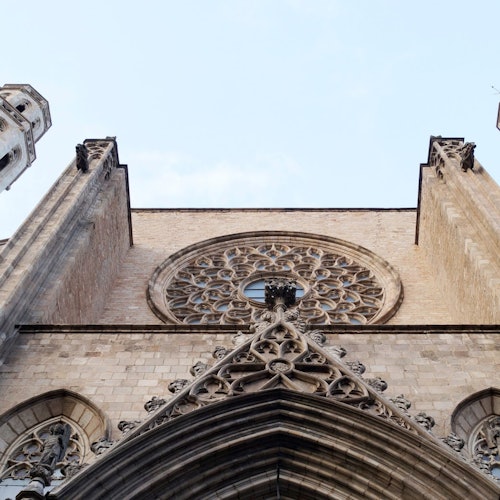
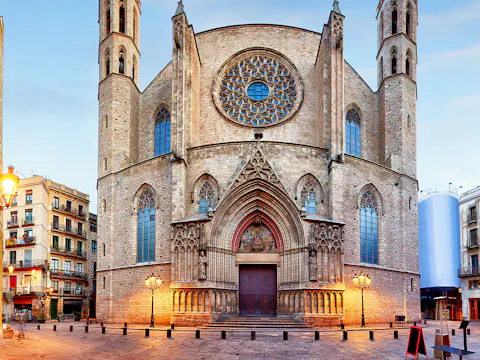
- The great-value alternative: Santa Maria del Mar in El Born, a 10-minute walk away. It's Catalan Gothic at its purest, and its tour with rooftop terrace access is one of the best things in the neighbourhood.
Getting there and what to pair it with
Metro: Jaume I (L4 yellow) is the closest stop, about 3 minutes via Carrer de l'Argenteria and Baixada de la Llibreteria. Liceu (L3, crossing La Rambla and the old Jewish quarter) and Urquinaona (L1/L4) also work. From Plaça de Catalunya it's a 10-minute walk down Avinguda del Portal de l'Àngel.
The visitor entrance is through the main façade on the Pla de la Seu. There are no timed slots: the queue moves quickly except around midday in high season.
Pair your visit
The cathedral is the perfect anchor for a Gothic Quarter morning: one minute away are the Pont del Bisbe (the city's most photographed neo-Gothic bridge, built in 1928), Plaça Sant Felip Neri and Plaça del Rei, where tradition says the Catholic Monarchs received Columbus. Finish the walk down at Santa Maria del Mar and El Born for lunch.
One minute of context (it changes what you see)
The "Gothic" façade everyone photographs comes with a twist: it is neo-Gothic, completed between 1887 and 1913 with funding from banker Manuel Girona, following a 15th-century design that had sat in a drawer for 400 years. The body of the building is genuinely medieval: it rose between 1298 and 1448 over an earlier Romanesque cathedral and an early Christian basilica whose remains you can still see underground at the neighbouring city history museum (MUHBA) on Plaça del Rei. For centuries the cathedral faced a narrow street with no vantage point — today's square and its "postcard view" are a 20th-century invention.
The church is dedicated to the Holy Cross and to Saint Eulalia, a Barcelona teenager martyred under Diocletian around the year 303 — by tradition after thirteen torments, hence the 13 geese in the cloister and her Gothic sarcophagus in the crypt. Forget the French Gothic of endless spires: what you'll see here is Catalan Gothic — breadth, sobriety and filtered light, with chapels tucked between the buttresses instead of external flying buttresses. To see that idea taken to perfection without 19th-century additions, walk 10 minutes to Santa Maria del Mar, built in just 55 years (1329–1383) and astonishingly coherent for it.
Frequently asked questions
How much does it cost to enter Barcelona Cathedral?
According to the official website (catedralbcn.org), the cultural visit costs €16 and includes the cathedral, cloister, choir, Chapter Hall and the rooftop lift. A €14 reduced rate applies to students up to 25 and large or single-parent families; free with a disability of 33% or more or an ICOM card.
Is Barcelona Cathedral the same as the Sagrada Família?
No. The cathedral is the medieval Gothic church of the Gothic Quarter; the Sagrada Família is Gaudí's basilica in the Eixample, 2.5 km away. Each has its own tickets and hours — here's our Sagrada Família guide.
Can I get in for free?
Yes, during worship hours (weekday masses at 9:00, 11:00, 12:00 or 19:15, and all Sunday morning), but only to pray or attend the service: no sightseeing circuit and no access to the cloister, choir or rooftops.
Is the rooftop worth it?
Yes, and it costs nothing extra: it's included in the cultural visit. A lift by the chapel of the Holy Innocents takes you up, and it's rarely busy. Views over the Gothic Quarter's rooftops with the Sagrada Família on the horizon.
Why are there 13 geese in the cloister?
They commemorate Saint Eulalia, Barcelona's co-patron saint, martyred at 13 according to tradition: one goose per year. Beyond the symbolism, they were the cloister's medieval alarm — they honk when something unsettles them.
Is there a dress code?
Yes: it is a working church. Shoulders covered and clothing to roughly knee length; no swimwear or bare chests. Entry can be refused for inappropriate dress.
When are sardanas danced in front of the cathedral?
Traditionally on Sundays around midday on the Pla de la Seu, though lately the schedule is less regular. Check the City Council's cultural calendar before making a special trip.
How long does the visit take?
Between 1 and 1.5 hours to see everything at a relaxed pace, rooftops included. Set aside half a day if you combine it with a Gothic Quarter walk, which is the logical plan.
Book your visit to Barcelona Cathedral
Tickets and tours with free cancellation on most options. And if what you were actually looking for is Gaudí's basilica, your page is the Sagrada Família guide.
See dates and prices