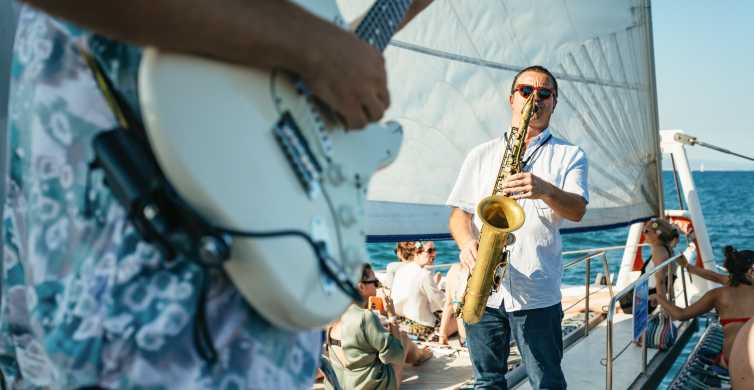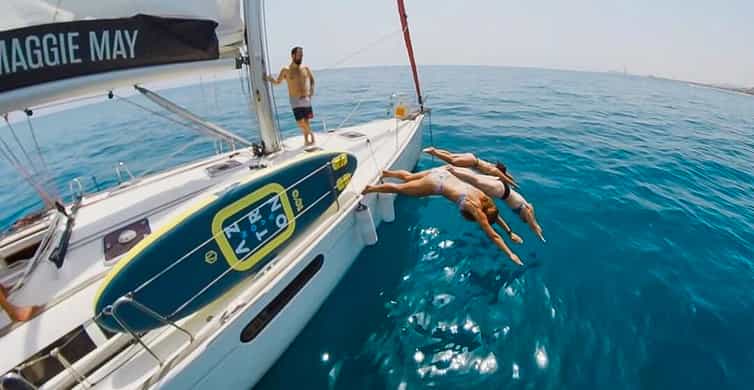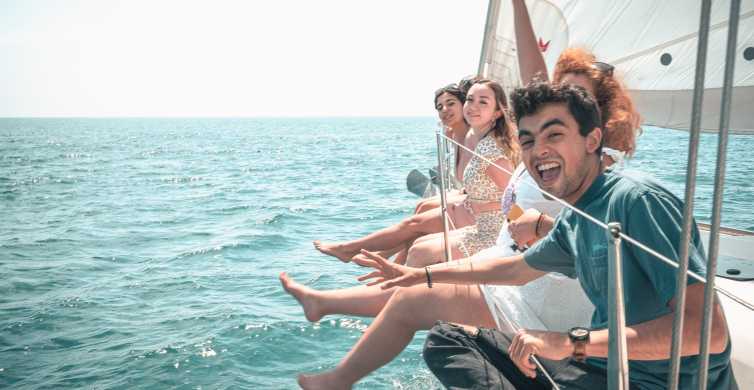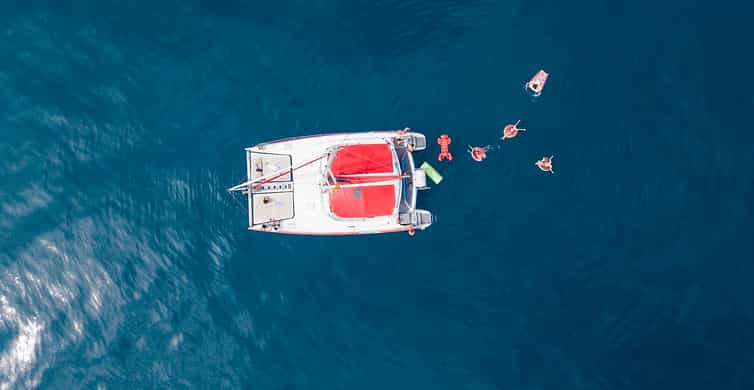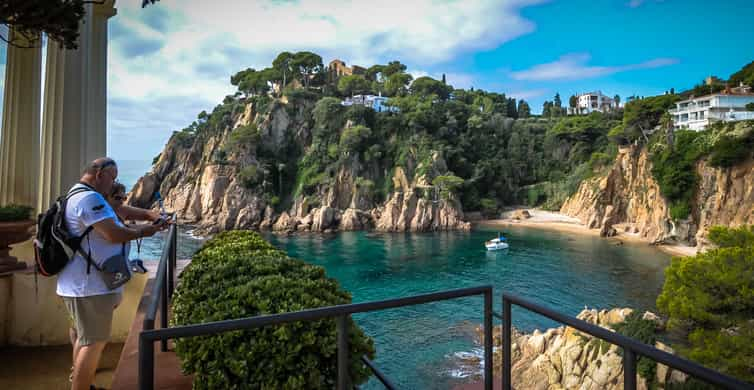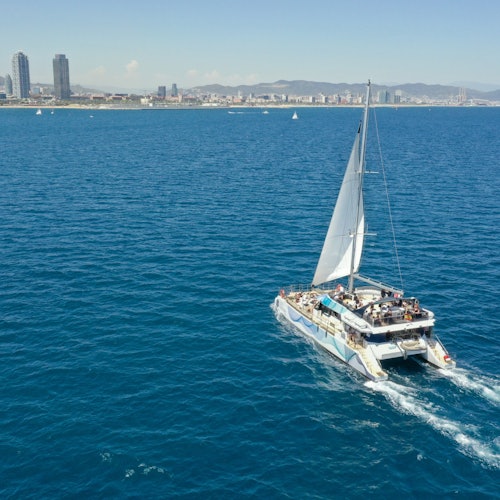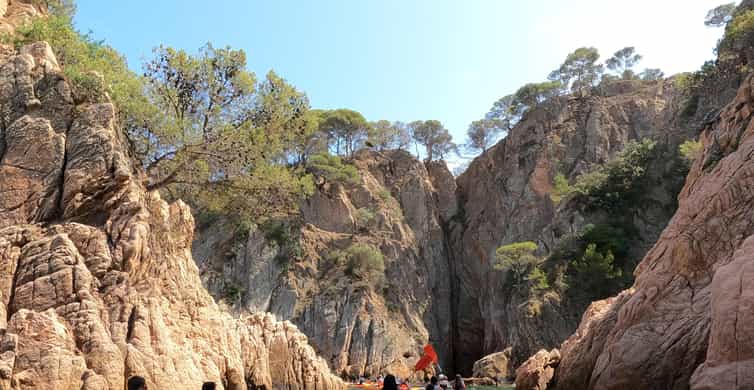
Costa Brava Tour: Kayak, Snorkel & Cliff Jump from Barcelona
4.9 (3,170 reviews)
from €85Check dates
The city beaches fill before 11 am — real sand is 25 minutes away by train
Barcelona has ~4.5 km of sand ten minutes from the centre, and that is a genuine luxury. It is also true that the sand arrived by barge for the 1992 Olympics, that in July there is no room for one more towel, and that the biggest danger is not the waves but bag thieves. Here is the honest guide: which city beach fits your plan — and when it pays to board a train, or a boat to the Costa Brava.
ⓘ Note: this is not the official website This is not the official website of Barcelona City Council or of any beach service. We are an independent guide: facts quoted come from barcelona.cat and rodalies.gencat.cat, and bookings are processed by authorised partners such as GetYourGuide.23 options · Prices checked on 18 October 2026
No options match these filters.
4.9 (3,170 reviews)
from €85Check dates
4.8 (2,703 reviews)
from €44Check dates
4.5 (3,545 reviews)
from €27Check dates
4.4 (227 reviews)
from €44Check dates
4.8 (2,112 reviews)
from €98.50Check dates
4.8 (2,000 reviews)
from €102.99Check dates
4.7 (1,886 reviews)
from €17.50Check dates
4.8 (1,181 reviews)
from €25Check dates
4.8 (1,144 reviews)
from €26Check dates
| Best city beach | Bogatell: wide sand, local crowd, full services and less crush |
|---|---|
| Quietest | Llevant, the last one heading north-east — or simply Ocata, ~25 min by train |
| Best nearby escape | Costa Brava (Tossa de Mar, Calella de Palafrugell): turquoise water and real coves |
| Swimming season | High season from late May to mid-September (in 2026, 30 May to 13 September; lifeguards 10:30-19:30), per barcelona.cat · sea warmest August-September |
| Main risk | Bag and phone theft: never leave anything unattended while you swim |
| Transport | Metro L4 (Barceloneta, Ciutadella | Vila Olímpica) · Rodalies R1 (Maresme) and R2 (Sitges) |
First, the uncomfortable truth: Barcelona's beaches are largely man-made. Until the 1980s this shoreline was factories, rail sidings and warehouses; the Olympic makeover of 1992 opened the city to the sea with imported sand, which winter storms keep stealing and dredgers keep putting back. They are more convenient than almost any urban beach in Europe — metro, showers, lifeguards, beach bars — but at the height of summer they run at capacity. Choose yours deliberately:
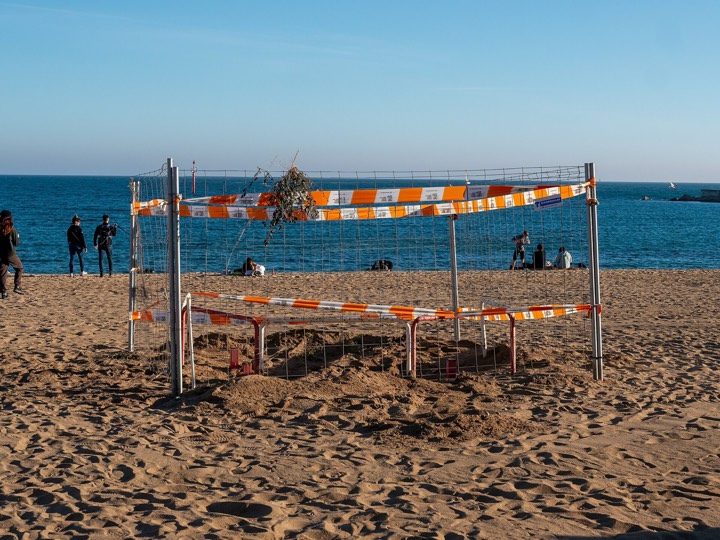
Want context along with your sand? The Barceloneta quarter and Ciutadella Park pair well: there is a Barceloneta and Ciutadella Park tour that covers the neighbourhood's seafaring history before you roll out the towel.
| Destination | How to get there | Time | Best for |
|---|---|---|---|
| Ocata (El Masnou) | Rodalies R1 from Plaça de Catalunya, direction Mataró/Blanes | ~25 min; the station sits right at the sand | The express escape: wide sand and a local vibe for the price of a commuter ticket |
| Garraf | Rodalies R2 Sud, Garraf stop | ~30-35 min | A small cove with green-and-white bathing huts; big charm, tiny capacity — go early |
| Sitges | Rodalies R2 Sud from Passeig de Gràcia or Sants | ~40 min | A full day out: 17 beaches, whitewashed old town, cosmopolitan scene |
| Tossa de Mar (Costa Brava) | Direct bus (~1 h 20 min) or a day tour with beach time | ~1.5 h each way | A beach with a medieval castle above it and water that is already Costa Brava |
| Calella de Palafrugell | Car, or a Costa Brava day tour with boat trip | ~2 h by road | The prettiest cove village on this stretch; public transport means slow connections |
Indicative times per rodalies.gencat.cat and bus operators; services thin out in winter.
Until four decades ago, Barcelona lived with its back to the sea. Its northern shoreline was a strip of factories, rail tracks and warehouses; squeezed between Barceloneta and Poblenou stood the Somorrostro, a shanty town without water or electricity where the flamenco dancer Carmen Amaya was born in 1913, and which was not cleared until 1966. Of that Barcelona, the beach's name is nearly all that remains.
The turn came with the 1992 Olympic Games: the urban operation opened the city to the sea, built the Olympic Village on industrial land and quite literally manufactured kilometres of new beach with imported sand and protective breakwaters. That is why purists call Barcelona's beaches "artificial" — true, and at the same time it is one of the most imitated urban reinventions in the world. The price of success is capacity — in peak August the city and its visitors barely fit on 4.5 km of sand — and a permanent battle with winter storms, which carry off sand that dredgers return each spring.
Yes. Water quality is tested daily in season and signalled with flags (green, yellow, red). The high bathing season with lifeguards runs from late May to mid-September (in 2026, 30 May to 13 September, according to barcelona.cat), with cover from 10:30 to 19:30. After heavy rain, wait a day before swimming: storm drains can overflow into the sea.
For most people, Bogatell: wide sand, local crowd, good beach bars and less crush than Barceloneta. For a seafront walk and photos, Sant Sebastià; for families, Nova Icària; for relative quiet, Llevant. For the genuinely best beach, leave the city: Ocata is ~25 minutes away by train.
Swimming is safe if you respect the flags. The real risk is theft: bags and phones disappearing while you swim is the number-one problem, especially at Barceloneta. Never leave anything unattended — bring the minimum, use a waterproof pouch, or swim in shifts.
Yes: a stretch of Mar Bella beach has a long-established naturist tradition, partly screened by dunes. It is the only such zone in the city; on neighbouring Nova Mar Bella and all other beaches, swimwear is the norm.
Ocata (El Masnou), on the Rodalies R1 line from Plaça de Catalunya: ~25 minutes, and the station sits right at the sand. It is wider, cleaner and far less packed than the city beaches. Heading south, the R2 reaches the Garraf cove and Sitges in ~40 minutes.
The Mediterranean warms up late: in June the water is still fresh (~20-21 °C) and the peak (~24-25 °C) arrives in August and September. September is the smart month: warm water, half the crowd, and the city past its August peak.
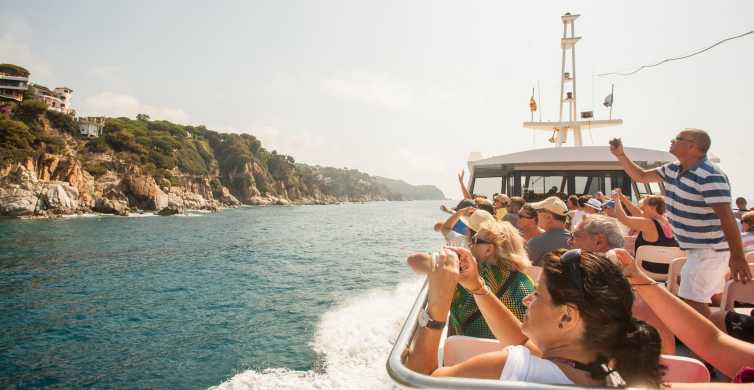
Yes, with caveats. A direct bus reaches Tossa de Mar (~1 h 20 min); coves like Calella de Palafrugell need slow public-transport connections. A day tour with a boat leg solves transport and coves in one booking — this is the one case where a tour clearly beats DIY.
July and August boat tours sell out days in advance. Free cancellation on most options: lock the date now and decide later.
See dates and prices