Concerts in Barcelona: Candlelight, Vivaldi & classical music
LED candles in Gothic basilicas, hour-long string quartets and the finest Modernista skylight in Europe. Here is what Barcelona's musical evenings actually offer: what each format costs, how long it runs and which one fits your night.
ⓘ Note: this is not the official website This is not the official website of any promoter, venue or festival. We are an independent guide: prices quoted come from the official ticketing sites (feverup.com, palaumusica.cat) and bookings are processed by authorised partners such as GetYourGuide.Tickets and tours to book
23 options · Prices checked on 18 October 2026
No options match these filters.
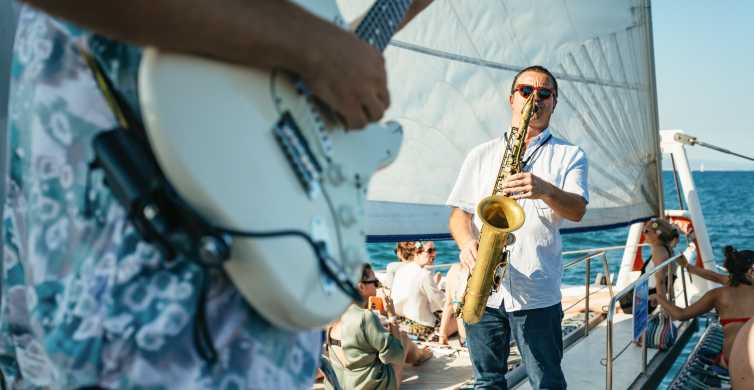
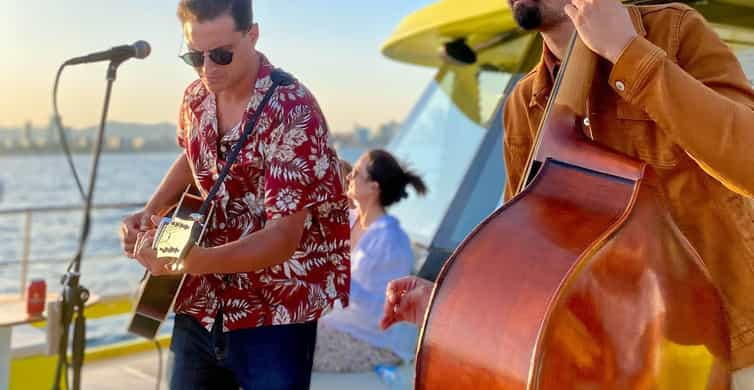
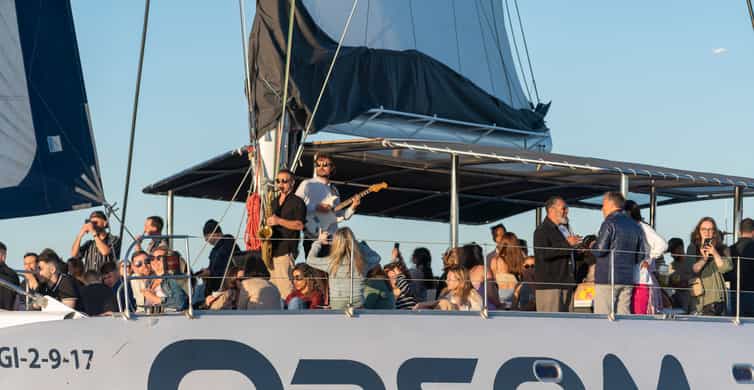
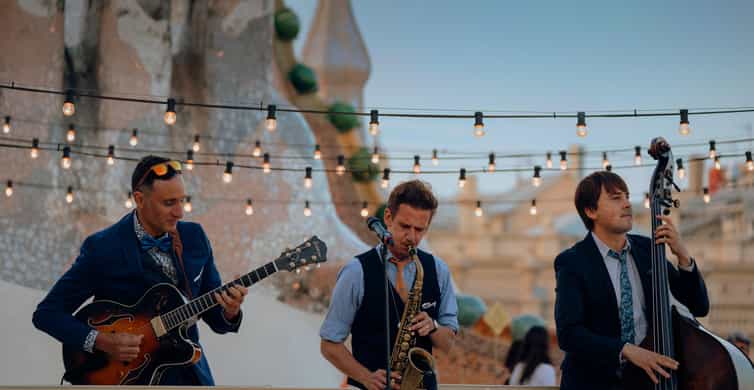
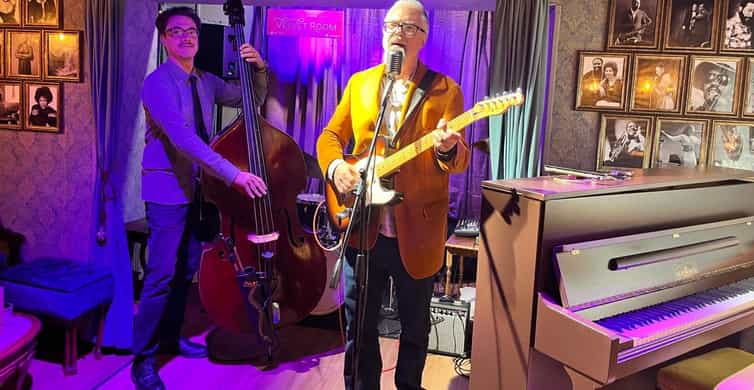
Barcelona: Catamaran Cruise with optional Live Jazz Music
4.7 (1,886 reviews)
from €17.50Check dates
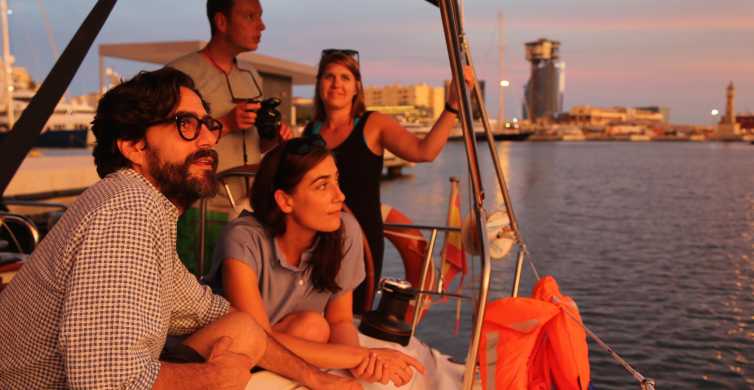
Barcelona: Sunset, Tapas, Open Bar & Optional Music & Dinner
4.7 (1,341 reviews)
from €56.05Check dates
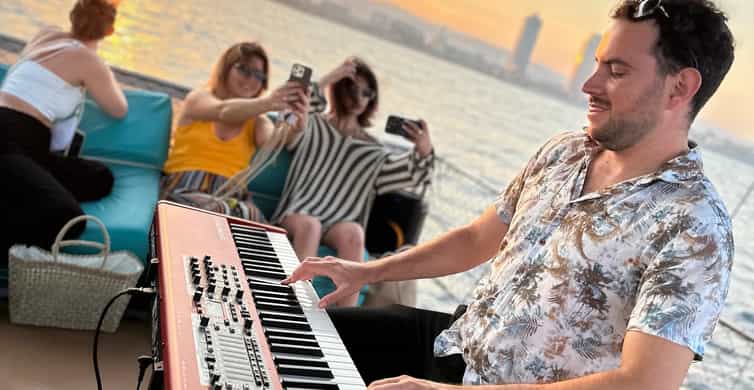
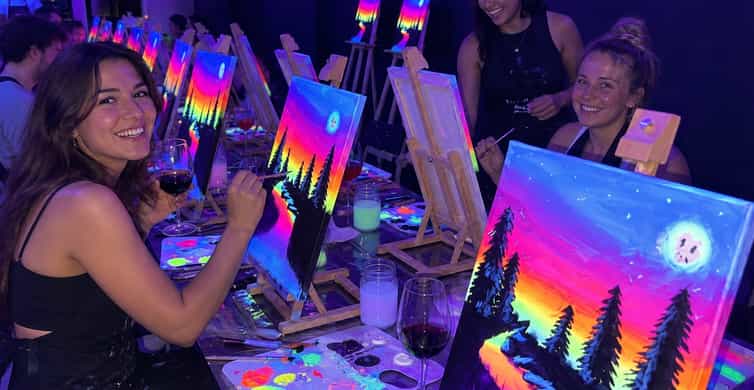
Paint & Wine in Barcelona: Art, Wine, and Music in a Unique Setting
4.9 (55 reviews)
from €35Check dates
The essentials in 20 seconds
| Price from | ~€20 in the back zones · ~€25-45 is the normal band |
|---|---|
| Running time | 60-75 minutes, almost always with no interval |
| Advance booking? | Yes: Fridays and Saturdays sell out and historic venues are small |
| Seating | Sold by zone (A closest, then B, C and D); within your zone, first in picks the seat |
| Dress code | None · bring an extra layer, churches are cold |
| Minimum age | Usually 8; under-16s must be with an adult |
Indicative prices and conditions per feverup.com and GetYourGuide product listings, August 2026. Every session sets its own rules — check yours before you pay.
The five formats that actually exist
Barcelona sells visitors a "concert" in five very different ways, and mixing them up is the number-one cause of disappointment. This table sorts you out in two minutes.
| Format | Approx. price | Length | Best for |
|---|---|---|---|
| Candlelight (LED candles) | ~€20-45 | ~60 min | First-timers, atmosphere, accessible repertoire |
| Vivaldi and classical in a basilica | ~€25-40 | ~60 min | Church acoustics and The Four Seasons |
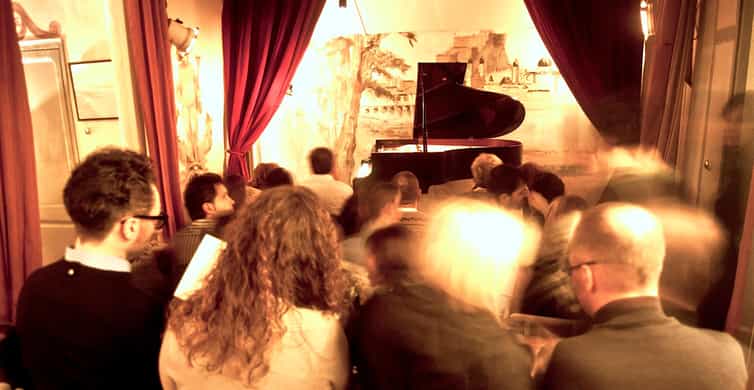
| Intimate piano (Only Chopin, Solo Piano) | ~€35-45 | ~90 min | Couples and serious listeners: tiny audience |
| Palau de la Música (own season) | Highly variable | 60-120 min | People who come for the hall as much as the music |
| Palau Sant Jordi, Razzmatazz, festivals | Artist-dependent | 2-3 h or several days | Pop, rock, indie and electronic |
Indicative bands as of August 2026 per feverup.com, palaumusica.cat and GetYourGuide; the final price depends on the session, the zone and the date.
What a Candlelight concert is really like
The format was popularised by the platform Fever and now fills rooms across half the world. The mechanics never change: a string quartet, a solo pianist or a small guitar ensemble plays in the middle of a good-looking space, ringed by hundreds of candles set out on the floor and the steps. It runs about 60 minutes with no interval, and doors open 30 to 40 minutes before the start time.
Three things are worth knowing before you pay. First: the candles are LED. Organisers describe the flameless candles as a safety measure for the audience and for buildings that are often protected heritage; the look is near-identical, but there is no smell of wax. Second: you buy a zone, not a seat. Zone A sits closest to the players, then B, C and D; within your zone you choose your spot as you walk in, so turning up twenty minutes early is worth more than paying for the tier above.
Third, and most important: the repertoire is often not classical at all. Alongside Vivaldi and Mozart, much of the calendar is tributes to Coldplay, Queen or ABBA, film scores, Studio Ghibli and Disney, all arranged for string quartet. This is an atmospheric, entry-level format, not a symphony season. If you want a complete work with a full orchestra, your venues are L'Auditori — home of the Barcelona Symphony Orchestra — the Palau de la Música, or the Gran Teatre del Liceu for opera.
Vivaldi in historic churches: what to expect
The city's best-selling programme is Vivaldi's Four Seasons, usually padded out with a Mozart, a Bach and an Ave Maria. These run in old-town churches, and that is a large part of the appeal: hearing Winter under a six-hundred-year-old stone vault is not the same as hearing it in a concert hall.
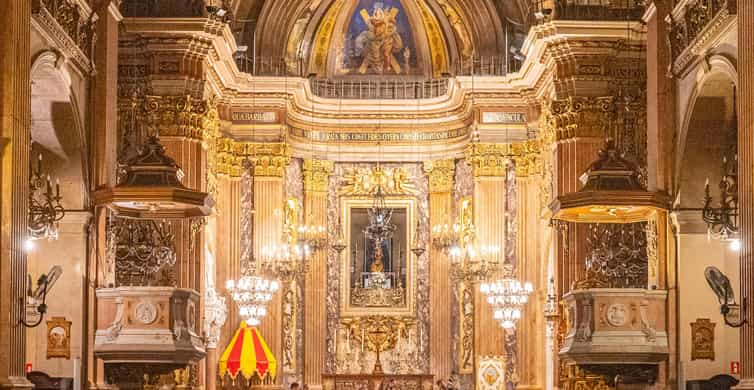
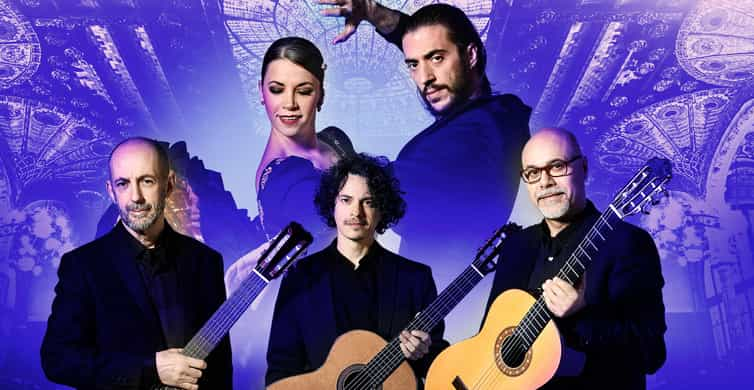
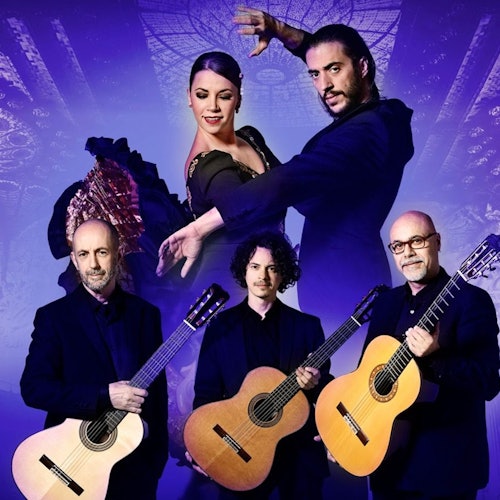
The most-booked version on GetYourGuide, Barcelona Concert: A. Vivaldi — The Four Seasons and more, is staged in the Basílica de la Mercè, an eighteenth-century Baroque church on Carrer de la Mercè, a couple of streets from La Rambla and Port Vell. A resident chamber orchestra performs it with a solo violinist and a soprano, it lasts around an hour, and there is no dress code. The other regular address is the Basílica de Santa Maria del Pi, fourteenth-century Catalan Gothic, with its huge rose window and a single very wide nave: candlelit Vivaldi and Bach programmes there alternate with Spanish and flamenco guitar cycles.
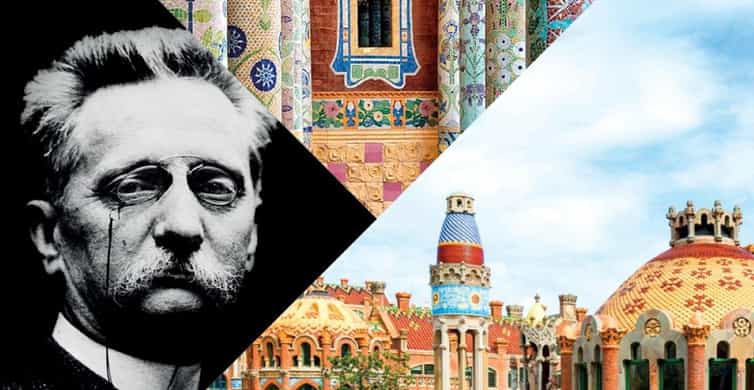
Two honest caveats. Venues rotate by season and promoter — sessions also run at the Petit Palau, the Sant Pau Art Nouveau Site and the Gaudí Crypt at Colònia Güell, which is outside the city — so always confirm the exact address on the listing before booking. And church acoustics cut both ways: the long reverb is glorious in an adagio and slightly smears the fast movements. That is part of the deal.
The Palau de la Música Catalana is the real prize
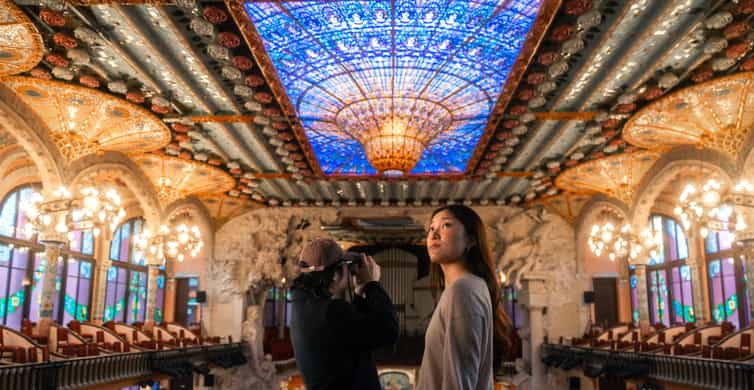
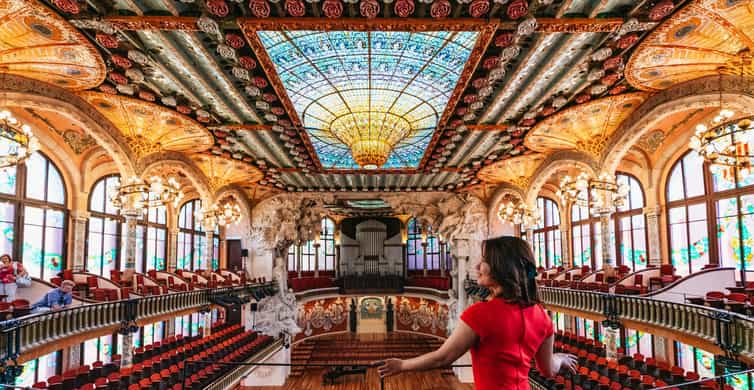
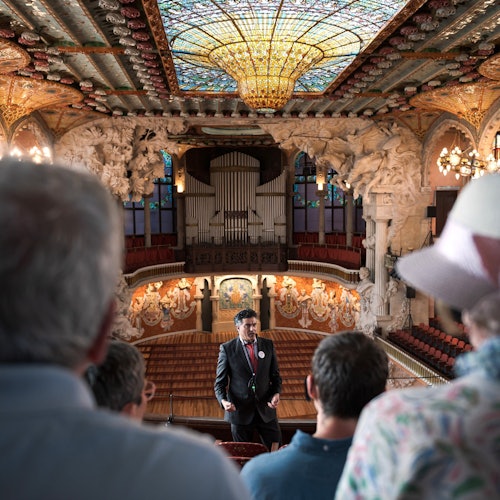
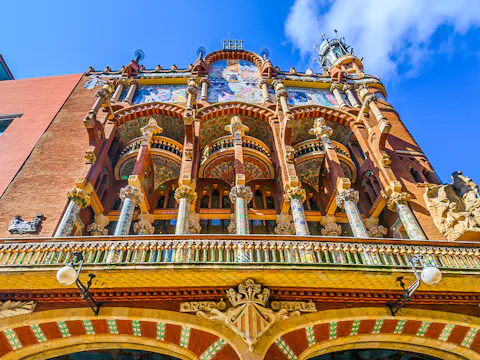
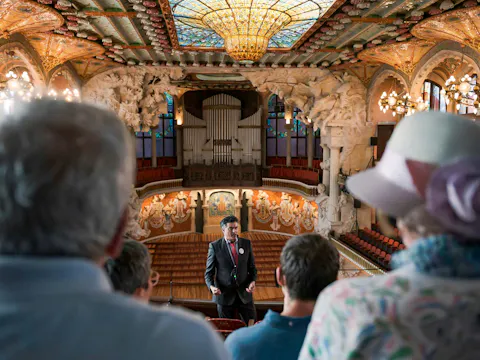
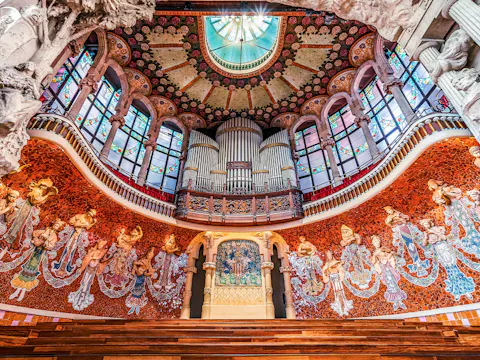
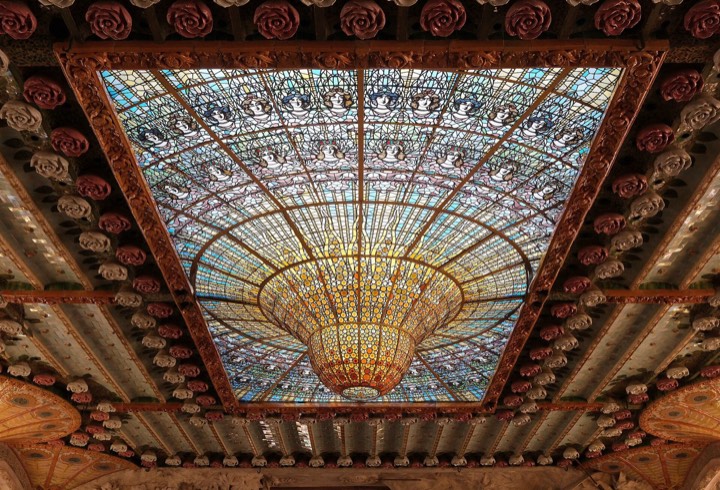
If you only get inside one musical building in Barcelona, make it this one. The Palau de la Música Catalana was built by Lluís Domènech i Montaner between 1905 and 1908 for the Orfeó Català choral society, and has been a UNESCO World Heritage Site since 1997. Its unrepeatable feature is the inverted stained-glass skylight hanging over the stalls like a drop of sun: this is the only concert auditorium in Europe lit by natural daylight. Add the mosaic columns, the ceramic muses flanking the stage and a brick facade that looks like a petrified garden.
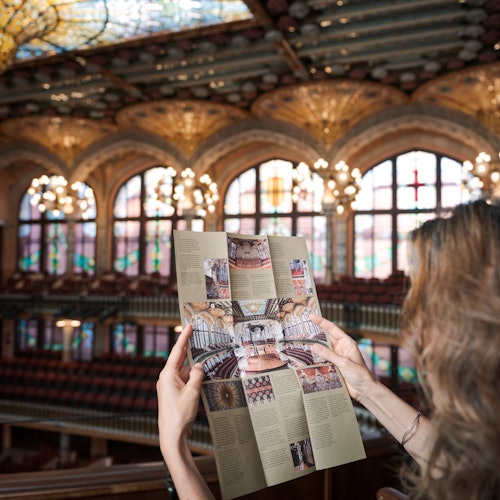
One thing matters for planning: the concerts and the guided tours are separate products, bought separately. Across the usual ticketing channels, self-guided entry starts at around €20 and the hour-long guided tour at around €24, while concert tickets depend entirely on the programme. The building also has a smaller second room, the Petit Palau, which hosts chamber recitals and some candlelit programmes. Check the calendar and exact rates on the official site (palaumusica.cat) before deciding.
A word of strategy: if you are doing the guided tour in the morning, don't also buy a concert ticket for that same evening unless the music genuinely matters to you. The building will already have given you what you came for, and Barcelona punishes over-stuffed days.
Pop, rock and festivals: the other musical night
Outside the classical circuit, Barcelona is a fixed stop on world tours. The Palau Sant Jordi, on Montjuïc's Olympic Ring, was designed by the Japanese architect Arata Isozaki for the 1992 Games and holds close to 18,000 people: that is where the big names play. At club scale, Razzmatazz in Poblenou runs five rooms — the main hall takes around 2,000 — and rolls straight from gig into club night until dawn; Sala Apolo, on the Paral·lel, does the same inside a former ballroom.
Then there is summer. Three festivals shape the city's music calendar:
- Primavera Sound — late May or early June, at Parc del Fòrum. The 2026 edition ran 4-6 June.
- Sónar — mid-June, electronic music and digital art, split between daytime and night-time sites at the Fira. In 2026 it ran 18-20 June.
- Cruïlla — July, also at Parc del Fòrum, with a broader line-up and plenty of Spanish- and Catalan-language artists. In 2026, 8-11 July.
Dates shift every year and passes go on sale many months ahead, often before the line-up is announced. Always confirm on the festival's official site before booking flights, and steer clear of unauthorised resale. If you are travelling during those weeks, book accommodation early: the city fills up and prices climb hard.
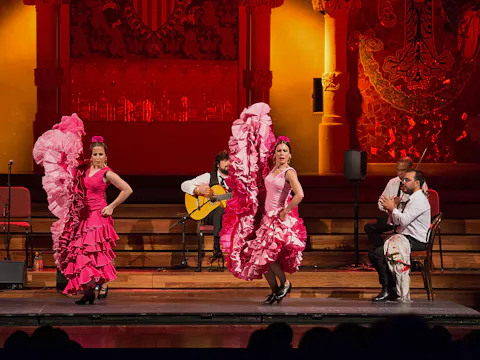
Flamenco deserves its own chapter — the tablaos work on a different logic of times, prices and optional dinner — so we keep it out of this comparison.
Practical: what to wear, when to arrive, which to pick
- What to wear: none of these formats has a dress code. People come in everyday clothes. In winter, take an extra layer — stone churches sit at the temperature of the stone.
- When to arrive: 20-30 minutes before the printed time. Within your zone seats go in arrival order, and naves with columns have places whose sightlines are clearly worse.
- Photos: generally allowed without flash, but many venues ask you to put the phone away during the performance. Take your candle shot on the way in, not mid-adagio.
- With children: most sessions are 8+, with an adult required for under-16s. An hour sitting in the dark is the sensible ceiling; for families, pick film scores or Disney over a full Baroque programme.
- Accessibility: historic churches mean steps and hard pews. If you need step-free access, email the promoter before buying rather than on the day.
How it fits the rest of the day: nearly all of these start between 6:30pm and 9pm, which makes them the ideal close to an afternoon in the Gothic Quarter. A visit to Barcelona Cathedral, an early dinner or food tour and then the concert is one of the best sequences the city offers — and it all fits inside a ten-minute walk.
Frequently asked questions
How much does a Candlelight concert in Barcelona cost?
From about €20 in the furthest zones to about €45 in Zone A, per feverup.com. Venue, zone and programme all matter: pop tributes come in cheaper than sessions in landmark buildings.
Are the candles real?
No, they are LED. Organisers describe flameless candles as a safety measure for the audience and for venues that are often protected heritage buildings. The effect is nearly identical, but it's worth knowing.
How long does it last?
60-75 minutes, almost always with no interval, doors open 30-40 minutes early. Intimate piano recitals run to about 90 minutes and include a drink and a chat with the pianist.
Do I need to book ahead?
Yes. Friday and Saturday sessions and popular programmes sell out days or weeks in advance, and historic venues are small. Booking online also secures the zone you want.
Is there a dress code?
No, neither for Candlelight nor for church concerts. Everyday clothes. In winter, wrap up: the stone shows no mercy.
Can children attend?
Most sessions admit ages 8 and up, with an adult for under-16s. For families, a film-score or Disney programme beats a full Vivaldi.
Which churches host the Vivaldi concerts?
Mainly the Basílica de la Mercè, just off La Rambla, and the Basílica de Santa Maria del Pi in the Gothic Quarter. Sessions also run at the Petit Palau, the Sant Pau Art Nouveau Site and the Gaudí Crypt at Colònia Güell. Venues rotate, so check the address on your ticket.
Is a Candlelight the same as a Palau concert?
No. Candlelight is a short, atmospheric ~60-minute format with accessible repertoire. The Palau de la Música runs its own classical, choral and chamber season with complete works, and sells guided tours of the building separately.
Book your musical evening
An hour of music inside an old-town basilica is the best possible ending to a Barcelona day. Free cancellation on most options.
See dates and prices