Barcelona nightlife: the real timetable, where to go and what the door costs
Nobody in Barcelona goes out at ten. Dinner is late, bars carry the night until half past one, and clubs don't fill until two. This guide translates that schedule so you don't end up alone on an empty dance floor, and tells you which district fits your plan, what you'll pay at the door, and how to get home afterwards.
ⓘ Note: this is not the official website This is not the official website of any venue, club or operator. We are an independent guide: prices come from the venues themselves, from TMB and from GetYourGuide, where bookings are processed.Tickets and tours to book
24 options · Prices checked on 18 October 2026
No options match these filters.


Barcelona: FC Barcelona Museum "Barça Immersive Tour" Ticket
4.3 (14,965 reviews)
from €30.10Check dates

FC Barcelona Museum: Barça Immersive Tour Entry Ticket + Audio Guide
4.4 (8,936 reviews)
from €33.10Check dates
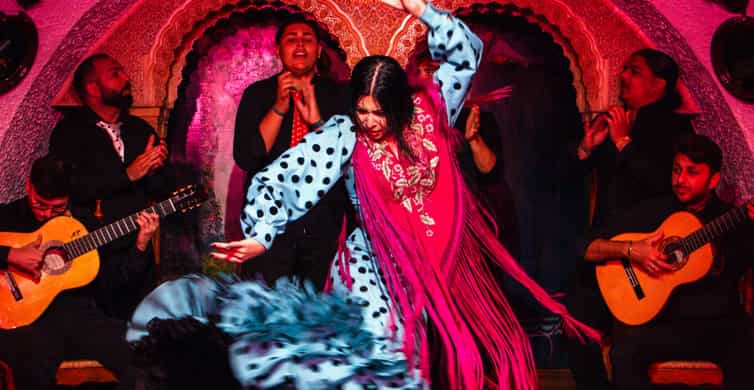
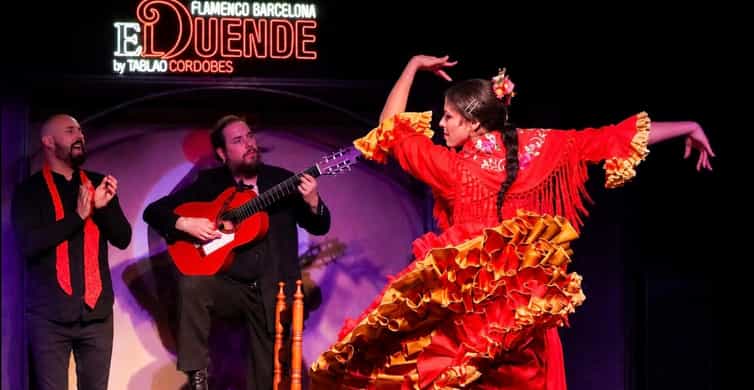
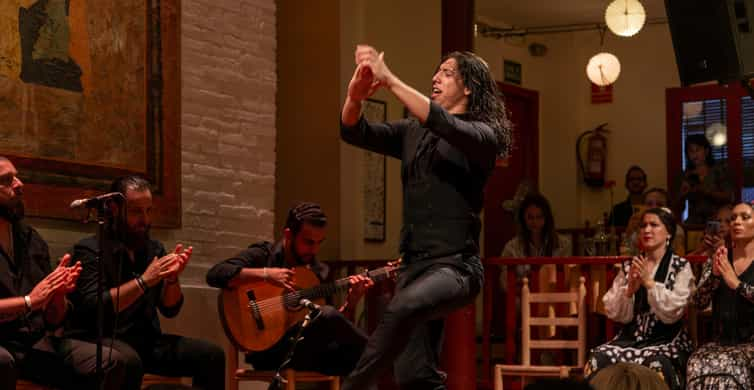
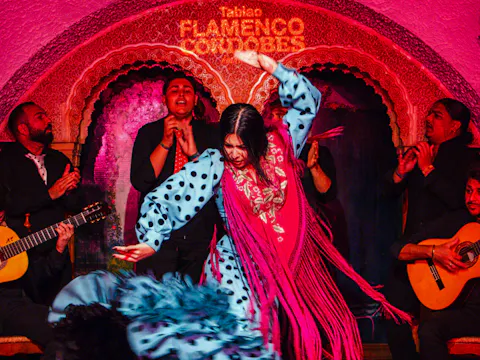
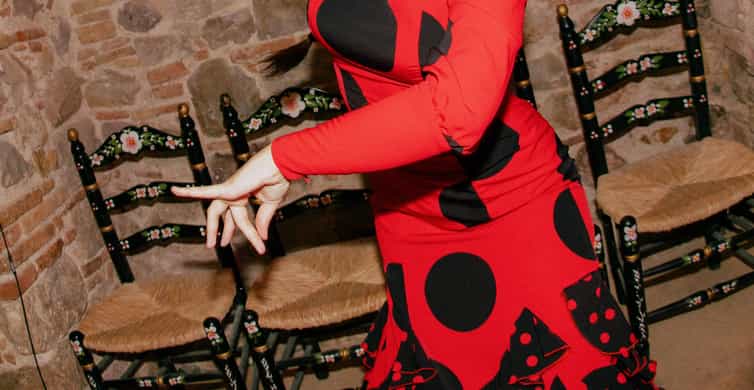
Top Awarded Flamenco Show Tablao Cordobes with dinner option
4.7 (5,268 reviews)
from €35Check dates


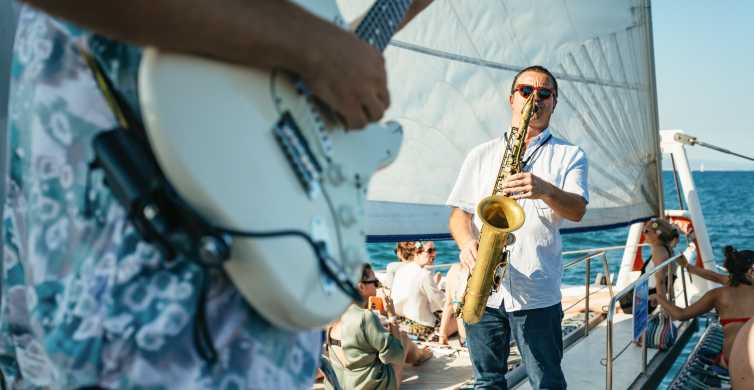
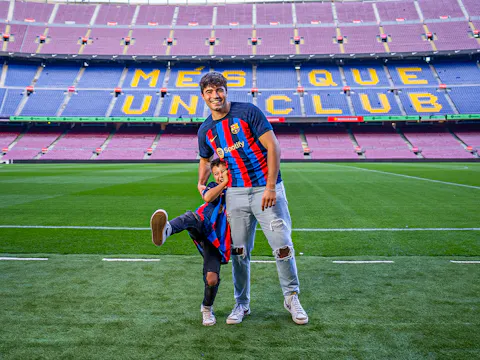
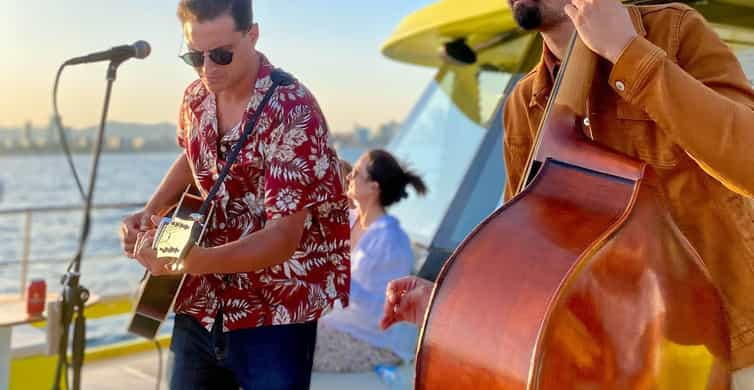
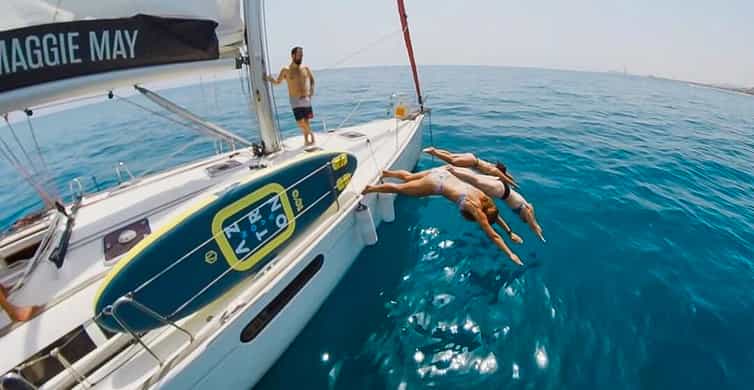

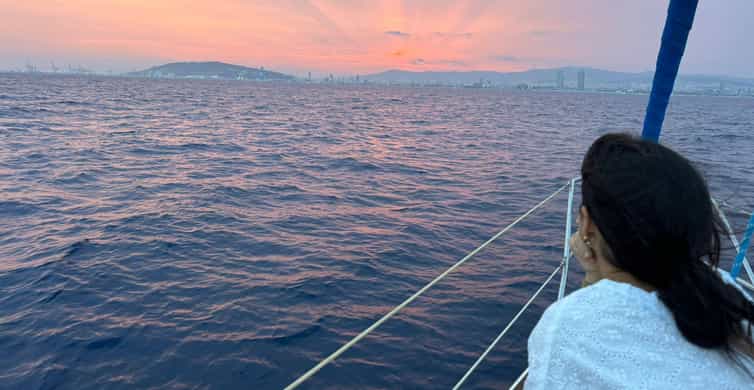
Barcelona: Midday or Sunset Sailing with Open Bar and Snacks
4.8 (2,703 reviews)
from €44Check dates

Barcelona: Sunset & Day Catamaran Cruise with Tapas & Drinks
4.5 (3,545 reviews)
from €27Check dates
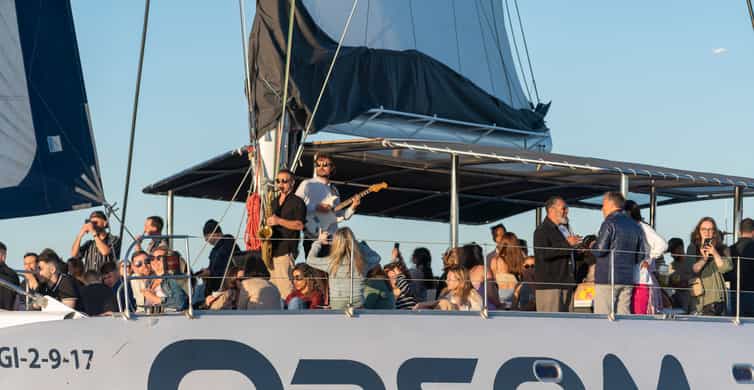
Barcelona: Catamaran Cruise with optional Live Jazz Music
4.7 (1,886 reviews)
from €17.50Check dates
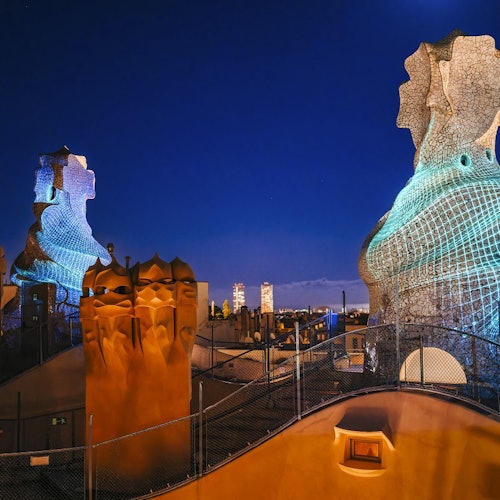
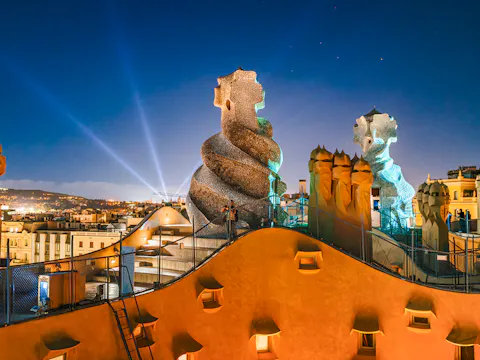
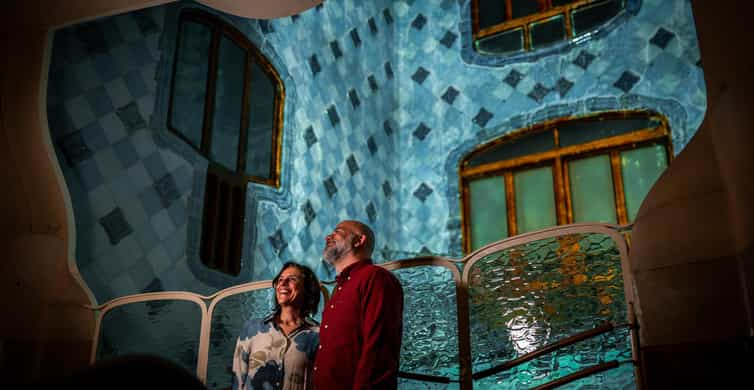
Casa Milà - La Pedrera: Guided Night Tour + Optional Dinner
4.4 (756 reviews)
from €39.50Check dates

The essentials in 20 seconds
| Dinner time | 21:00–22:30. At 20:00 many kitchens haven't even opened |
|---|---|
| Bars | 23:00–01:30, the liveliest stretch of the night |
| Clubs | Open 00:00–01:00 · fill at 02:00 · close 05:00–06:00 |
| Club entry | ~€15–25 with one drink included; guest lists and pre-booking cut it |
| Minimum age | 18, with original photo ID at the door |
| Getting home | Metro all night on Saturdays only; Fridays to 02:00; otherwise NitBus |
| Where | Born and Gòtic (bars) · Poble-sec and Gràcia (local) · Passeig Marítim (beach clubs) |
Transport hours per TMB; door prices per the venues and ticket portals. All of it shifts with the season and with special events.
The real timetable of a Barcelona night
This is the single most useful thing on this page, and the detail that wrecks the most nights out when visitors ignore it. Barcelona starts late and finishes later. Run the evening on a northern-European clock and you'll arrive while the bar is still setting up, then leave exactly as places start to fill.
| Time | What's happening | What you should do |
|---|---|---|
| 19:00–21:00 | Vermouth hour: small beers, terraces, olives | An aperitif in Poble-sec or Gràcia — don't mistake it for dinner |
| 21:00–22:30 | Dinner. Kitchens hit full speed around 22:00 | Book for 21:30, and not before 21:00 |
| 23:00–01:30 | Bars and cocktail rooms at their best | The strongest stretch of the night: Born, Gòtic, Raval |
| 00:30–01:00 | Clubs open their doors to a near-empty floor | Only go in now if you have a guest list or advance ticket |
| 02:00–04:00 | Peak: queues outside, rooms full inside | Arrive before 02:00 to skip a 40-minute wait |
| 05:00–06:00 | Venues wind down and close | Know your route home before this point |
| 06:00–08:00 | Churro stands and neighbourhood bars open up | Churros con chocolate before bed — it's the tradition |
Why it works this way. The Spanish working day ends late, dinner lands at half past nine, and nobody rushes the conversation afterwards. Clubs plan around it: the headline DJ goes on between 02:00 and 03:30, and no venue seriously expects a crowd before midnight. If you have an early flight, don't try to compress the night into half of itself — swap the club for bars and a rooftop and call it a night at one.
Where to go out: the districts, without the gloss
| Area | What you'll find | Best for |
|---|---|---|
| El Born & the Gothic Quarter | Cocktail bars, wine bars and small venues along three-metre-wide lanes; Plaça Reial alone holds half a dozen | A first night out, walking everywhere |
| El Raval | Dive bars, cheap drinks, a genuine mix of locals and visitors, life until very late | Tight budgets and an unfiltered atmosphere |
| Poble-sec | Vermouth and tapas on Carrer Blai; pintxos at €1–2 and calm terraces | Starting the night by eating well and cheaply |
| Gràcia | Squares (Sol, Virreina, Vila de Gràcia), neighbourhood bars, zero nightclubs | A local evening, conversation, home by one |
| Barceloneta & Passeig Marítim | Beach clubs and large venues: the most touristy and priciest end of the night | A big club with the sea outside |
| Poble Espanyol & Montjuïc | Large venues and an open-air summer club; metro to Espanya | Electronic line-ups and festival nights |
| Eixample | Hotel terraces, craft cocktails, a slightly older crowd | A drink with a view, before or instead of a club |
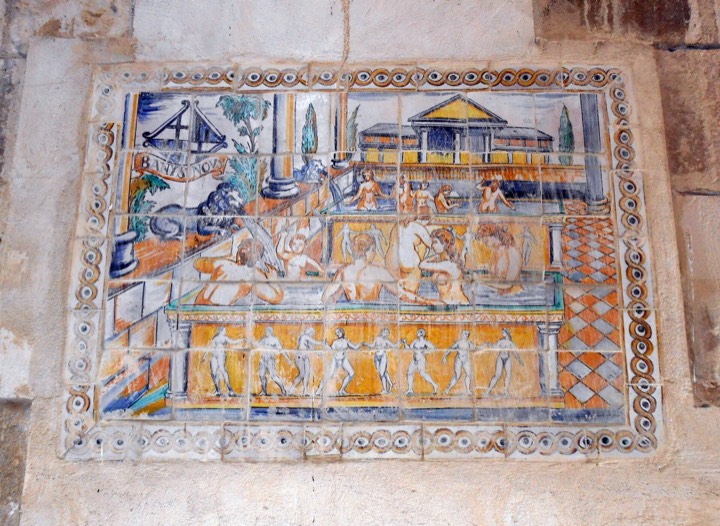
El Born and the Gothic Quarter are the logical starting point: within a twenty-minute walk you have serious cocktail bars, wine bars and live-music rooms. It's also the busiest and priciest area, with a few places living entirely off passing trade — if a bar has photos of the drinks menu propped by the door, walk two streets further.
El Raval deserves an honest note. It's a genuinely alive neighbourhood with historic bars and the lowest prices in the centre, and most of it is perfectly fine to walk. That said, the southern axis around Carrer d'en Robador and Carrer de Sant Ramon, plus the poorly lit stretches beside the lower Rambla del Raval, see more street dealing and more late-night theft. The advice isn't to avoid the district — it's to leave it along wide, busy streets (Nou de la Rambla, Carrer del Carme) and not to wander it alone at four in the morning with your phone in your hand.
Poble-sec is the best opening act of the night: Carrer Blai is an entire pedestrian street of pintxos and vermouth at neighbourhood prices, ten minutes from Paral·lel. Gràcia plays a different game — squares full of people sitting out, small bars, not a single nightclub.
Barceloneta and the Passeig Marítim are the tourist end, and it's worth saying so plainly: higher door prices, resort-priced drinks and a lot of street promoters. The old strip of bars along the Port Olímpic marina was dismantled when the port was redeveloped, and what remains of the beach scene sits in the venues along the seafront promenade. Fine for one big night by the water; don't expect a local crowd. In daylight, see the beaches guide.
The formats, and which one is you
- Pub crawl (~€20–30). A guide, three or four bars with a shot included at each, and skip-the-queue entry to a club at the end. What you're really buying is company, which makes them useful if you're travelling solo. Straight up: they're built for the under-30 crowd and the group can be rowdy. If your idea of a good night is a quiet bar, pick something else.
- Rooftops and hotel terraces (drinks ~€12–16). Almost every hotel in the Eixample and the old town opens its roof to the public, not just to guests. These are early venues — 19:00 to 23:00 — and many need a booking in summer. Cocktails sit around €12–16 and climb to €16–20 at the most in-demand terraces.
- Beach clubs. Large rooms along the Passeig Marítim in Barceloneta, with terraces over the sand, commercial house and the strictest door policy in the city. Entry typically €20 with a drink; bottle tables start in the hundreds.
- The big clubs. Razzmatazz, in Poblenou, is five rooms inside one industrial building — Razz Club, The Loft, Lolita, Pop Bar and Rex Room — each with its own sound and all covered by a single ticket: indie and rock in the main hall, techno and house upstairs, eighties and nineties pop downstairs. Sala Apolo, on Paral·lel, alternates gigs and club nights, and its Nasty Mondays have been filling a Monday for decades. In summer, La Terrrazza, inside Poble Espanyol on Montjuïc, is the open-air club of reference, running roughly from late May to late September.
- Live music. The most rewarding alternative if clubs aren't your thing: jazz rooms off Plaça Reial, small gigs in the Gòtic and Raval, and the larger halls in Poblenou and Montjuïc. Check the concert listings, or if you'd rather have song and dance, a flamenco show at 20:00 slots in neatly before dinner.
Indicative door and drink prices per the venues, ticket portals and published rooftop menus (August 2026). Always check before booking.
At the door: prices, guest lists, dress code and ID
- What it costs. The normal range is €15–25 with one drink included. Razzmatazz entry with a drink starts around €17 and Opium runs about €20, per the venues and ticket portals. International line-ups, New Year's Eve and festival weeks sit well above that.
- Guest lists and advance tickets. Nearly every club runs a discounted list or reduced entry if you arrive before a set hour — usually 01:00 or 01:30. Signing up is free, through the venue's own site or a ticketing platform. Buying ahead isn't always cheaper, but it does save you the queue.
- Dress code. Smart casual: long trousers or a dress, closed shoes. No flip-flops, swimwear, sports shorts, beach vests or football shirts. The door is strict at the seafront clubs and very relaxed at Razzmatazz, Apolo or anywhere in the Raval.
- ID. You must be 18 and carry original photo ID: passport, Spanish DNI or an EU national ID card. Many doors reject photocopies and phone photos. Keep it in an inside pocket rather than in your hand.
- Drinks inside. Budget €10–14 for a spirit and mixer at a mid-range club, more at the beach venues. Most clubs hand you a drink token with your ticket — don't lose it, they won't replace it.
- Street promoters. On La Rambla and around Barceloneta you'll be offered tickets and "free drinks" on the pavement. Some are legitimate, others funnel you into places with inflated prices. If you don't recognise the venue's name, don't hand over cash in the street.
Door and drink prices per the venues and ticket portals consulted in August 2026; they vary by day, event and arrival time.
Getting home in the small hours
Sort this before you go out and the end of the night takes care of itself. The key fact, per TMB: the metro only runs right through the night from Saturday into Sunday. Monday to Thursday and on Sundays it closes around midnight, and on Fridays and the eve of public holidays it runs until 02:00. So on a Saturday you can ride home at any hour; every other night needs a plan B.
- NitBus. The night bus network covers the city and the metropolitan area from roughly 22:20 to 06:00, with buses about every 20 minutes on most routes. Almost all the N lines call at Plaça de Catalunya, which works as the interchange hub. Standard single tickets and the usual integrated travel cards are valid.
- Taxi. The black-and-yellow taxis can be flagged in the street, taken from a rank or ordered through an app; a night tariff applies from 22:00 and at weekends. There's usually a rank outside the big clubs, but expect a wait at 05:00 when everyone leaves at once.
- On foot. El Born to the Eixample is a 20–25 minute walk along busy streets: a sensible way home if you choose lit avenues over shortcuts through empty alleys.
- Airport. With an early flight, check schedules in advance: some NitBus lines connect to the airport overnight. Tickets and zones are covered in the transport guide.
Neighbours and safety, in two minutes
In Barcelona, people live above the bars. Much of the Gòtic, El Born, Gràcia and Barceloneta is dense residential housing, and night-time noise has been the top source of resident complaints for years, with organised protests in Barceloneta and around the squares of Gràcia. The city's civic ordinance also bans drinking alcohol in the street, with fines running into the hundreds of euros. In practice: keep your voice down when you leave a venue, don't hold court under the balconies, and don't buy cans from street sellers to drink in the square.
Pickpocketing. This is the real risk and it is high in the nightlife areas. The hotspots are La Rambla, metro entrances in the small hours, terraces in the old town and crowded dance floors. Phone in a front pocket, bag worn across the front, and never hang a bag on the back of a chair or leave a phone on the table. Two seconds of distraction in a packed room is all it takes.
Drinks. Don't leave your glass unattended and don't accept a drink you haven't seen poured at the bar. Some venues provide drink covers or testing strips. If you suddenly feel unwell out of all proportion to what you've drunk, tell bar or security staff straight away and don't head out into the street alone — door staff are trained for exactly this.
Adult common sense. Drink moderately, alternate with water, eat before you go out, and set yourself a limit on both spending and hours. Travelling in a group: agree a meeting point in case someone gets separated, because phone signal inside clubs is poor.
Frequently asked questions
What time do clubs open?
Most between 00:00 and 01:00, but the floor doesn't fill until 02:00. They close between 05:00 and 06:00. Arrive at 23:30 and the room will be empty — that hour belongs to bars.
How much is club entry?
€15–25 with one drink included. Razzmatazz entry with a drink starts around €17 and Opium is about €20, per the venues and ticket portals (August 2026). Nights with an international DJ cost more.
Does the metro run all night?
Only on Saturday nights. Monday to Thursday and Sundays it closes at midnight; Fridays and eves of public holidays it runs to 02:00, per TMB. Otherwise take a NitBus (N lines, almost all via Plaça de Catalunya, roughly 22:20–06:00) or a taxi.
Is there a dress code?
Smart casual: long trousers or a dress, closed shoes. Flip-flops, sports shorts, beach vests and football shirts get refused, especially on the Passeig Marítim. Razzmatazz and Apolo are far more relaxed.
Which district is best?
Born and Gòtic for bars and cocktails; Poble-sec (Carrer Blai) for vermouth and tapas; Gràcia for squares and a local crowd with no clubs; Eixample for rooftops; Passeig Marítim for beach clubs, the most touristy and expensive option.
Are pub crawls worth it?
Yes if you're solo and want company: a guide, three or four bars with a shot included and skip-the-queue club entry. They're aimed at the under-30 crowd and can be rowdy. For a quiet night, choose something else.
Do I need my passport?
Yes: 18 minimum, with original photo ID (passport, DNI or EU national ID card). Many venues won't accept photocopies or phone photos.
Is Barcelona safe at night?
Violent crime is uncommon; pickpocketing is the real issue on La Rambla, at metro entrances late, on terraces and on crowded dance floors. Front pocket, bag across the front, nothing on the table. Don't leave your drink unattended.
Lock in your night before you go out
Advance tickets and guest lists spare you the 02:00 queue, which is the worst one of the night. Free cancellation on most options.
See nightlife options and dates