Palau de la Música Catalana: tickets and guided tour
Lluís Domènech i Montaner's modernista concert hall has been a UNESCO World Heritage Site since 1997 and is probably the most photographed auditorium in Europe. Here are the official 2026 prices, the real opening hours, how the three visit formats actually differ, and why a concert ticket is sometimes the smarter buy.
ⓘ Note: this is not the official website This is not the official Palau de la Música Catalana website. We are an independent guide: prices and opening hours quoted here come from palaumusica.cat, and bookings are processed by authorised partners such as GetYourGuide.Tickets and tours to book
24 options · Prices checked on 18 October 2026
No options match these filters.
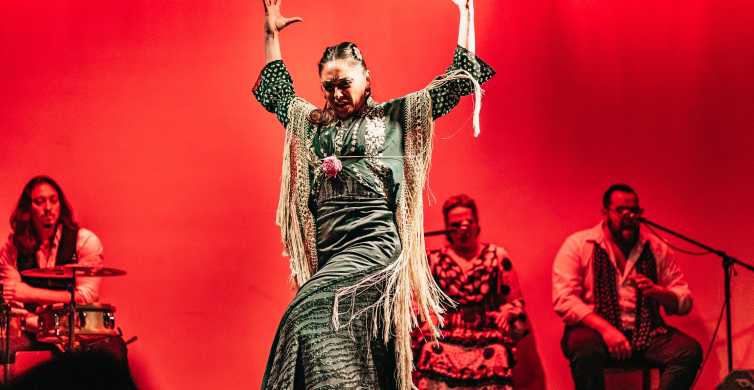
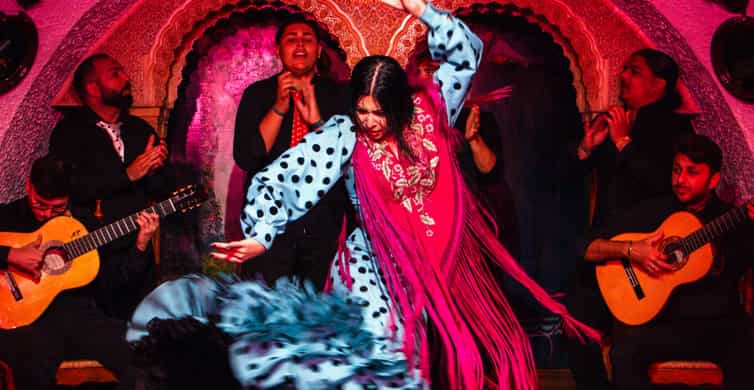
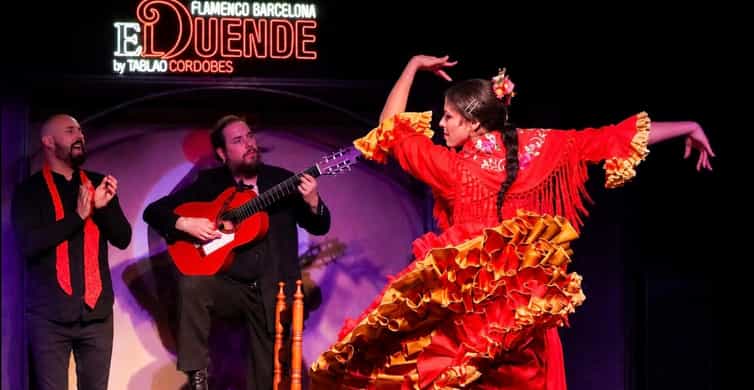
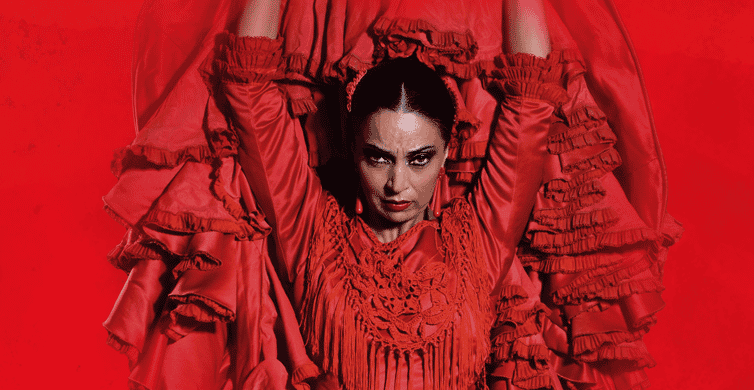
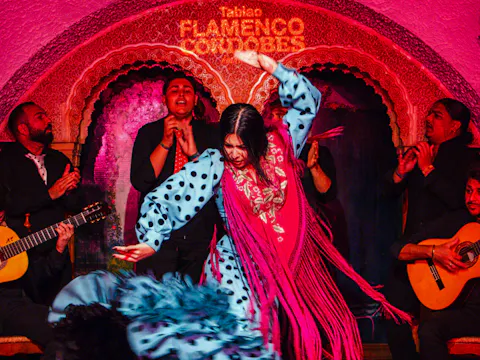
Top Awarded Flamenco Show Tablao Cordobes with dinner option
4.7 (5,268 reviews)
from €35Check dates
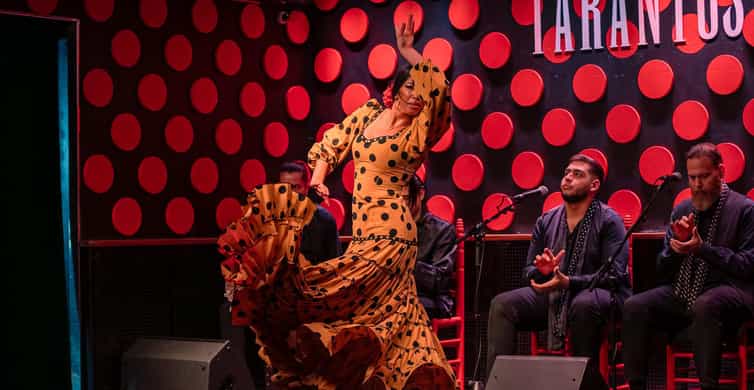
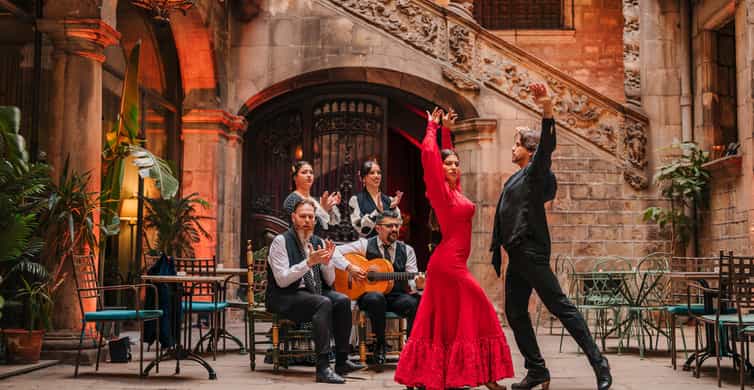
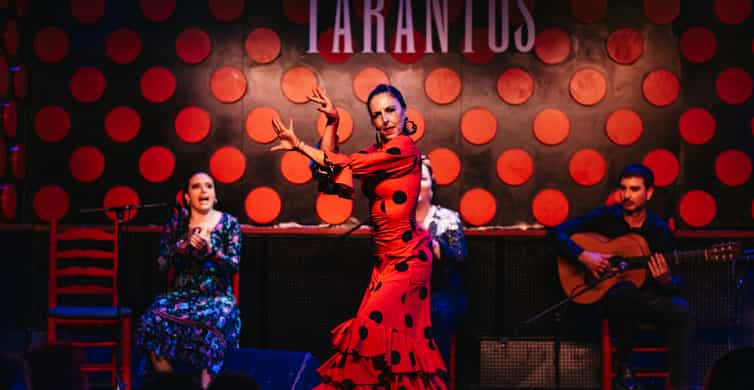

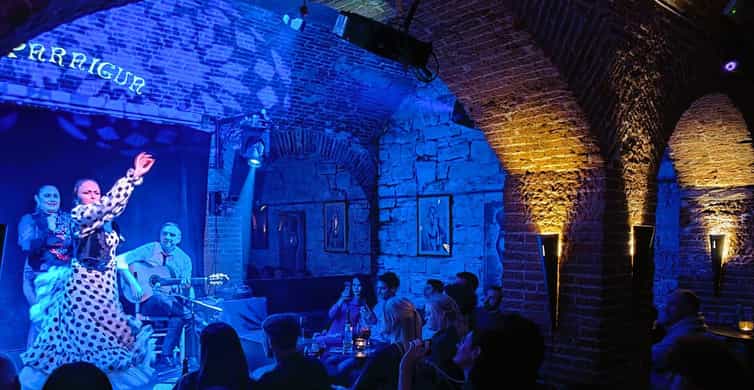
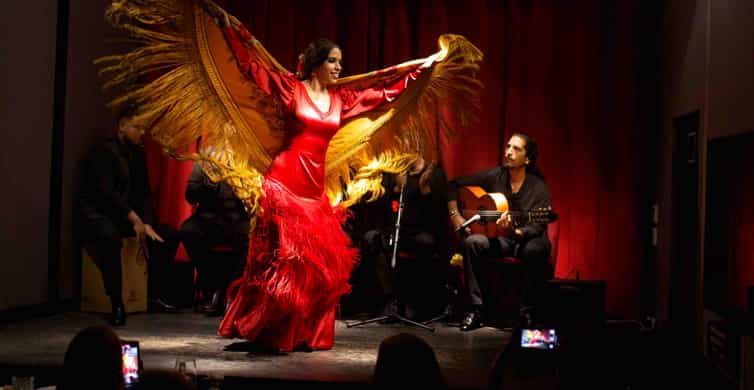
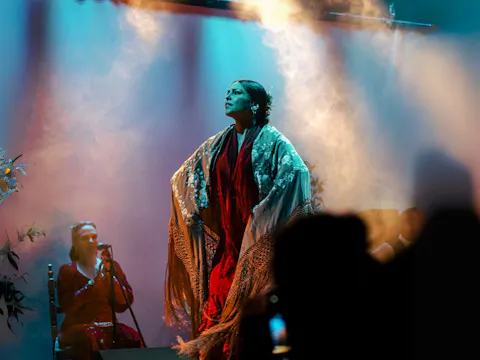
Barcelona: Exclusive Flamenco Show at El Paraigua with Drink
4.9 (429 reviews)
from €24.65Check dates

The essentials in 20 seconds
| Price from | €20 self-guided · €24 with audio guide or live guide · free under 10 |
|---|---|
| Visit hours | Daily 9:00–15:30 (occasional extended hours in summer and at Easter, announced each year) |
| Book ahead? | Yes. Capped time slots and language-specific departures; in high season they go days in advance |
| Duration | ~50 minutes for all three formats · 1 hr 30 min for the Palau Premium experience |
| Metro | Urquinaona (L1 red / L4 yellow), 3 minutes away · Plaça de Catalunya a 5–8 minute walk |
| Key fact | The only concert hall in the world on the UNESCO World Heritage list (inscribed 1997) |
Three ways in — and a fourth almost nobody considers
The Palau sells its visit in three formats that cover exactly the same rooms and take exactly the same time, roughly 50 minutes. What changes is who does the talking. And then there is the option that never appears on the visits page: buying a ticket to an actual concert.
| Format | Price | What you get | Best for |
|---|---|---|---|
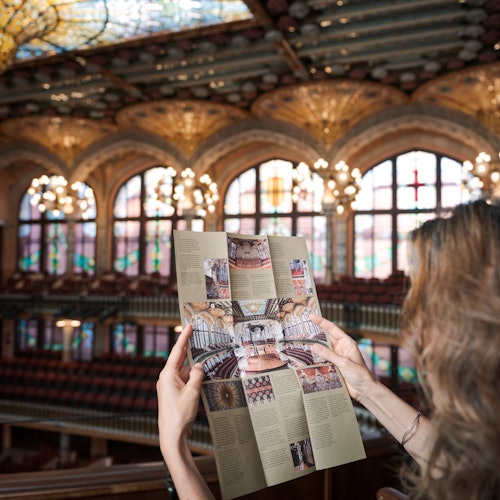
| Self-guided visit | €20 | Walk the route at your own pace with a brochure in 17 languages. Family pack €60 | Visitors who are there for the visuals and hate being herded. |
| Audio-guided visit | €24 | Audio guide downloaded to your phone with images, music, video and a 360° concert-night sequence. Own headphones required | Anyone who wants the full story without a group's timetable. |
| Guided tour | €24 · €20 (65+ and under 35) · €14 Catalonia residents | Professional guide. Stepping onto the stage subject to availability. Family pack €72 | People who want to ask questions and understand the building. |
| Palau Premium | €130 per person (groups of 2–9) | 90-minute guided tour, rooms closed to the public, pastries and a glass of cava. At 8:00 and 13:00 | Special occasions and serious architecture buffs. |
| Going to a concert | Varies by programme | A seat in the Sala de Concerts during a real performance | Anyone who wants to be in the hall rather than pass through it. |
Official rates per palaumusica.cat (August 2026). Under-10s go free on all three standard formats; visitors with a disability of 65% or more enter free, and those between 33% and 65% pay €10–12 depending on format. A 20% discount applies at the box office for large families, single-parent and foster families, and holders of the Barcelona Card, City Tours and Ruta del Modernisme passes. The official site notes an online booking surcharge of roughly €2 per ticket compared with box-office prices. Third-party products vary in price by date and language.
The fourth option: a short concert beats the tour
This is the least obvious advice on the page. The 50-minute visit does go into the Sala de Concerts, but you enter as a group, the seats are empty, the stage is dark and a guide is watching the clock. At a concert you sit in one of those seats for around 90 minutes with the room in use and — for an afternoon programme — with the skylight lit by the sun. The difference in feeling is enormous, and a cheap seat at a short recital often lands in the same price bracket as a visit ticket.
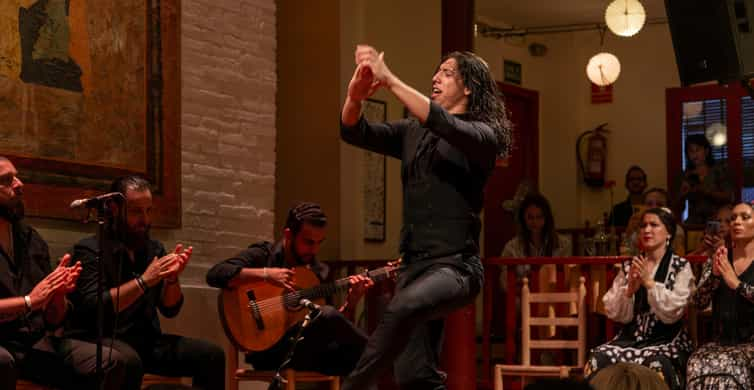
To be straight with you, though: not everything played in that hall is the Orfeó Català's own season. Two programmes coexist. One is the Palau's own — choral, symphonic and chamber music, cycles such as Palau 100 — with complete works and prices that run from the cheap upper seats to the expensive stalls. The other is visitor-facing shows such as Barcelona Guitar Trio & Dance, a 90-minute Spanish-guitar and flamenco-dance programme built around Falla, Lorca, Chick Corea and Paco de Lucía. It is very well played and it does take place in the good hall, but it is not the same thing as a season concert: it is a format designed for an audience passing through. Buy it knowing what it is. If you want serious flamenco, our tablao guide covers that separately, and the full live-music picture is in concerts in Barcelona.
What you actually see: the glass sun, the muses and the proscenium
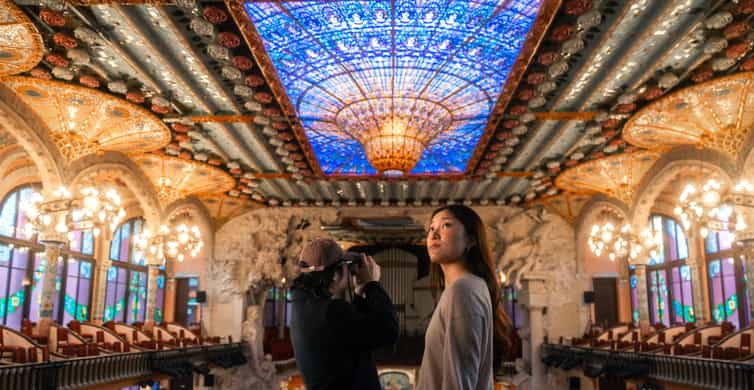
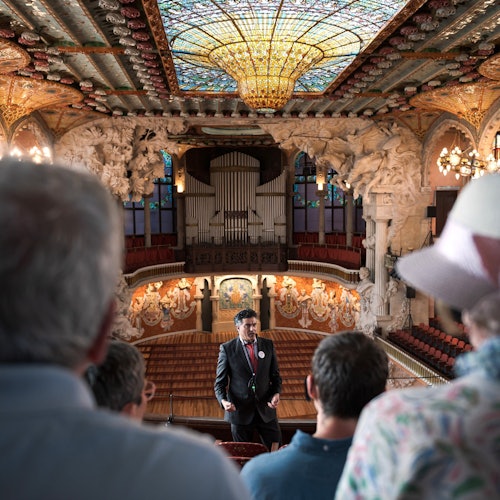
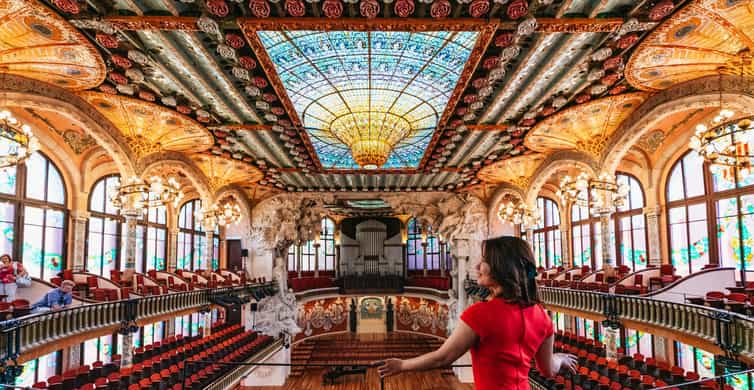
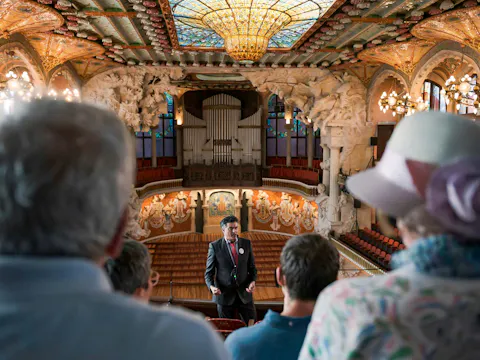
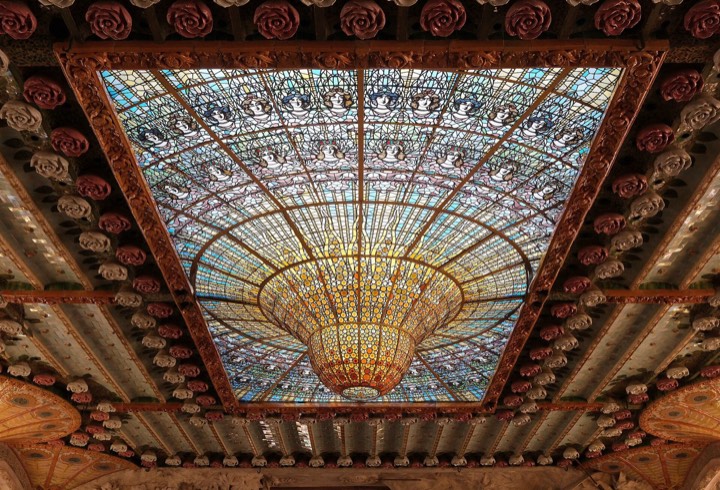
The route takes in the foyer, the staircase up to the hall, the Sala Lluís Millet — the first-floor lounge with its modernista lamp and the busts of the founders — and finishes in the Sala de Concerts. That is where everyone's head tips back:
- Antoni Rigalt's skylight. A stained-glass inverted dome that hangs from the ceiling like a drop of light: golds and ambers at the centre, blues around the rim, and a ring of female figures encircling the central disc. It is the element that turns a ceiling into a sun.
- The 18 muses behind the stage. Half sculpture, half mosaic: the torsos were carved by Eusebi Arnau, the lower halves are trencadís mosaic by Lluís Bru. Each figure holds a different instrument, and they are arranged so that when the stage fills with players, the real musicians appear to continue the line.
- The proscenium arch. On one side, Wagner's Valkyries charging above a bust of Beethoven; on the other, Anselm Clavé and a group of singers performing Les flors de maig. It is a statement of intent — high German music and Catalan folk song, the same sentence written with both hands. The arch was carved by Dídac Masana and Pau Gargallo, not by Domènech himself.
- The glass walls. The building's structural trick: Domènech i Montaner put the load on an exposed iron frame, which freed the walls, so he could build them out of stained glass. That is why light comes in from the sides as well as from overhead.
Which brings us to the line every guidebook repeats: that this is the only concert hall in Europe lit entirely by natural daylight during the day. The claim originates with the Palau itself and has been copied thousands of times since; we could not find an independent source that has audited every auditorium in Europe to confirm it, so treat it as a well-founded slogan rather than a verified statistic. What is genuinely checkable, and no small thing, is that the Palau is the only concert hall anywhere on the UNESCO World Heritage list, inscribed in 1997 alongside the same architect's Sant Pau modernista complex.
Timing: the hour for light, the hour for queues
- Book days ahead between June and September. Capacity is capped per slot and the mid-morning English and Spanish departures are the first to go. In low season you may find a same-day gap, but do not plan around it.
- First slot of the day (9:00–10:00). Fewer groups, more quiet. The trade-off: the sun is still low, so the skylight is not at full strength.
- Mid-morning for the glass. Between 11:00 and 13:00 the light comes in closer to vertical and the central disc of the skylight really ignites. That is exactly why those slots are the most in demand.
- Nothing after 15:30. The building switches to venue mode: rehearsals, get-ins, performances. If the afternoon is your only window, the answer is not a tour but a concert ticket.
- Arrive on time. The official site is blunt about it: once a tour has started, latecomers are not let in. Turn up five or ten minutes early with your code ready.
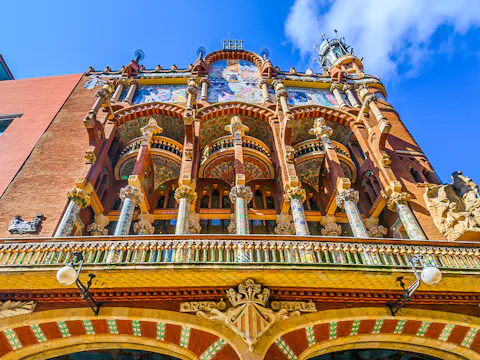
For the exterior shot, the corner of Carrer de Sant Pere Més Alt and Carrer del Palau de la Música is the spot: that is where Miquel Blay's sculptural group La cançó popular catalana (unveiled in 1909) sits, with Sant Jordi and a central female figure surrounded by ordinary Catalans. The street is narrow and the façade is backlit for much of the day; by mid-afternoon light bouncing off the building opposite fills it in.
How to pay less
- If you are under 35 or over 65: the guided tour drops to €20 instead of €24 — the price of the self-guided visit, but with a guide. It is the best value in the whole table.
- Residents of Catalonia: €14 on the guided tour according to the official site. Bring proof.
- Under-10s go free on all three standard formats, and the family packs (€60 self-guided, €72 guided) start paying off from three adults.
- 20% off at the box office for large families, single-parent and foster families, and holders of the Barcelona Card, City Tours and Ruta del Modernisme passes. Note the catch: it is a box-office discount, not an online one, so you trade a guaranteed slot for the saving.
- Combined tickets: Palau + La Pedrera for €42, Palau + Sant Pau modernista complex for €32. The second is the logical pairing, since both buildings are by Domènech i Montaner and share the same UNESCO listing.
- Before buying individual tickets, check whether a city pass works out cheaper — we break that down in the passes guide.
- There is no free visit, but the ground-floor foyer, box office, shop and café are open without a ticket. You will see the entrance mosaics and columns, not the hall.
Getting there and what to combine it with
Address: Carrer Palau de la Música, 4-6, 08003 Barcelona. It sits in the Sant Pere district just north of Via Laietana, in a tangle of lanes that means you arrive at the façade almost without seeing it coming.
Metro: Urquinaona (L1 red and L4 yellow) is the closest stop, about a 3-minute walk. From Plaça de Catalunya it is 5–8 minutes on foot along Carrer de Fontanella. Jaume I (L4) is roughly 8 minutes away if you are coming from the Gothic Quarter.
Box office and access: per palaumusica.cat, the box office opens Monday to Saturday 8:30–21:00 and Sundays and public holidays 8:30–15:30, plus two hours before each concert. There is no cloakroom and no left-luggage service, so travel light — with a large suitcase you will not be let in.
Accessibility: lifts to every floor, an adapted route, accessible toilets, a wheelchair loan service and reserved parking nearby. Tours with a sign-language interpreter or with audio description can be arranged if you ask in advance.
Photography: on sightseeing visits, stills for personal use are fine without flash or tripod; video and commercial use need permission. During concerts, no photos and no recording. The rules shift depending on the day and the room, so ask staff on arrival.
What to pair it with
The Palau is five minutes from Plaça de Catalunya and ten from El Born, so the morning builds itself: a 10:00 visit, coffee on Carrer de Sant Pere Més Alt, then down to Santa Maria del Mar and the Picasso Museum. To stay with Domènech i Montaner, take the metro out to the Sant Pau modernista complex. And Barcelona Cathedral is a ten-minute walk away.
One minute of context (you'll look at it differently)
The Palau was not built for tourists or for an elite. It was built for a choir. The Orfeó Català, founded in 1891, was a popular choral society at a moment when singing in Catalan was a way of declaring who you were. In 1905 they commissioned their headquarters from Lluís Domènech i Montaner — architect, politician and director of the School of Architecture — and by 1908 the hall was standing, squeezed onto a tiny plot hemmed in by party walls on almost every side. That constraint produced the building's two brilliant decisions: an exposed iron frame so no wall had to carry weight, and glass envelopes to steal light from an alley. What we now read as decorative exuberance began as engineering for an impossible site.
The building has changed more than it looks. Between 1982 and 1989 Òscar Tusquets and Carles Díaz led a restoration and extension that won the FAD architecture prize in 1989; a second phase, with Josep Palain, ran from 2000 to 2004 and added a new six-storey wing, an entrance square where a church once stood, and the Petit Palau, the 538-seat small auditorium that opened in 2004 and is now the natural home of chamber music. In other words, the façade you photograph and the square you photograph it from are not contemporaries. The big Sala de Concerts, with a little over 2,000 seats, is still the 1908 room.
If you arrive here straight from the Sagrada Família and Casa Batlló, the Palau will throw you slightly, and that is the point. Domènech i Montaner is the other modernisme: straight lines and ceramic brick, ornament applied in layers rather than Gaudí's organic form-making. Seeing both on the same trip is the best way to grasp that Catalan modernisme was never a style — it was an argument.
Frequently asked questions
How much does it cost to visit the Palau de la Música Catalana in 2026?
According to the official website (palaumusica.cat), the self-guided visit is €20 and both the audio-guided visit and the tour with a professional guide are €24. The guided tour has reduced rates of €20 for over-65s and under-35s and €14 for residents of Catalonia. Under-10s go free on all three.
What are the opening hours for visits?
Daily from 9:00 to 15:30 according to palaumusica.cat, because the building reverts to being a working auditorium in the afternoon. The Palau sometimes extends this in summer and at Easter, but it is announced year by year — check the official site before you go.
How long is the guided tour?
About 50 minutes, the same as the self-guided and audio-guided options. It covers the foyer, the main staircase, the Sala Lluís Millet and the Sala de Concerts; going up onto the stage depends on availability that day. The Palau Premium experience runs 1 hr 30 min.
Which languages are the tours in?
With a live guide: Catalan, Spanish, English, French, Italian, German and Chinese. The audio guide covers eight languages (Catalan, Spanish, English, French, Italian, Korean, German and Chinese) and you must bring your own headphones. The self-guided brochure exists in 17 languages.
Is the guided tour better than going to a concert?
It depends. The tour explains the building and reaches rooms that are shut during performances. A modestly priced concert instead puts you in a seat for around 90 minutes with the hall in use and the skylight lit. For similar money, many people enjoy it more that way. Ideally, if time allows, do both — here's the concert overview.
Do I need to book in advance?
Yes, particularly June to September and around public holidays: slots are capped and the mid-morning English and Spanish departures sell out first. Rehearsals and recordings can also alter the route, so booking ahead saves you a wasted trip.
Can you take photos inside?
On sightseeing visits, yes — no flash, no tripod, personal use only; video and commercial use require permission. During concerts, no photography or recording. The rules are adjusted often, so ask staff when you arrive.
Is the Palau wheelchair accessible?
Yes: lifts to every floor, an adapted route, accessible toilets, a wheelchair loan service and reserved parking nearby, per the official site. Tours with a sign-language interpreter or audio description are available on request. There is no cloakroom or left-luggage service.
Book your visit to the Palau de la Música Catalana
Slots are capped between 9:00 and 15:30 and split by language: in high season, booking a few days out is the difference between getting in and standing on the pavement. And if your only free window is the afternoon, check the concert programme instead.
Check dates and prices