Barcelona with kids: things to do, age by age
Barcelona works beautifully with children if you accept one rule: one big thing a day. Here is the plan by age band, the attractions that genuinely hold an afternoon, the real logistics of prams and mealtimes, and a three-day itinerary that doesn't end in tears.
ⓘ Note: this is not the official website This is not the official website of any attraction mentioned here. We are an independent guide: prices come from each venue's official website and bookings are processed by authorised partners such as GetYourGuide.Tickets and tours to book
21 options · Prices checked on 18 October 2026
No options match these filters.



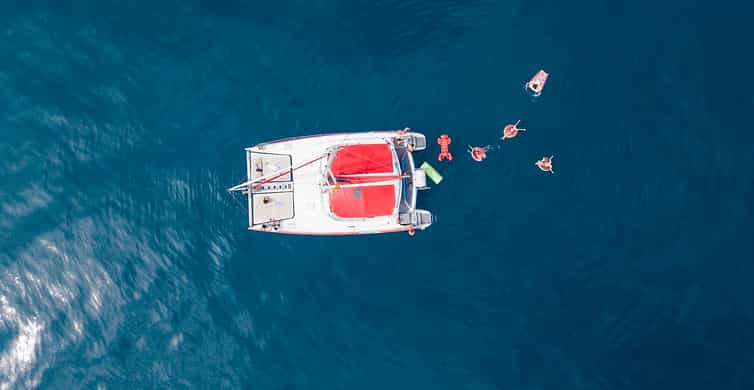
Barcelona: Sunset & Day Catamaran Cruise with Tapas & Drinks
4.5 (3,545 reviews)
from €27Check dates

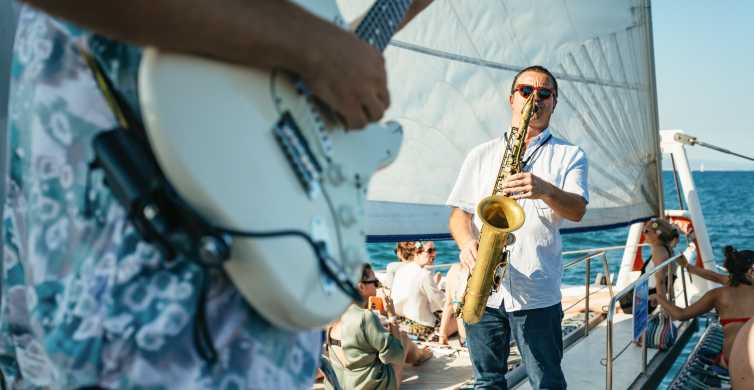
Barcelona: Catamaran Cruise with optional Live Jazz Music
4.7 (1,886 reviews)
from €17.50Check dates
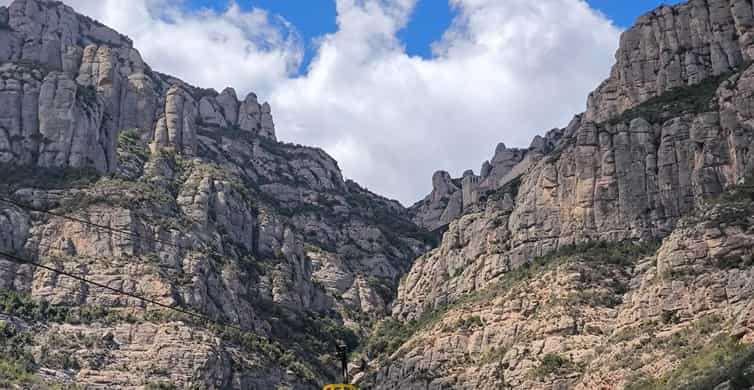
From Barcelona: Montserrat Monastery, Easy Hike, Cable Car
4.9 (1,335 reviews)
from €69.56Check dates

Salou: PortAventura and Ferrari Land 1, 2, or 3-Day Ticket
4.3 (2,726 reviews)
from €50.40Check dates
The essentials in 20 seconds
| Kids go free | Sagrada Família, under 11 · Park Güell, under 7 · CosmoCaixa, under 16 · TMB metro, under 4 |
|---|---|
| Rainy-day plan | CosmoCaixa (€8 adult) and its Flooded Forest; then the Aquarium and the immersive museums |
| Sunny-day plan | Beach in the morning, siesta back at the flat, Magic Fountain or a park once the sun drops |
| Realistic pace | One big attraction a day plus one unplanned afternoon. Two monuments back to back never works |
| Prams | Board metro and buses unfolded; but eight stations still have no lift, including Ciutadella | Vila Olímpica (L4) |
| Emergencies | 112 for everything (ambulance, police, fire) · a 24-hour duty pharmacy in every district |
The plan, by age band
The difference between a good family trip and a week of arguments is not the attractions — it is picking the ones that match the age you're travelling with. A two-year-old doesn't need Park Güell, he needs a fountain. A teenager doesn't need the zoo, she needs a cable car and wi-fi.
0–3: the city at knee height
With babies and nappers, forget queues and dark interiors. What works is open space with a boundary: Ciutadella park (rowing boats on the lake, the concrete mammoth, genuine shade), the Montjuïc gardens, and the Barceloneta sand first thing, before the sun bites. Barcelona has playgrounds on almost every square in the Eixample and Gràcia — free, fenced, and the answer to any dead hour.
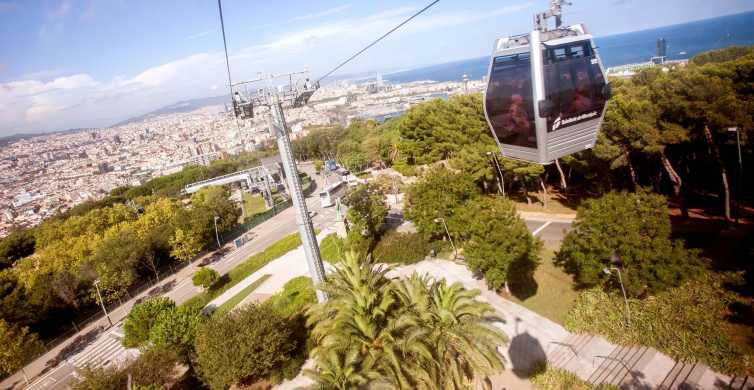
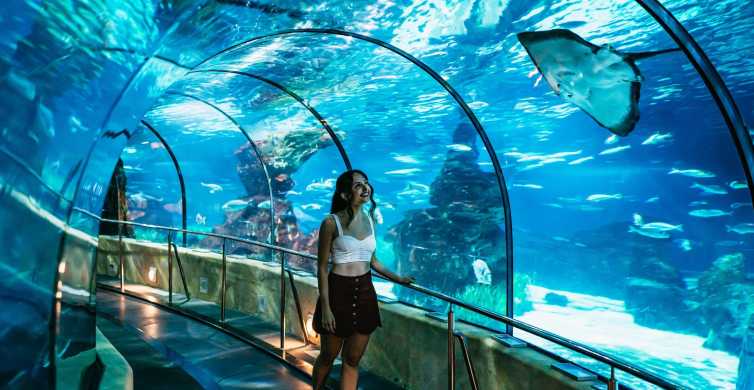
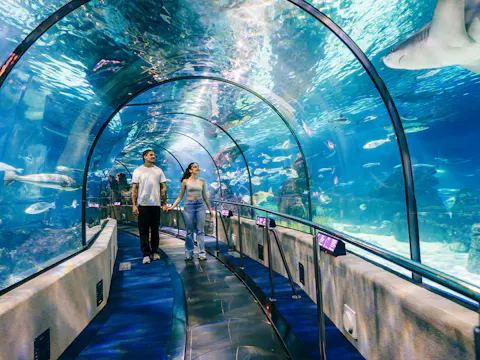
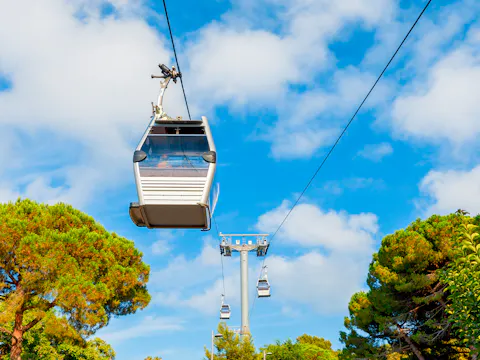
The Aquarium holds up well at this age because it is essentially a blue-lit corridor with big fish, and the Explora floor is built at toddler height. The Montjuïc cable car is a quiet win: a short ride in a cabin, big views, zero effort. And the zoo, inside Ciutadella, is walkable end to end with a pram.
4–9: Barcelona's golden age band
This is the bracket the city seems designed for. It takes in Park Güell told as a story (the dragon, the gingerbread house, the forest of crooked columns), Tibidabo with its century-old rides, all of CosmoCaixa, and the Chocolate Museum, which starts by handing you a chocolate bar.
It is also the perfect age for a themed tour. The Gothic Quarter dragon tour for families turns a walk through narrow lanes into a treasure hunt counting stone dragons, and the Park Güell family tour with map and stickers gives them a mission while the adults actually listen to the guide.
10 and up: let them choose
With tweens and teenagers, the best single tactic is handing over one decision a day. What lands: the immersive experiences and the Museum of Illusions, Camp Nou, the viewpoints at Tibidabo and the Carmel bunkers, a water park half an hour away by train, and an afternoon on a boat along the coast. The Sagrada Família also improves at this age if you add a tower: the spiral staircase on the way down makes far more of an impression than any stained glass.
The family attractions, ranked by reliability
This ranking is not about tourist importance. It is about the odds that the afternoon goes well.
- L'Aquàrium (Port Vell). The Oceanari tunnel — 80 metres under sand tiger sharks and rays — plus the Explora floor for little ones. €30 adult, €23 ages 5–10, €15 ages 3–4 and free below that, according to the official website (aquariumbcn.com). Two to three hours with children. Its one flaw: on a rainy day it is the entire city's plan B.
- Parc d'Atraccions del Tibidabo. Open since 1901, it is one of the oldest amusement parks in Europe still running, and it sits on the Collserola ridge 500 metres above the sea. The star is not the rollercoaster: it is l'Avió, a replica of the first plane to fly Barcelona–Madrid, swinging out over thin air since 1928, and the Talaia, a rotating arm that leaves you looking at the whole city from 550 metres up. Rates from tibidabo.cat: €39 adult (over 120 cm), €15.50 for children 90–120 cm, €11.70 for over-60s. If you're not doing the full park, the Àrea Panoràmica is free to enter and its Emblematic Rides Pass costs €21.50 adult (€9.10 for over-60s), funicular included. Getting there is half the fun: every ticket type includes the Cuca de Llum, the new funicular, and the TibiBus shuttles.
- CosmoCaixa. The science museum, up in the hills. Its Flooded Forest is a thousand square metres of rebuilt Amazon rainforest — real humidity, capybaras, fish seen from below the waterline — and it is, without argument, the best rainy-day plan in Barcelona. General admission is €8 (€7.60 online) and it is free for anyone under 16; workshops and the planetarium are extra. Budget half a day.
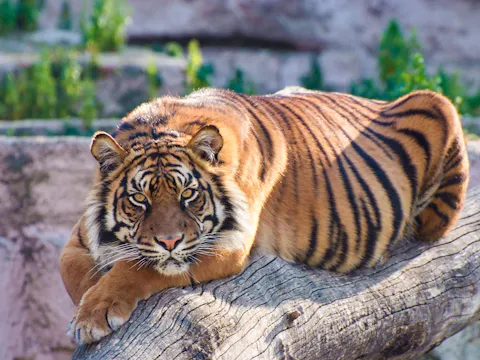
- Barcelona Zoo. Inside Ciutadella park, which lets you chain it to the rowing lake and the playground. Expect around €23 for adults and €13.90 for ages 3–12, free under 3, with a discount for booking online. An honest note: some tourism products still sell it "with dolphin show". That show does not exist. The city stopped programming cetacean performances in 2015, moved its last three dolphins to the Attica Zoological Park in Athens in 2020, and demolished the old Aquarama afterwards. What you are buying is a day ticket to the zoo.
- Park Güell. Gaudí is a superb storyteller for children if you frame him right. The dragon staircase, the hypostyle hall with its leaning columns and the endless wave-shaped bench work at five as well as at fifty. General €18, reduced €13.50 (ages 7–12 and over-65s), free for under-7s, per parkguell.barcelona. Timed entry with a cap of 1,400 visitors an hour: book.
- The beach. Four kilometres of sand a metre from the centre, with lifeguards in season, showers, toilets and playgrounds beside the promenade. For families the northern beaches — Nova Icària, Bogatell, Mar Bella — beat Barceloneta: wider, better equipped, and the water shelves gently.
- Sagrada Família. Describe it as a stone forest where the columns branch into the ceiling and the light changes colour with the hour, and you'll hold their attention for forty minutes. Free for children under 11 per sagradafamilia.org. Go mid-morning or late in the day, when the sun drives through the windows on one side or the other.
- Museu de la Xocolata. Small, warm, and built on one excellent idea: your ticket is a bar of chocolate. It occupies the former Sant Agustí convent in El Born and shows monumental chocolate sculptures alongside the history of cacao. A solid hour — ideal for filling a wet morning between El Born and Ciutadella.
- Poble Espanyol. A village-museum built for the 1929 Exposition on Montjuïc, with replicas of architecture from across Spain. What makes it a family day are its twenty-plus working craft studios: children can blow glass, throw clay or print fabric, with workshop fees charged separately from admission and typically running €3–€20. On Sundays there is theatre, magic and oversized games.
- Magic Fountain of Montjuïc. Water, light and music below the Palau Nacional, free and ticketless. It is the best possible end to a family day because it asks nothing of you: you arrive, you sit on the steps, done. Watch the calendar: it is seasonal — more nights and later in summer, fewer and earlier in winter — and it shifts several times a year. Check barcelona.cat on the day; the detail is in squares and parks.
One more mention: the immersive museums and the Museum of Illusions have multiplied the city's indoor options. With children aged 6 to 12 they are a reliable afternoon: about an hour, air-conditioned, and they photograph themselves.
When to come and how to split the day
- May, June and September are the ideal family window: warm water, streets without the August crush, and long days. Month-by-month detail is in when to visit.
- July and August force you to split the day. Between 14:00 and 17:00 the street is unworkable with small children — which is exactly what the siesta is for. Out at 9:00, back for lunch, sleep, and out again at 18:00 with the city bearable.
- The commercial siesta exists, but less than people claim. Major museums, attractions and city-centre shops do not close at midday. Neighbourhood shops do, and so do many restaurant kitchens, which shut between roughly 16:00 and 20:00.
- Rainy days: book before you leave the flat. CosmoCaixa, the Aquarium and the immersive museums fill the moment it clouds over, and turning up without a ticket means queueing with wet children.
- Avoid Monday for municipal museums — many close. The Aquarium, the zoo and Tibidabo are unaffected.
Family logistics nobody tells you about
Prams and the metro
Prams board the metro and buses unfolded, and the easy move is entering through the middle doors, where the reserved space is. The problem is not the carriage, it is the station. Roughly 95% of metro stops have a lift, but eight still don't, and the list matters when you're pushing a pram: Ciutadella | Vila Olímpica (L4) — the stop for the zoo and the park, which is the one that really stings — plus Clot (L1), Verdaguer (L4 and L5), Plaça de Sants (L1 and L5) and Urquinaona (L1 and L4). Several are under construction and the network isn't expected to be fully accessible until 2028. Workarounds: for Ciutadella, get off at Arc de Triomf (L1) or Barceloneta (L4). Every TMB bus is low-floor with a ramp, so when in doubt, take the bus.
What children pay
On public transport, under-4s travel free on TMB and need no ticket. From four they pay the full fare unless they are residents holding a T-16. Buy a T-Casual 10-journey card: it is multi-person, so one card covers everyone in the group who pays, validated once per person. Full detail in transport.
At monuments, the free-entry age varies a lot from venue to venue: under 11 at the Sagrada Família, under 7 at Park Güell, under 16 at CosmoCaixa, under 3 at the Aquarium and the zoo. Practical tip: even when the child doesn't pay, nearly every booking system still requires a €0 ticket in their name. Issue it — staff at the gate can and do ask.
Eating with kids in a city that has dinner at 21:00
This is culture shock number one. The fix isn't to fight the Spanish clock, it's to invert it: make lunch the big meal, between 13:30 and 15:00, when every kitchen is open and there's a good-value menú del día. In the evening, restaurant kitchens typically open around 20:00 or 20:30 and fill up at 21:30.
If you need to eat at 19:00, you have four dependable options: tapas bars, which serve at any hour; the pizzerias and burger places of the Eixample; the restaurants at Maremagnum and the Port Olímpic, which run continuous hours; and the beach chiringuitos in season. One note: hardly any neighbourhood restaurant will object if you order one dish to split between two children, and high chairs are reasonably common — though not in the small places in the Gothic Quarter.
Changing tables, toilets and playgrounds
Baby-changing facilities are not universal. The safe bets are the big museums (CosmoCaixa, the Aquarium, the Picasso Museum), the shopping centres (Maremagnum, L'Illa, Glòries), El Corte Inglés on Plaça Catalunya, and the larger markets. In small old-town bars, don't count on it. Public playgrounds are Barcelona's most underrated infrastructure: there's one on almost every Eixample block and every Gràcia square, all fenced and free. When the day goes sideways, there's one within five minutes of wherever you are.
Pharmacies and emergencies
Spain's single emergency number is 112: it covers ambulance, police and fire, is answered in several languages, and is free from any mobile. Pharmacies are marked by a green cross, and every district has at least one on 24-hour duty — the door of any closed pharmacy lists the nearest one that's open. Spanish pharmacists deal directly with fevers, insect bites and heat exhaustion without needing a doctor. Pack high-factor sunscreen: the August sun here is harsher than the sea breeze makes it feel.
How families save money
- Exploit the free ages. With children of 6 and 9, the Sagrada Família and CosmoCaixa are free for both of them, and Park Güell is free for the younger one. That materially changes the maths on a weekend.
- Buy online. Almost every family attraction — Aquarium, zoo, Poble Espanyol, CosmoCaixa — sells cheaper on the web than at the door, by somewhere between 5% and 20%.
- Do the sums on passes. Above three or four paid attractions per person a city pass starts to pay; below that it doesn't. The comparison is in city passes.
- The free list is long: the beach, the Magic Fountain, Ciutadella park, the Montjuïc gardens, the Carmel bunkers, the Laberint d'Horta (very cheap, and free on some days) and every playground in the city.
- Large-family cards: if you hold a Spanish or European large-family card, bring it. The zoo, CosmoCaixa and several municipal attractions apply a discount on presentation at the desk.
Prices checked at aquariumbcn.com, tibidabo.cat, cosmocaixa.org, parkguell.barcelona and sagradafamilia.org (August 2026). Barcelona Zoo and Poble Espanyol rates are quoted approximately: confirm them at zoobarcelona.cat and poble-espanyol.com before booking.
A 3-day family itinerary
Day 1 — Gaudí without wearing anyone out
Morning: Sagrada Família on an early timed slot (under-11s free). Early lunch in the Eixample. Afternoon: Park Güell with a booked slot, ideally from 17:00, when the heat drops and the light improves. To finish: walk down into Gràcia and eat on a square where the children can run about while the adults finish their meal.
Day 2 — Sea
Morning: the Aquarium at opening, while the Oceanari tunnel is still elbow-free. Lunch at Port Vell or the Maremagnum, which serve at civilised hours. Afternoon: the beach at Nova Icària or Bogatell, with the promenade playground as the closing prize. If it's overcast, swap the beach for the cable car and the Montjuïc gardens.
Day 3 — Pick altitude or science
If the weather holds: a full day at Tibidabo. Take the FGC train to Peu del Funicular and finish the climb on the Cuca de Llum — the funicular is included in the ticket and is half an amusement park in itself. If it rains or bakes: CosmoCaixa in the morning (free under 16), lunch, and an immersive museum in the afternoon. Either way, close with the Magic Fountain on Montjuïc, if the calendar has it running that night.
Frequently asked questions
Is Barcelona an easy city to travel with children?
Yes, with two caveats. In its favour: short distances, a beach inside the city, playgrounds on almost every square and a culture that welcomes children in any restaurant at any hour. Against it: July and August heat forces you to split the day in two, and eight metro stations still have no lift, so with a pram it pays to check the route before you go down.
Do children pay on the Barcelona metro?
Children under 4 travel free across the TMB network and need no ticket at all. From age 4 they pay the adult fare unless they live here and hold a T-16 card. For a visiting family the practical buy is a T-Casual 10-journey ticket shared between the adults and any children who pay: it is a multi-person travel card.
Which Barcelona monuments are free for children?
The Sagrada Família is free for under-11s according to sagradafamilia.org, and Park Güell for under-7s according to parkguell.barcelona (ages 7 to 12 pay the reduced €13.50). CosmoCaixa is free for anyone under 16. Even when entry is free, most booking systems still issue the child a €0 ticket: get it, because staff at the gate can ask for it.
Is there still a dolphin show at Barcelona Zoo?
No. Barcelona stopped programming dolphin performances in 2015 and in 2020 moved its last three cetaceans to the Attica Zoological Park in Athens; the old Aquarama was demolished afterwards. Some tourism products still carry the old title, but what you buy today is a plain day ticket to the zoo with no cetacean show.
What can you do in Barcelona with kids when it rains?
CosmoCaixa is the best answer: €8 for adults, free for under-16s, and home to the Flooded Forest, a thousand square metres of indoor Amazon rainforest. Behind it come the Aquarium, the Chocolate Museum and the immersive museums. Book before you leave the flat: on a wet morning the whole city has the same idea.
How do you eat with kids in a city that has dinner at 21:00?
Move the main meal to lunchtime, between 13:30 and 15:00, when every kitchen is open and there is a fixed-price menú del día. In the evening, restaurant kitchens generally open around 20:00 or 20:30; before that, tapas bars, pizzerias, the Maremagnum chains and the beach chiringuitos serve all day with no fixed hours.
Can I take a pram on the metro without folding it?
Yes: prams board metro and buses unfolded, ideally through the middle doors. The problem is not the carriage, it is the station. Around 95% of metro stops have a lift, but eight still do not, and one of them is Ciutadella | Vila Olímpica (L4) — the stop for the zoo and the park. With a pram, get off at Arc de Triomf (L1) or Barceloneta (L4) instead.
How many days do you need in Barcelona with children?
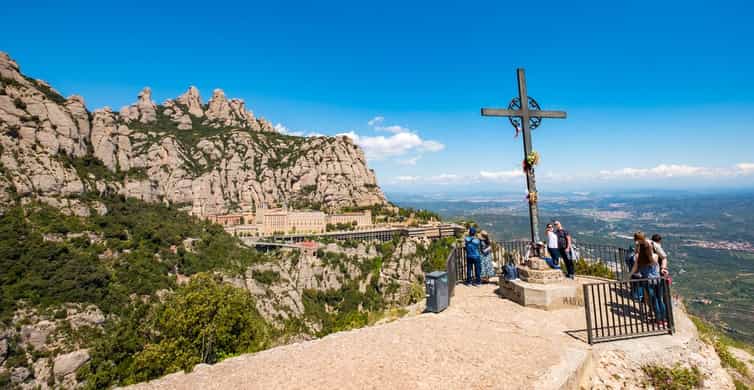
Three full days give you one Gaudí day, one sea day and one science or theme-park day without anyone melting down. A fourth adds a Montserrat day trip or a water park. The rule that saves family trips: one big thing per day, and keep the afternoon loose.
Book the family plan
Tours designed for children sell out sooner than general ones, especially during school holidays. Most offer free cancellation.
See dates and prices