Barcelona's squares and parks: a guide to everything you can see for free
Barcelona charges for almost everything that appears on its postcards, but its best layer — the squares, the historic parks and the gardens of Montjuïc — is still open to anyone who walks in. Here are the ten that earn the walk, one by one: what they are, when to go, which metro to get off at and what is next door. Plus the honest reverse: which famous name is really just a bus interchange with good branding.
ⓘ Note: this is not the official website This is not the official website of Barcelona City Council, the MUHBA or the Museu de Ciències Naturals. We are an independent guide: facts quoted come from barcelona.cat, museuciencies.cat and ticketshop.barcelona, and bookings are processed by authorised partners such as GetYourGuide.Tickets and tours to book
24 options · Prices checked on 18 October 2026
No options match these filters.
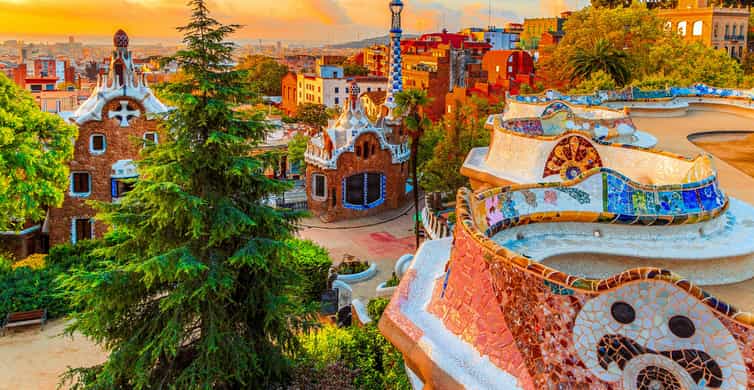
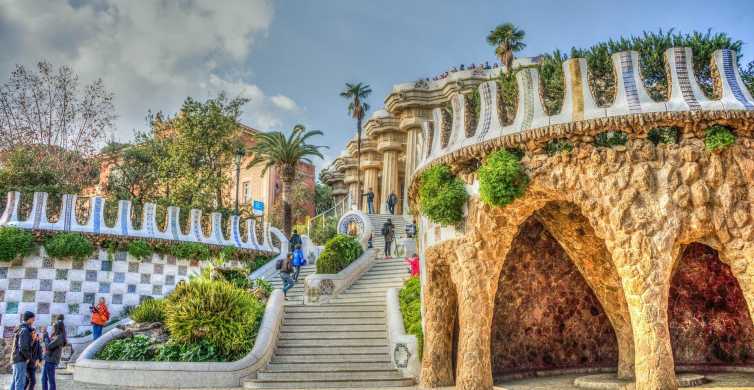
Barcelona: Gaudí’s Park Güell Tour with Fast-Track Ticket
4.7 (7,822 reviews)
from €25.99Check dates

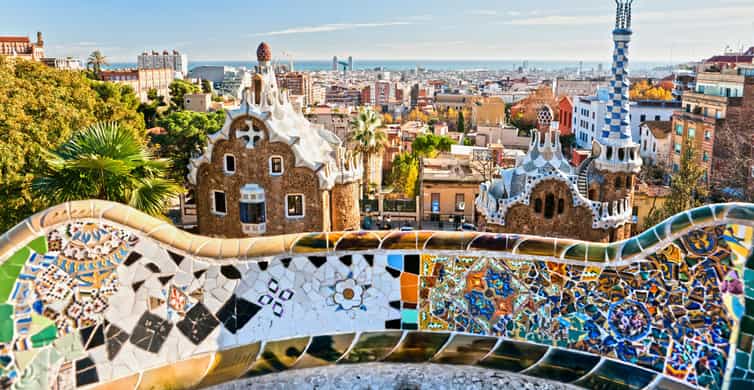
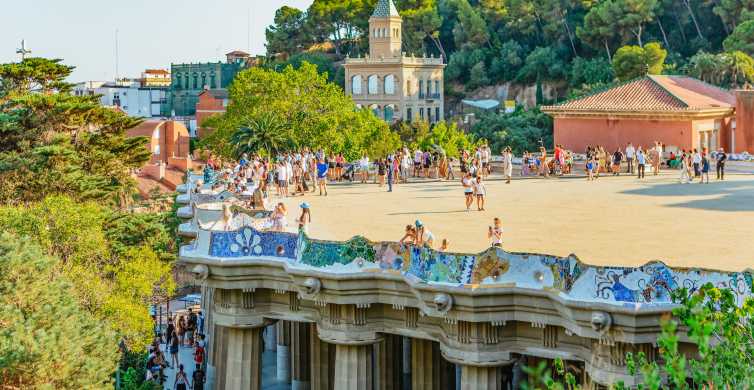
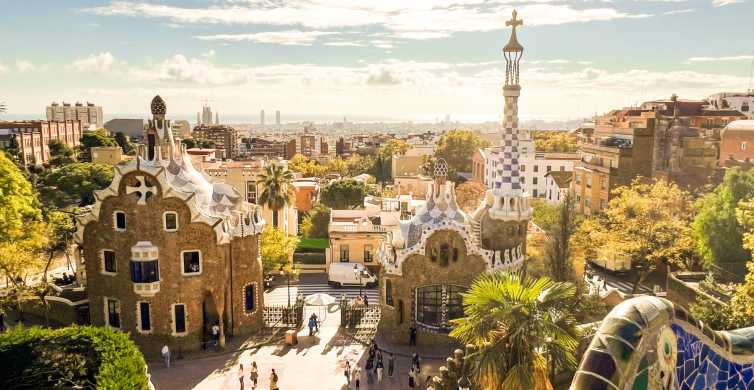
Barcelona: Park Güell & La Sagrada Familia Tickets and Tour
4.8 (1,723 reviews)
from €109Check dates
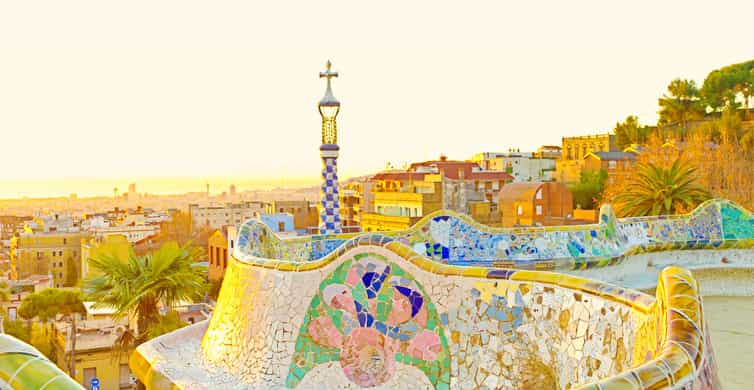

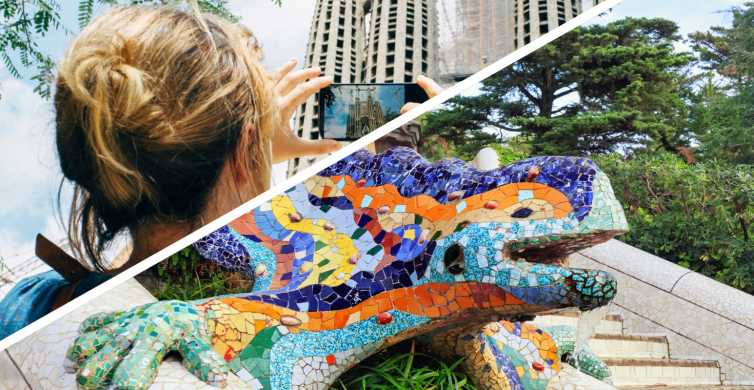
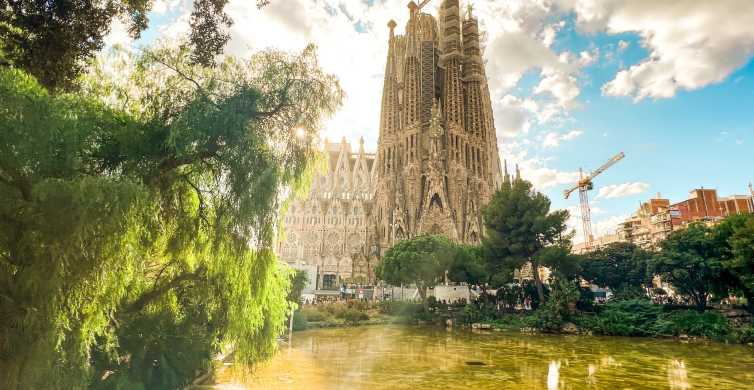
Barcelona: Sagrada Familia, Park Güell & Gothic Quarter Tour
4.7 (1,334 reviews)
from €66.75Check dates
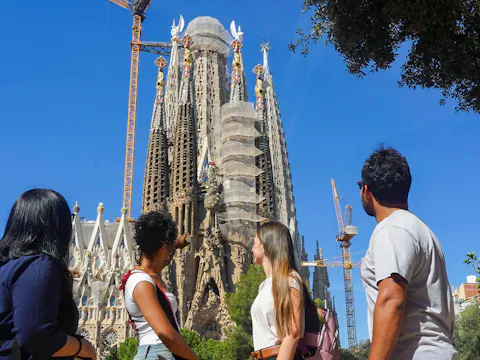
Combo: Park Güell + Sagrada Familia Skip-the-Line Guided Tour
4.5 (3,399 reviews)
from €89Check dates
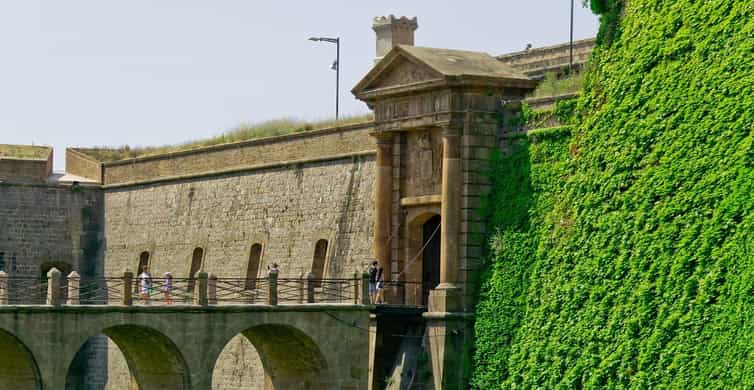
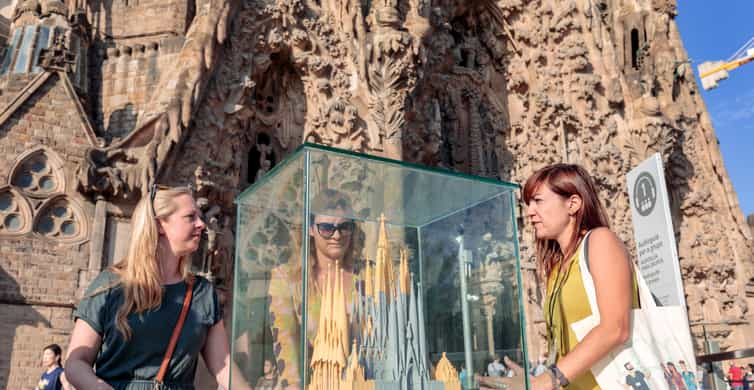

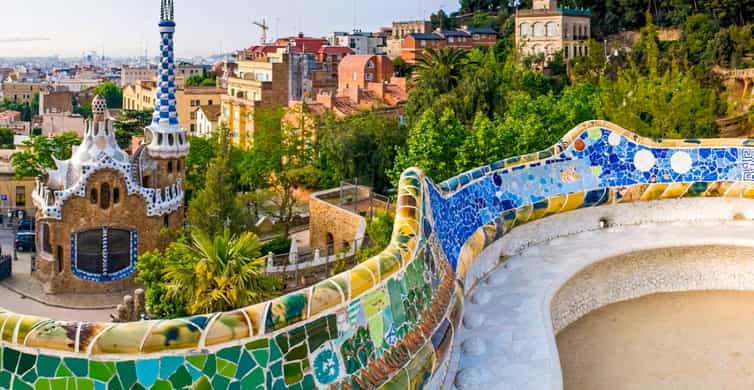
Barcelona: Park Güell Skip-the-Line Tour with Official Guide
4.7 (676 reviews)
from €27.50Check dates
The essentials in 20 seconds
| Price | Free almost everywhere. Only three charge: Laberint d'Horta (~€2.20), the Botanical Garden (€3.50) and the MUHBA at Plaça del Rei (€7) |
|---|---|
| The must-see park | Parc de la Ciutadella: Cascada fountain, rowing lake, Parliament and zoo across 17 hectares |
| The must-see square | Plaça Reial at 9 am (for Gaudí's lampposts) and Plaça del Rei at any hour |
| Best timing | Before 10 am in the Gothic Quarter; late afternoon on Montjuïc and at Turó de la Rovira |
| Magic Fountain | Running again since 24 September 2025 after almost three years dark; seasonal calendar — check barcelona.cat |
| Key metro stops | L1/L3 Catalunya and Espanya · L1 Arc de Triomf · L4 Jaume I and Barceloneta · L3 Mundet |
The central squares: four stops in one morning
The four squares below fit into a two-hour walk and cost nothing. They are listed from least to most interesting, which is the exact reverse of the order most visitors take them in.
- Plaça de Catalunya — the hinge. Five hectares of paving between the old city and the Eixample, laid out for the 1929 International Exposition, with fountains, sculptures — including Josep Clarà's La Deessa — and a legendary pigeon population. Let us be blunt: this is an interchange, not a destination. Metro lines L1, L3, L6 and L7 converge here, along with Rodalies trains to the Maresme coast and the airport Aerobús; La Rambla and Passeig de Gràcia both begin at its edges. Best hour: whenever you happen to pass, because you will. Metro: Catalunya (L1, L3). Nearby: El Corte Inglés, the Portal de l'Àngel shopping street and the walk up to the modernista block. One practical warning: this is textbook pickpocket territory, especially at the metro entrances.
- Plaça Reial — the courtyard with columns. Designed by Francesc Daniel Molina and opened in 1848 on the site of a Capuchin convent, this is the old city's only arcaded square built at monumental scale: neoclassical porticoes, tall palms, the Three Graces fountain in the middle and, flanking it, the two six-armed lampposts Antoni Gaudí designed in 1878 and which were installed on 24 September 1879. They were his first commission from the city council, almost half a century before he died with the Sagrada Família unfinished; look at the bases, where serpents coil around Mercury's caduceus. Best hour: 9 am, while they are sweeping and nobody is about. Metro: Liceu (L3). Nearby: La Rambla and Palau Güell, two streets away. After dark the square becomes something else — bars, live music, expensive terraces — and one of the city's worst spots for theft: a phone left on a table here does not stay long.
- Plaça del Rei — the genuinely medieval one. A stone rectangle enclosed by the Palau Reial Major, the watchtower of King Martí, the chapel of Santa Àgata and the 14th-century Saló del Tinell. There is not a single café terrace, and that is precisely why it works: it is the one square in the Gothic Quarter where you can hear your own footsteps. Beneath the paving lies the MUHBA excavation, several thousand square metres of Roman Barcino — streets, dye works, a garum factory — crossed on walkways. Price: €7 general, €5.20 reduced, free on the first Sunday of the month and every Sunday from 3 pm. Metro: Jaume I (L4). Nearby: the cathedral and the rest of the central museums.
- Plaça de Sant Felip Neri — the one to visit in silence. A small baroque square with an acacia and a fountain, hidden a minute from the cathedral. The church façade is pitted with holes, and not from age: on 30 January 1938, Italian aircraft allied with Franco bombed this spot. The first bomb fell shortly after nine in the morning on a shelter full of children; a second, roughly two hours later, struck the rescue teams. Forty-two people were killed, most of them children. A plaque has marked it since 2007. Best hour: not mid-morning on a weekday — there is a school on the square and the yard belongs to the pupils. Come first thing or late afternoon. Metro: Jaume I (L4) or Liceu (L3). This is a memorial, not a backdrop: look, read the plaque, lower your voice.
Plaça d'Espanya and the Magic Fountain: the stage set of 1929
If Plaça de Catalunya is the city's everyday hinge, Plaça d'Espanya is its stage set. Everything you see here was built for the 1929 International Exposition: the twin brick Venetian towers framing Avinguda Maria Cristina, the rising perspective towards the Palau Nacional — now the MNAC art museum — and the great circular plaza with its monumental fountain. Beside it stands the former Las Arenas bullring, converted into a shopping centre with a circular rooftop terrace you can reach free via the outside ramp: one of the easiest no-cost views along the Montjuïc axis.
The headline act is the Magic Fountain, the water, light and music show that the engineer Carles Buïgas designed for that same exposition and which debuted in 1929. And here we have to be straight with you, because plenty of guides are still out of date: the fountain sat dry for almost three years. It stopped in November 2022 during the drought emergency and used the pause for its biggest overhaul in three decades — a new control system and the replacement of 4,760 incandescent bulbs with roughly 680 LED units. Water restrictions were lifted in spring 2025 and the Magic Fountain ran again on 24 September 2025, during the Mercè festival.
Metro: Espanya (L1, L3, L8 and FGC). Nearby: the MNAC, Poble Espanyol, the Montjuïc gardens and the cable car up to the castle. With children or a tight schedule, take the escalators running alongside Avinguda Maria Cristina — the slope is longer than it looks.
Arc de Triomf and Parc de la Ciutadella: the 1888 axis
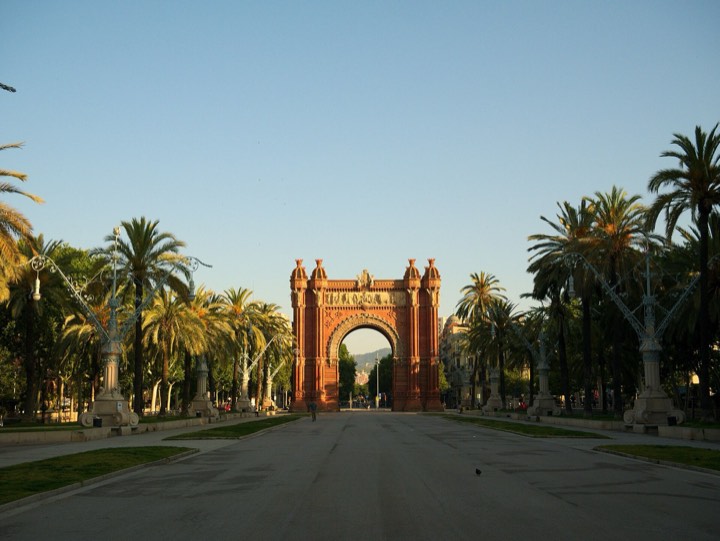
The Arc de Triomf commemorates no battle at all, and that is the point of it. Josep Vilaseca i Casanovas raised it in 1888 as the entrance gate to the Universal Exposition, which is why it is built of exposed red brick rather than noble stone: it is an arch of welcome, in a Moorish-revival vocabulary, with glazed ceramic and a front frieze — Barcelona rep les nacions by Josep Reynés — in which the city literally receives its guests. It stands about 30 metres tall and, unlike its cousins in Paris or Rome, was planted in the middle of a tree-lined promenade with no traffic circling it.
That promenade, Passeig de Lluís Companys, is half a kilometre of plane trees, benches, skaters and runners leading straight into the park. Walk it: it is the best urban transition in the city and the reason the arch makes sense where it stands. Best hour: early morning, when the eastern sun hits the red brick full on and there is no queue of people taking the same photo. Metro: Arc de Triomf (L1).
At the far end begins Parc de la Ciutadella, and with it a less comfortable history: this was the site of the military citadel Philip V ordered built after the defeat of 1714, flattening an entire neighbourhood so the city could be watched from within. Barcelona spent a century and a half campaigning for its demolition; from 1869, Josep Fontserè turned the cleared ground into the city's first great public park. What to look for:
- The Cascada fountain. Built between 1875 and 1888 to Fontserè's overall design and inaugurated in 1881. Behind the theatre of rocks, grottoes and bronze quadrigas sits a water tank that fed the park's lakes — and the structural calculations for it were signed by Antoni Gaudí while he was still an architecture student, working with Fontserè on the hydraulic side. It is, quite literally, the first Gaudí you can touch in Barcelona, and it costs nothing.
- The rowing lake. Boats for a few euros per half hour, with the Cascada behind you. With children it is the best money spent in the park.
- The Parliament of Catalonia. It occupies the old arsenal of the Bourbon citadel, the one military building spared in the demolition. In front of it, the pond with Josep Llimona's sculpture El desconsol.
- Castell dels Tres Dragons. The café-restaurant Lluís Domènech i Montaner built for the 1888 Exposition, a pioneering piece of modernisme in exposed brick and iron. Beside it stand the Hivernacle and Umbracle, two iron-and-timber glasshouses that are the most photogenic corner of the park.
- The Barcelona Zoo entrance. It takes up the south-east corner and has its own ticket office: the park is free, the zoo is not.
On Sunday afternoons the park fills with drum circles, jugglers and people lying on the grass; mid-morning on a weekday it is quiet and full of the city's screeching monk parakeets. If you want the context delivered on the ground, there is a walking tour of Barceloneta and Ciutadella Park that ties the park to the old fishermen's quarter and the beach, ten minutes away on foot.
Gardens: Montjuïc, the oldest maze and the bunker viewpoint
Barcelona holds more garden than the street-level view suggests. These three — four, counting the viewpoint — are the ones worth a metro ride:
- Jardins de Laribal (Montjuïc) — free. Terraces, pergolas, tiled water staircases and shaded walks, laid out between 1917 and 1924 by the French landscape architect Jean-Claude Nicolas Forestier with Nicolau Maria Rubió i Tudurí. This is the city's canonical Mediterranean garden, with the Font del Gat pavilion and the Teatre Grec a short walk away. Best hour: the last two hours of daylight, when the sun comes sideways through the pergolas. Getting there: bus 55 or 150, or walk up from Poble Sec (L3 Paral·lel plus the funicular).
- Jardí Botànic de Barcelona — €3.50. On the southern flank of Montjuïc, between the Olympic Stadium and the castle, a contemporary garden opened in 1999 that gathers the floras of the world's five Mediterranean-climate regions: the Mediterranean basin, California, central Chile, South Africa and Australia. According to ticketshop.barcelona, general admission is €3.50, reduced (ages 16-29 and over-65s) €1.70, and it is free for under-16s; there is also free entry on the first Sunday of the month and on Sundays from 3 pm. The views over the Llobregat plain are worth as much as the plants.
- Parc del Laberint d'Horta — ~€2.20. The oldest surviving garden in Barcelona: begun in 1794 by Joan Antoni Desvalls, Marquis of Llupià, working with the Italian engineer Domenico Bagutti, and extended in the 19th century by his son with a romantic garden, a canal and a waterfall. At the top sits the clipped-cypress maze, which you can genuinely walk and genuinely get lost in for a while. Admission is around €2.20 general and about €1.40 reduced, and it is free on Wednesdays and Sundays; payment is usually card-only and capacity is capped, so arrive early on free days. Metro: Mundet (L3), then about ten minutes uphill on foot. It is far from the centre, and that is exactly why it is empty — the best change of air on this list.
- Turó de la Rovira, the Carmel bunkers — free. At 262 metres, a 1937 anti-aircraft battery that defended the city from bombing raids and later housed a shanty settlement until 1990. Today it is a MUHBA site and Barcelona's most complete 360-degree viewpoint: the sea, the Sagrada Família, Montjuïc and the Collserola ridge in a single turn. Now the important part: it closes at night, and has done since 2023 — in summer it typically opens around 9:00 and shuts about 19:30 — because drinking, litter and amplified music made it unbearable for the residents of El Carmel, who are still pressing for tighter controls. Come up by bus or on foot from metro L4 El Carmel, arrive well before closing, leave the speaker at home and carry your rubbish back down. This is a viewpoint inside a residential neighbourhood, not a rooftop bar.
A free day in Barcelona (a route that actually works)
This route costs nothing beyond a metro ticket, covers a thousand years of city and ends with a show. It is built for a spring or autumn day; in August, shift everything an hour earlier.
| Time | Where | Why then |
|---|---|---|
| 9:00 | Plaça Reial and Plaça del Rei | The Gothic Quarter still empty: Gaudí's lampposts with nobody in front of them, the medieval square in silence |
| 10:00 | Plaça de Sant Felip Neri | Before the school breaks for the yard; raking morning light picks out the marks on the façade |
| 11:00 | Arc de Triomf and Passeig de Lluís Companys | Red brick in full morning sun, then walk towards the park with the arch behind you |
| 11:30 | Parc de la Ciutadella | Cascada, Umbracle and an hour on a bench. With children, half an hour in a rowing boat |
| 14:00 | Lunch in El Born or Barceloneta | Ten minutes on foot; go for the set lunch menu rather than a tourist terrace |
| 16:30 | Jardins de Laribal (Montjuïc) | The hottest hours pass better under a pergola, and the afternoon light is the good light |
| 20:00 | Plaça d'Espanya and the Magic Fountain | Walk down Avinguda Maria Cristina and eat nearby. Check that day's calendar on barcelona.cat first |
Times are indicative. Magic Fountain days and hours are seasonal and can change without notice; verify on barcelona.cat.
What earns a detour, and what does not
There is a real difference between a place you go to and a place you go through. Bluntly:
- Worth a deliberate detour: Parc de la Ciutadella (a whole half-day in good weather), Parc del Laberint d'Horta (an hour of metro there and back, and still worth it), the Jardins de Laribal and Plaça de Sant Felip Neri.
- Worth the stop if you are already close: Plaça Reial and Plaça del Rei — five minutes each if you are walking the Gothic Quarter — the Arc de Triomf on your way to Ciutadella, and the free rooftop at Las Arenas if you find yourself at Espanya.
- Just an interchange: Plaça de Catalunya. It is an excellent hub and a mediocre square; do not build a morning around it. And Plaça d'Espanya too, unless you are heading for the MNAC, up Montjuïc, or to a confirmed Magic Fountain show — by day it is a very large roundabout with traffic.
The underlying reason is that Barcelona is a city of superb public space and expensive monuments. The big tickets — Sagrada Família, Casa Batlló, Park Güell — absorb your budget and your queueing time; the squares and parks absorb the good hours of the day and cost nothing. If money is tight, the formula that works is simple: pay for one or two of the headline sights, give the rest of your time to this free layer, and spend what you saved on eating well. And if you would rather have it explained while you walk, a guided tour of the park and the seafront quarter costs less than most museum tickets.
Frequently asked questions
Which are the most beautiful squares in Barcelona?
For architecture, Plaça Reial (arcaded, palm trees, Gaudí's lampposts) and Plaça del Rei (medieval, with not a single café terrace). For emotional weight, Plaça de Sant Felip Neri. For sheer monumental scale, Plaça d'Espanya. Plaça de Catalunya, by contrast, is mainly a transport interchange: you cross it rather than visit it.
Is the Magic Fountain of Montjuïc running in 2026? Which days?
Yes. The fountain was dark for almost three years — from November 2022 — because of drought restrictions and its biggest overhaul in three decades, and it started running again on 24 September 2025 during the Mercè festival. The calendar is seasonal: in summer shows generally run Wednesday to Sunday late in the evening, while in the colder months they drop back to Thursday to Saturday and start over an hour earlier, with maintenance breaks. Exact days and times change several times a year, so always check the city calendar on barcelona.cat before you go. It is free to watch.
Is Parc de la Ciutadella free?
Yes, the park is open and free, including the monumental Cascada fountain, whose hydraulic engineering a student Antoni Gaudí worked on. Only two things inside cost money: renting a rowing boat on the lake, and Barcelona Zoo, which occupies the south-east corner and has its own ticket office.
What is special about Plaça Reial?
Its two six-armed lampposts were Antoni Gaudí's first commission from Barcelona City Council: designed in 1878 and installed on 24 September 1879, decades before the Sagrada Família. Go around 9 am to see them without a crowd. At night the square changes character entirely: bars, live music, and one of the city's heaviest concentrations of pickpockets.
Can you visit the Turó de la Rovira bunkers?
Yes, and it is free, but since 2023 there is a night closure (in summer it typically opens around 9:00 and closes about 19:30) because parties, litter and noise made life impossible for residents of El Carmel. Get there by bus or walk up from metro L4 El Carmel. Go before closing time, leave the speaker at home and carry your rubbish back down: this is a viewpoint inside a residential neighbourhood, not a rooftop bar.
How much does Parc del Laberint d'Horta cost?
It is the only place in this guide with a ticket booth, and it is still cheap: around €2.20 general admission and about €1.40 reduced, with free entry on Wednesdays and Sundays. Payment is usually by card only and capacity is capped, so arrive early on a free day. Take metro L3 to Mundet.
What happened at Plaça de Sant Felip Neri?
On 30 January 1938, during the Spanish Civil War, Italian aircraft allied with Franco bombed the square. The first bomb fell shortly after nine in the morning on a shelter full of children; a second, roughly two hours later, hit the rescue teams. Forty-two people were killed, most of them children. The shrapnel scars are still visible on the church façade, and a plaque has commemorated the victims since 2007. This is a memorial site: visit quietly and do not treat it as a photo backdrop.
Is Plaça de Catalunya worth visiting?
As a destination, not really: it is a five-hectare paved expanse with pigeons, fountains and a lot of traffic. As a hub, it is essential: metro lines L1, L3, L6 and L7 meet here, along with Rodalies trains to the Maresme beaches and the airport Aerobús, and both La Rambla and Passeig de Gràcia start from it. Use it as a meeting point and a starting line, and keep an eye on your bag.
Walk Ciutadella with someone who can tell the story
The park and Barceloneta make far more sense with context: the Bourbon citadel, the 1888 Exposition and the old fishing quarter in a single walk. Free cancellation on most options.
See dates and prices