Barcelona: Sagrada Familia Entry Ticket with Audio Guide
4.6 (121,104 reviews)
from €33.80Check dates
May, June and September are the city's sweet spot — see the weather month by month
Barcelona doesn't really have a bad season — it has different ones. Below is the full twelve-month table: average highs and lows, sea temperature, rain days and crowd levels. Then comes the part that actually decides your trip: which month suits what you came to do, and how far ahead you need to book in each season.
ⓘ Note: this is not the official website This is not the official website of any weather service or of the attractions mentioned. We are an independent guide: the climate figures are long-term averages (not a forecast) and opening hours come from each landmark's official site. Bookings are processed by authorised partners such as GetYourGuide.24 options · Prices checked on 18 October 2026
No options match these filters.
4.6 (121,104 reviews)
from €33.80Check dates
4.8 (15,271 reviews)
from €73.80Check dates
4.6 (9,388 reviews)
from €52.80Check dates
4.7 (7,100 reviews)
from €39Check dates
4.8 (5,535 reviews)
from €52.80Check dates
4.7 (5,268 reviews)
from €35Check dates
4.7 (8,286 reviews)
from €10.25Check dates
4.8 (4,382 reviews)
from €59.25Check dates
4.9 (3,170 reviews)
from €85Check dates
| Month | Avg high / low | Sea | Rain days | Crowds | What's on |
|---|---|---|---|---|---|
| January | 14 / 6 °C | 13 °C | ~4 | Very low | Three Kings parade (5-6), sales, empty landmarks |
| February | 15 / 6 °C | 13 °C | ~4 | Low | Santa Eulàlia (12), Carnival, cheapest month alongside January |
| March | 17 / 8 °C | 13 °C | ~5 | Medium | Mobile World Congress spikes hotel rates; almond blossom |
| April | 19 / 10 °C | 14 °C | ~5 | Medium-high | Easter week (movable) and Sant Jordi on the 23rd: roses and book stalls |
| May | 22 / 14 °C | 17 °C | ~5 | High | Terraces in full swing, 14 hours of daylight, no mugginess yet |
| June | 26 / 18 °C | 20 °C | ~4 | High | Sant Joan on the night of the 23rd: bonfires and fireworks on the beach |
| July | 28 / 21 °C | 23 °C | ~2 | Peak | Driest, sunniest month; festivals, cruise ships and long queues |
| August | 29 / 21 °C | 25 °C | ~5 | Peak | Warmest sea of the year; Festa Major de Gràcia (mid-month) |
| September | 26 / 18 °C | 23 °C | ~5 | High | La Mercè, the city's patron festival, around the 24th |
| October | 22 / 14 °C | 20 °C | ~7 | Medium | Wettest month (~100 mm) and high season for cruise calls |
| November | 18 / 9 °C | 17 °C | ~5 | Low | The city belongs to locals again; prices in free fall |
| December | 15 / 6 °C | 15 °C | ~5 | Low (Christmas spike) | Fira de Santa Llúcia by the cathedral from late November |
Temperatures, sea and rain days: 1991-2020 reference-period climate averages compiled by climatestotravel.com from AEMET data, rounded. These are historical means, not a forecast — check aemet.es or meteo.cat in the days before you travel. Crowd levels are our own estimate based on the city's tourism seasonality.
If you had to pick blind, pick May, June or September. All three share what makes Barcelona work: highs of 22 to 26 °C — warm enough to walk all day without soaking your shirt, and to sit outside at ten at night — plenty of daylight, and a city that isn't yet in survival mode.
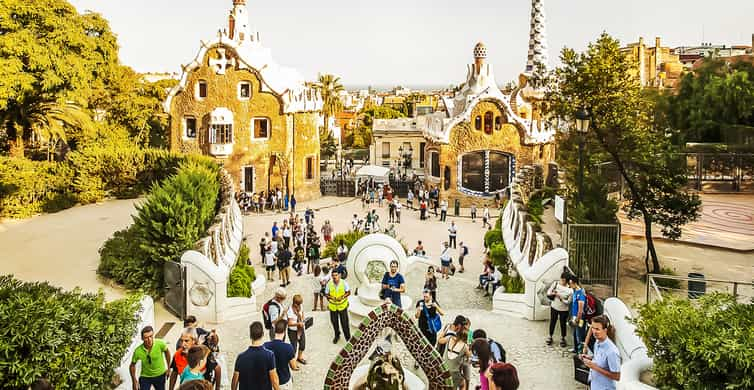
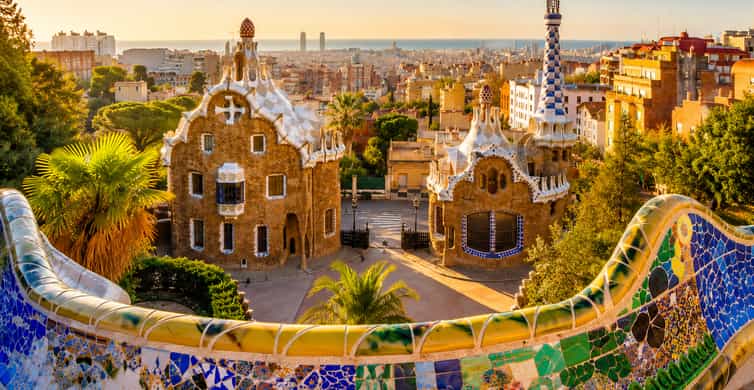
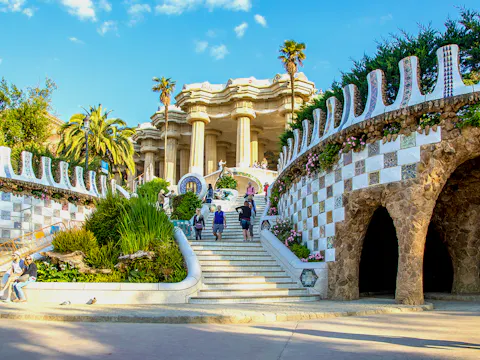
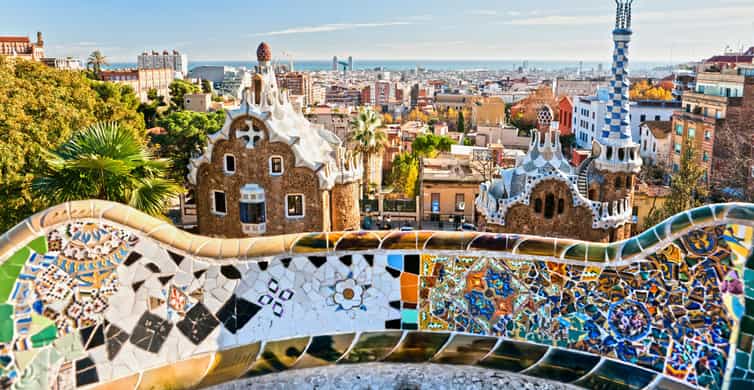
May is the prettiest month on land. Park Güell's planting is genuinely green, evenings stretch to nearly half past nine, and the humidity hasn't arrived. Its one flaw is the sea at around 17 °C: you can get in, but nobody stays in. It is also expensive — spring demand pushes hotel rates close to summer levels.
June is the best city-and-beach combination. The water sits near 20 °C, days are the longest of the year, and the first fortnight is still short of July's saturation. The night of Sant Joan, on the 23rd, is the wildest date in the calendar: bonfires, firecrackers and the whole city on the sand until sunrise. If you're sleeping near the beach that night, don't count on sleeping.
September is the pick of most people who know the city. The sea is still 23 °C — warmer than June — highs drop to civilised levels, and from the second week the European holidays end and the pressure eases. It also carries La Mercè, the city's patron festival, around the 24th: free concerts, castellers human towers, giant figures and the fire-run correfoc. It's the best week of the year to see Barcelona being Barcelona rather than a backdrop.
Nobody is going to tell you to skip summer if summer is when you get time off. But it helps to know what you're walking into. August is the hottest month: average highs of 29 °C, lows of 21 °C, and a coastal humidity that makes 29 °C feel like 34. Nights by the water rarely fall below 22-23 °C, so air conditioning in your accommodation stops being a luxury and becomes a requirement. July runs a degree cooler and far drier — barely 2 rainy days on average, the sunniest month of the year.
Then there's the human pressure. Barcelona recorded 26.1 million visitors in 2025 according to the city council, and the port closed that year with close to 4 million cruise passengers. Cruise ships don't spread that number evenly: they unload thousands of people at once, in the morning, and funnel them into La Rambla, the Gothic Quarter, the Sagrada Família and Park Güell between 10:00 and 15:00. That pattern you can dodge, even when you can't dodge the month.
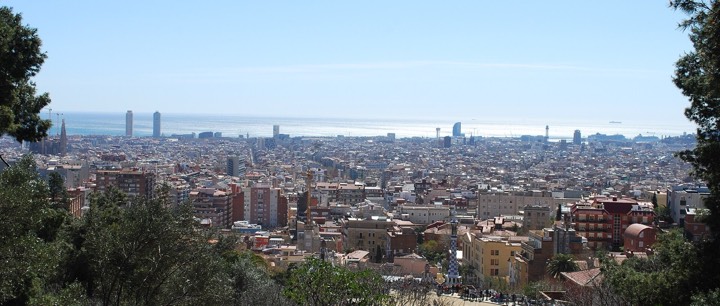
This is Barcelona's most underrated season and, for a certain kind of trip, its best. Average highs don't drop below 14 °C even in January, so this is jacket weather, not overcoat weather. It rains little — four or five days a month — and on a clear January day the light over the Mediterranean is the cleanest of the year.
What you gain is everything else: landmark tickets available almost same-day, hotels at half the price (January and February are the cheapest months of the calendar, with November right behind), restaurants you can walk into, and Gothic Quarter streets that feel like a neighbourhood again. Almost everything stays open — the major museums and monuments don't close for the season, they just trim their hours.
What you lose: the sea, at 13-15 °C, is out unless you're a winter swimmer; it gets dark around 17:30 in December, which cuts the photographic afternoon short; and closing times move earlier — the Sagrada Família shuts at 18:00 from November to February according to its official website (sagradafamilia.org), against 20:00 in high season. Schedule the big visits for the morning.
The shoulder months are the sweet spot for anyone who came to walk. April (19 / 10 °C) opens the terrace season, and the 23rd brings Sant Jordi, the day of the book and the rose: La Rambla and Passeig de Gràcia turn into an open-air bookshop, and it is probably the loveliest day of the year to be on the street. Watch out for Easter week, which moves between March and April and spikes prices whenever it lands.
October is the mirror image: the sea still at 20 °C, highs of 22 °C, golden light and fewer people than September. It is also the wettest month, at around 100 mm — but spread across six or seven days of short, heavy Mediterranean storms rather than weeks of drizzle. A packable rain jacket settles the question; the downpour arrives, lasts twenty minutes, and the city smells of wet stone afterwards. October's other side is that cruise season is still running hot, so the midday peaks downtown persist.
March and November are the hinge months, and the least predictable: they can hand you twenty degrees and blue sky, or a week of northerly wind. In exchange, the value for money is among the best of the year.
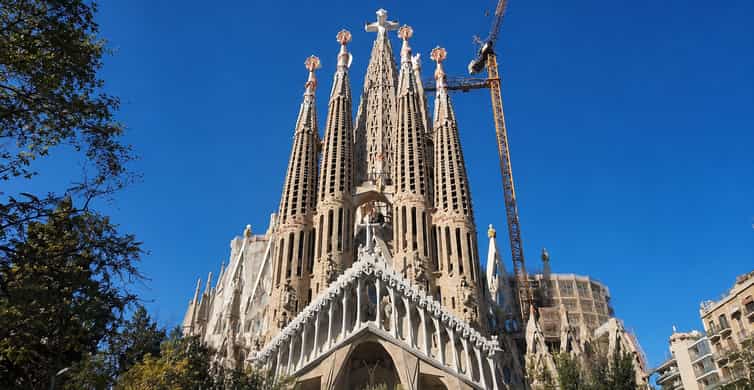
The weather decides what you pack; the season decides when you buy tickets. The two landmarks that break itineraries for lack of slots are always the same: the Sagrada Família, which sells online only, with a timed entry, and Park Güell, which caps the Monumental Zone at 1,400 visitors per hour.
| Season | Sagrada Família | Park Güell | Tours and day trips |
|---|---|---|---|
| Jul-Aug and holidays | 3-4 weeks (towers, earlier) | 2-3 weeks | 1-2 weeks; small-group, longer |
| Jun and Sep | 2-3 weeks | 1-2 weeks | ~1 week |
| Apr-May and Oct | 1-2 weeks | ~1 week | A few days |
| Nov-Feb | 2-5 days (towers, more) | 2-3 days | Next-day, except Christmas |
Estimates based on observed availability and on the conditions published by sagradafamilia.org and parkguell.barcelona. At Christmas, Easter and La Mercè, apply high-season lead times even if the month is otherwise quiet.
The fixed dates don't move, but the programmes do: check barcelona.cat in the weeks beforehand for exact times of individual events.
| Kind of trip | Best months | Why |
|---|---|---|
| Beach and swimming | June to September | Sea above 20 °C; the peak is August (25 °C) and September (23 °C) |
| Walking city and landmarks | April-May and October | 20-22 °C for full days on foot, good light without the mugginess |
| Tight budget | November to February | Flights and hotels at their lowest; no queues (skip Christmas and MWC) |
| Families with children | June and September | Usable beach, long days and fewer hours queuing in the sun |
| Photography | October to December | Low golden light all day, clean skies after the storms |
| Festivals and atmosphere | June (Sant Joan) and September (La Mercè) | The two nights when the entire city is out on the street |
Myth 1: the siesta. In central Barcelona, large shops, museums and monuments do not close at midday. Plenty of neighbourhood and family-run shops do, roughly from 14:00 to 17:00. What is real is the meal clock: lunch runs 13:30 to 15:30 and dinner starts from 21:00, with kitchens shut in between.
Myth 2: "everything's closed in winter". False. What changes is closing times — earlier from November to February at nearly every landmark — and the outdoor terraces, which retreat indoors. The cultural programme, by contrast, is busier than in August.
August is the hottest month: average highs of ~29 °C, lows of ~21 °C, and high humidity that makes it feel worse. Nights by the sea rarely drop below 22-23 °C. It's perfectly visitable if you invert the day: landmarks at opening, beach or siesta at midday, city again from 18:00. These are climate averages, not a forecast.
October is the wettest month of the year: ~100 mm across only 6-7 days on average. Short, heavy Mediterranean storms rather than continuous drizzle. With highs of ~22 °C and a 20 °C sea, it's still one of the best months for walking the city — pack a light rain jacket and go.
From June to October the water averages above 20 °C, peaking in August (~25 °C) and September (~23 °C). May and November sit around 17 °C — bracing — and from December to April the sea stays at 13-14 °C.
January and February, with November and early December close behind. The exception is Mobile World Congress week (1-4 March in 2027), when hotel rates beat even August. Also avoid Christmas, Easter week and Spanish long weekends.
Yes, for a city trip. Highs around 15 °C, tickets available almost same-day, cheap hotels and the Fira de Santa Llúcia market by the cathedral. Downsides: dark by 17:30, a 15 °C sea, and earlier closing times (the Sagrada Família shuts at 18:00 from November to February per its official site).
May, June and September: highs of 22-26 °C, a swimmable sea from June, long daylight and less pressure than midsummer. For walking and landmarks without the crush, April-May and October; for the beach, June and September.
No. Museums, landmarks, transport and city-centre shops run normally. What closes for the holidays are many family-run restaurants and neighbourhood shops, for a week or two. Check the specific place you had in mind on its website or social media.
June to September and on holiday weekends, 2-4 weeks ahead: the Sagrada Família sells online only with a timed slot and Park Güell caps the Monumental Zone at 1,400 people per hour. In spring and autumn 1-2 weeks is enough; November to February, a few days — though tower slots and the best-light times still sell out.
Every month has its own page with the real weather, what's on, how busy it gets, what it costs and what you need to book ahead.
Whichever month you choose, timed-entry tickets and weekend day trips are the first things to go. Free cancellation on most options.
See dates and prices