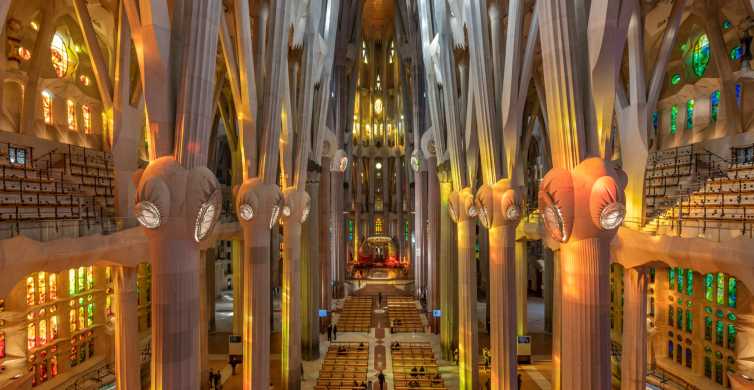
Barcelona: Sagrada Familia Entry Ticket with Audio Guide
4.6 (121,104 reviews)
from €33.80Check dates
January is Barcelona's cheapest and emptiest month — see the month's numbers
January is the month Barcelona gets handed back to the people who live in it. Average highs of 14 °C, barely four rainy days, a 13 °C sea nobody goes near, and landmarks you can book the night before. Here's the whole month: how the cold actually feels, what to pack, what shuts for Three Kings, and why the last three weeks are the cheapest window of the year.
ⓘ Note: this is not the official website This is not the official website of any weather service or of the attractions mentioned. We are an independent guide: the climate figures are long-term averages (not a forecast) and opening hours come from each landmark's official site. Bookings are processed by authorised partners such as GetYourGuide.24 options · Prices checked on 18 October 2026
No options match these filters.
4.6 (121,104 reviews)
from €33.80Check dates
4.8 (15,271 reviews)
from €73.80Check dates
4.6 (9,388 reviews)
from €52.80Check dates
4.7 (7,100 reviews)
from €39Check dates
4.8 (5,535 reviews)
from €52.80Check dates
4.7 (5,268 reviews)
from €35Check dates
4.7 (8,286 reviews)
from €10.25Check dates
4.8 (4,382 reviews)
from €59.25Check dates
4.9 (3,170 reviews)
from €85Check dates
| Figure | January | Context |
|---|---|---|
| Average high | 14 °C | The coldest month of the year, level with December on lows |
| Average low | 6 °C | Frost in the city is very rare; the cold is damp rather than sharp |
| Sea temperature | 13 °C | Annual low with February; it won't pass 20 °C again until June |
| Rain days | ~4 | One of the driest months, on a par with February |
| Daylight | ~9 h 15 min → ~10 h | Dark by about 17:30 on the 1st, about 18:00 by the 31st |
| Crowds | Very low | Only spikes from the 1st to the 6th, over the Three Kings holiday |
| Price level | Lowest of the year | Level with February; the peak sits in the first week |
Temperatures, sea and rain days: 1991-2020 reference-period climate averages compiled by climatestotravel.com from AEMET data, rounded, and identical to those in our month-by-month table. Daylight is an approximate astronomical calculation for Barcelona's latitude (41.4° N). These are historical means, not a forecast — check aemet.es or meteo.cat in the days before you travel.
The thermometer doesn't tell the whole story. A normal January day in Barcelona runs between 8 and 15 °C: in the sun, at midday, out of the wind, you walk comfortably in a mid-weight jacket and the scarf feels like overkill. Cross to the shaded side of an Eixample street and you lose four or five degrees in one step. Once the sun goes down, around 17:30, it drops again and the coastal humidity works its way into your clothes. That's why the cold here reads sharper than the same number of degrees in a dry inland city.
The real surprise is indoors. Plenty of flats, old bars and pre-war buildings have no central heating — they run on portable heaters or a reversible air-conditioning unit, and in a holiday apartment in a 1900s block you can be colder sitting still than you were walking. When you book accommodation for January, check explicitly that the heating works rather than assuming it exists. Museums, the metro and shopping centres, on the other hand, are properly warm, so you'll spend the day adding and removing layers.
The sea sits at 13 °C, its annual floor. Nobody swims except the wetsuited regulars you'll see off Barceloneta at first light. The beaches are still an excellent walk on a clear day — an empty promenade and a quality of light you won't get in July — but as a towel-and-swim plan, January doesn't exist.
January splits into two very different halves. Until the 6th the city is still in Christmas mode, with high-season prices and streets full of Catalan families. From the 7th, it empties.
January's strategy is August's in reverse. In summer you flee the midday heat; in January you spend the short daylight outdoors and bank the interiors for the end of the day. With darkness at 17:30, a museum that closes at 20:00 hands you two and a half hours of programme at exactly the moment there is nothing left to do outside.
What doesn't work in January, and is worth accepting before you buy the flight: swimming, long outdoor terrace afternoons, boat trips on a comfortable sea, and beach days. If your trip rests on any of those, pick another month.
January and February are the two cheapest months in Barcelona's calendar for flights and accommodation, with November just behind. The gap with August isn't a nuance: rooms can go for half the price, and European flights sit at their annual floor because nobody flies to the Mediterranean for the Mediterranean in winter.
Tourist pressure falls by the same proportion. Cruise season — which in summer dumps thousands of passengers at once into La Rambla, the Gothic Quarter and the Sagrada Família between 10:00 and 15:00 — is at its annual minimum. There are no European school holidays after Three Kings. And the congress that really moves hotel prices, Mobile World Congress, lands in early March (1-4 March in 2027), not January. The result is a city running at normal speed: you get into restaurants without booking, buy a landmark ticket the day before, and cross Ciutat Vella without dodging anyone.
| January | April | August | |
|---|---|---|---|
| Avg high / low | 14 / 6 °C | 19 / 10 °C | 29 / 21 °C |
| Sea | 13 °C | 14 °C | 25 °C |
| Rain days | ~4 | ~5 | ~5 |
| Crowds | Very low | Medium-high | Peak |
| Sagrada Família lead time | 1-2 days | 1-2 weeks | 3-4 weeks |
Climate data: the same 1991-2020 averages used in our month-by-month table. Crowd levels and lead times are our own estimates, based on the city's tourism seasonality and on observed availability.
One caveat: the first week isn't cheap. Between New Year's Eve and Three Kings, hotels hold high-season rates and Spanish domestic tourism fills the city. The drop comes on the 7th.
January's rule is a comfortable one: almost nothing needs planning — but the few things that do, still do.
Mildly cold and damp, not freezing. Averages are 14 °C by day and 6 °C overnight, so a normal January day runs between about 8 and 15 °C. In the sun and out of the wind a mid-weight jacket is enough; step onto the shaded side of the street and it drops four or five degrees instantly. The thing that catches visitors out is indoors rather than outdoors: many flats, old bars and pre-war buildings have no central heating and stay chilly.
No, unless you are a committed cold-water swimmer. The Mediterranean averages about 13 °C in January, its annual low alongside February, and it does not climb back above 20 °C until June. The beaches stay open and are a genuinely good walk on a clear day — runners, dog walkers and the odd wetsuit — but nobody is sunbathing.
6 January is a public holiday across Catalonia: almost all shops close, along with many neighbourhood restaurants and most offices. The major landmarks open, but several cut their hours — the Sagrada Família runs 9:00-14:00 on both 1 and 6 January according to its official website (sagradafamilia.org). 1 January is also a holiday. Plan museums and walking for those two days, and save the shopping for the 7th onwards, when the winter sales start.
Yes, if you are coming for the city rather than the coast. January is the cheapest and emptiest month of the year: tickets available one or two days ahead, hotels at a fraction of August rates, restaurants without a waiting list, and a Gothic Quarter that feels like a neighbourhood again. What you give up is the sea, outdoor terrace weather and long afternoons — it gets dark around 17:30 in early January.
Layers, not an arctic coat. A mid-weight windproof jacket, a thin jumper underneath, a scarf and closed comfortable shoes cover almost every day. Add a packable rain jacket — it only rains about 4 days a month, but the fronts arrive with wind — and clothes you can peel off, because museums and the metro are well heated and you will be in and out all day.
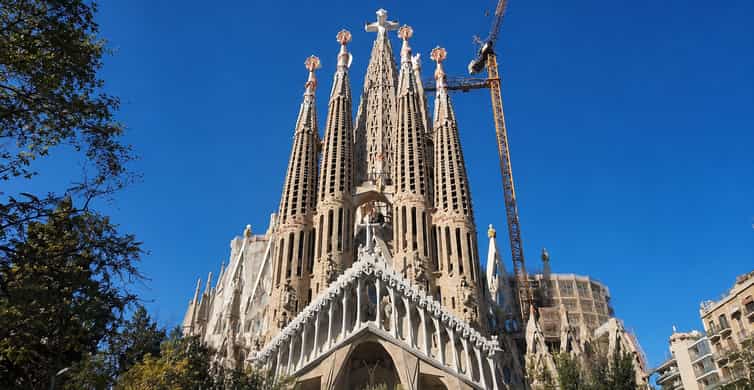
Barely. The Sagrada Família sells online only with a timed slot, so there is never a ticket-office queue; in January you will find availability one or two days ahead, against 3-4 weeks in July. From November to February it closes at 18:00 per its official website, and on 1 and 6 January it opens only from 9:00 to 14:00. Tower access and the first morning slots are the only things that still sell out early.
January and February are the two cheapest months of the year for flights and accommodation, with November just behind. There is one clear exception within January: from the 1st to the 6th, over the Three Kings holiday, rates stay high. From the 7th they fall sharply, and the last three weeks are the cheapest window in the entire calendar.
No. January averages around 4 rainy days, one of the lowest figures of the year alongside February and July. The typical pattern is a run of clear days with the cleanest light of the year over the sea, broken by a short front. These are 1991-2020 climate averages, not a forecast — check aemet.es or meteo.cat in the days before you travel.
This is the month when you can decide the plan the night before. Even so, check dates before you leave home — Sagrada Família tower slots and weekend day trips are the only things that sell out. Free cancellation on most options.
See dates and prices