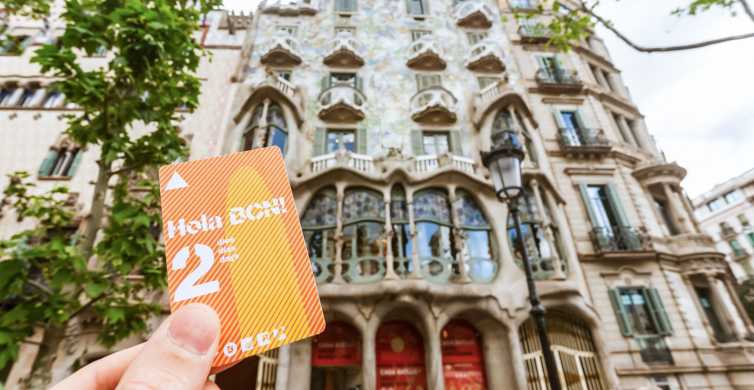
Barcelona: Sagrada Familia Entry Ticket with Audio Guide
4.6 (121,104 reviews)
from €33.80Check dates
August is the most misunderstood month of the Barcelona year — read the honest verdict before you book
August is the most misunderstood month in the Barcelona calendar. It is the hottest and the most humid, it holds the warmest sea of the year at 25 °C, and it is simultaneously the month when the city is fullest of tourists and emptiest of locals: half the family-run restaurant trade and a good share of neighbourhood shops pull the shutters down for the holidays. Here are the real numbers, what actually opens and what doesn't, and how to build a good trip if August is your only window.
ⓘ Note: this is not the official website This is not the official website of any weather service, festival or attraction mentioned. We are an independent guide: the climate figures are long-term averages (not a forecast) and prices, opening hours and festival dates come from official sites. Bookings are processed by authorised partners such as GetYourGuide.24 options · Prices checked on 18 October 2026
No options match these filters.
4.6 (121,104 reviews)
from €33.80Check dates
4.8 (15,271 reviews)
from €73.80Check dates
4.6 (9,388 reviews)
from €52.80Check dates
4.7 (7,100 reviews)
from €39Check dates
4.8 (5,535 reviews)
from €52.80Check dates
4.7 (5,268 reviews)
from €35Check dates
4.7 (8,286 reviews)
from €10.25Check dates
4.8 (4,382 reviews)
from €59.25Check dates
4.9 (3,170 reviews)
from €85Check dates
| Figure | August | What it means |
|---|---|---|
| Average high / low | 29 / 21 °C | The hottest month of the year; tropical nights of 22-23 °C by the sea |
| Sea temperature | ~25 °C | Its annual peak: warmer than July and warmer than September |
| Rain days | ~5 (about 65 mm) | Short, violent summer storms rather than drizzle; more than July |
| Sunshine | ~9 hours a day | An hour less than July: afternoon cloud starts to build |
| Daylight and sunset | 14 h 25 min → 13 h 12 min · sunset ~20:57 → ~20:11 | You lose more than an hour of daylight across the month |
| Relative humidity | ~71 % | 29 °C feels like 34-35; the city record is 37.5 °C |
| Crowds | Peak (annual maximum) | More visitors than ever, fewer residents than ever |
| Prices | Peak | A hotel can cost double what the same room costs in November |
Temperatures, sea, rain, sunshine and humidity: 1991-2020 reference-period averages compiled by climatestotravel.com from AEMET data, rounded, and consistent with the month-by-month table in this guide; the 37.5 °C record corresponds to August 2003 and August 2010 per the same source. Daylight and sunset: timeanddate.com. These are historical means, not a forecast. Crowd and price levels are our own estimate based on the city's seasonality.
Barcelona is not Seville: the sea rules out the 42 °C of inland Spain. What it has instead is the opposite problem — a low, sticky heat that never lets go at night. With highs of 29 °C, lows of 21 °C and average humidity of 71 %, the midday feels-like figure runs to 34-35 °C and the small hours by the water stay at 22-23 °C. That is the number everybody underestimates: in August you don't suffer at two in the afternoon, you suffer at three in the morning.
The other difference from July is storms. August collects roughly 65 mm across five days against July's 20 mm across two. These are not rainy days: they are twenty-minute downpours with thunder that break in the afternoon and leave the air even more humid. A packable rain jacket in the daypack settles it; an umbrella doesn't, because the storms come with wind.
The day that works in August is the same one that works in July, applied with more discipline:
In the bag: linen or technical fabric, a hat, sunglasses, high-factor sunscreen, a refillable bottle — the tap water is drinkable and the public fountains work — and a scarf or light shirt to cover shoulders and knees at the Sagrada Família and other churches. Add the packable rain jacket, which is dead weight in July and isn't in August.
This is the misunderstanding that defines the month. One story says Barcelona shuts down in August; the opposite story says nothing closes at all. Both are half wrong.
What runs normally — and at full tilt — is everything that lives off tourism: museums, landmarks, the metro and buses, department stores, the shops on Passeig de Gràcia, the port attractions, tours and day trips. August is their strongest month of the year; they are not going to close. Some museums even extend their summer hours.
What does close is the residents' city: family restaurants, wine shops, grocers, neighbourhood bakeries, the hairdresser, the workshop. They shut for one or two weeks — often the ones straddling 15 August — and many announce it with nothing more than a sheet of paper taped to the shutter. There is no official list. If you had bookmarked a particular bar in Gràcia, Sant Antoni or Poblenou, the only way to know is to check its social media or ring.
On top of that, 15 August is a public holiday (l'Assumpció): small retail closes almost completely that day and the mood is that of a long Sunday. Plan the 15th around museums, the beach or the Gràcia festival — not shopping.
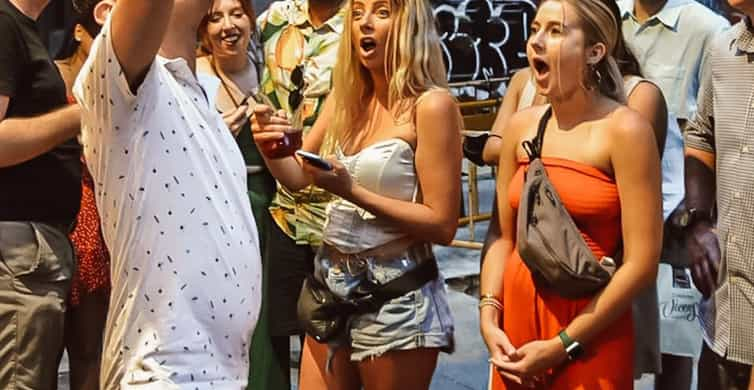
Festa Major de Gràcia, mid-August — about a week from the 15th, with the opening pregó the evening before. It is the most photogenic festival of the year and it is free. For months beforehand, each street's residents' committee builds entire sets out of recycled material — submarines, jungles, starry skies — and competes for the best-decorated street prize. Recent editions have had around twenty decorated streets and squares and hundreds of activities, all free, according to the Fundació Festa Major de Gràcia.
The honest part: from about 22:00, Gràcia's narrow streets turn into a human funnel with music on every corner and a bar in every square. It is loud, it moves slowly, and it is no plan for a pushchair or for anyone in a hurry. Go on a weekday, in the early evening, if what you want is the decorations and the photographs; go at night only if what you want is the party. And if you are sleeping in Gràcia that week, expect music until the small hours.
La Tomatina is not a Barcelona festival. Worth saying plainly, because half the internet sells it as though it were. The tomato fight happens in Buñol, province of Valencia, roughly 330 km away as the crow flies and about 380 km by road, on the last Wednesday of August and lasts one hour from around 11:00. From Barcelona it is a very long full-day trip: a pre-dawn departure and seven to eight hours on a coach in total. If you go anyway, wear clothes you can throw away and swimming goggles, not contact lenses. Details and operators are in the festivals and events calendar.
Beyond that, August holds no major music festivals: Sónar and Primavera Sound fall in June and Cruïlla in July. What it does have is a continuous open-air programme — summer cinema, concerts on Montjuïc — and nightlife at its annual peak.
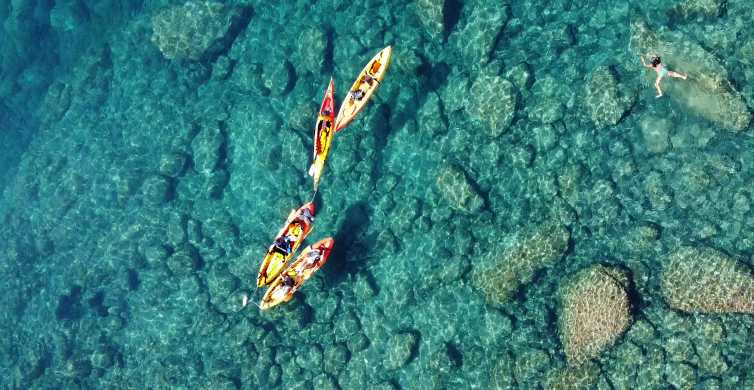
There is one thing August does better than any other month of the year, and that is the sea. At 25 °C the water is warmer than in July and warmer than in September; you walk in without a transition and can stay in for a long hour without getting cold. If your trip is built around swimming, August makes sense in spite of everything else.
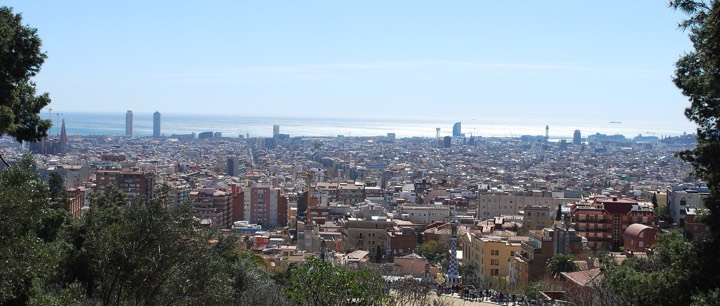
Barcelona recorded 26.1 million visitors in 2025 according to the city council and close to 4 million cruise passengers through the port. August shares the peak with July, and it is also when there are fewest residents on the street. The crush is hourly rather than constant: cruise ships unload in the morning and fill La Rambla, the Gothic Quarter, the Sagrada Família and Park Güell from 10:00 to 15:00. Choosing a Tuesday, Wednesday or Thursday changes the experience more than choosing the month does.
On price, August is the ceiling of the year apart from Mobile World Congress week in March: the same hotel can cost double what it does in November, and flights follow the same curve. There is no trick here — the only lever is buying early.
| What | Lead time | Note |
|---|---|---|
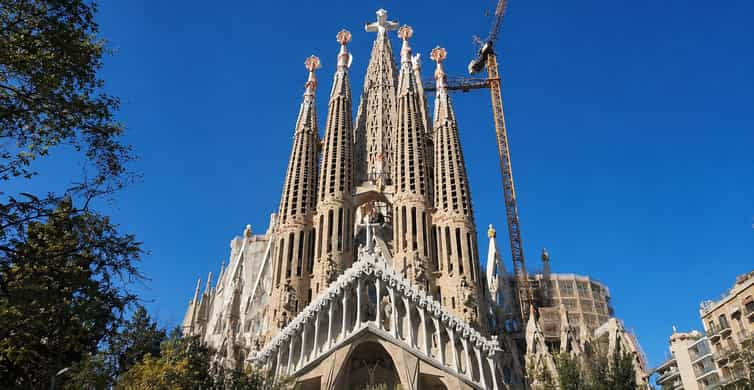
| Sagrada Família | 3-4 weeks | Online only with a timed slot; towers and best-light slots, earlier |
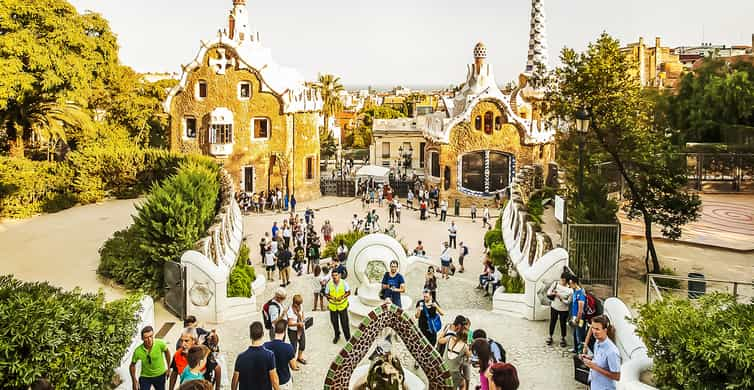
| Park Güell | 2-3 weeks | 1,400 people/hour cap in the Monumental Zone |
| Hotel during Gràcia week (from 15 Aug) | 2-3 months | And choose your neighbourhood: Gràcia has music until dawn |
| Sunset catamaran | 3-7 days | Longer on Friday and Saturday |
| Full-day trips | 1-2 weeks | Montserrat, Girona, the Costa Brava and Penedès sell out at weekends |
| La Tomatina day trip (last Wednesday of August) | Several weeks | Limited coach seats and a pre-dawn departure |
Estimates based on observed availability and on the conditions published by sagradafamilia.org and parkguell.barcelona. Festa Major de Gràcia and La Tomatina timing per the organisers and barcelona.cat; confirm each year's dates before booking. All individual options are at Barcelona tickets; if you plan four or more visits back to back, compare the city passes first.
If you can pick any month of the year, don't pick August. September gives you a sea that is effectively as good (23 °C), highs of 26 °C, the whole city open and — from the second week — considerably less tourist pressure, plus La Mercè. June offers the same deal with the longest days of the year. Both beat August on everything except water temperature.
If August is your only window — and for half of Europe it is — Barcelona works perfectly well. These are the five decisions that separate a memorable trip from an exhausting one:
And there is one thing August has that no other month matches: the nights. With 23 °C at midnight, a seafront terrace or a decorated Gràcia street at eleven in the evening are experiences that simply do not exist in April. August is uncomfortable by day and superb after dark. Build the trip accordingly.
It is the hottest month of the year: average highs of 29 °C, lows of 21 °C and average humidity around 71 %, which makes it feel like 34-35. The city's record stands at 37.5 °C, recorded in August 2003 and August 2010 (climatestotravel.com). What wears you down is not midday but the tropical night: by the sea it rarely drops below 22-23 °C before dawn.
No, but there are half-truths on both sides. Museums, landmarks, public transport and city-centre shops all run normally — August is their strongest month of the year. What does close are many family-run restaurants and neighbourhood shops, which take one or two weeks off and often announce it with nothing but a sheet of paper taped to the shutter. If you had a specific place in mind, check its website or social media before crossing town.
July, unless you are coming to swim. July runs a degree cooler (28 °C against 29 °C), is far drier (2 rainy days against 5, about 20 mm against 65) and keeps the whole city open. August wins on exactly one count, though an important one: the sea at 25 °C, its annual peak. If the trip will be spent between the sand and the water, August makes sense; if you plan to walk the city, take July or September.
In mid-August, for about a week from the 15th, with the opening pregó the evening before. Residents' committees decorate entire streets with recycled material and compete for the best-decorated prize: around twenty decorated streets and squares and hundreds of activities in recent editions, all free, according to the Fundació Festa Major de Gràcia. It is free and one of the loveliest things in the Barcelona year, but from about 22:00 the narrow streets of Gràcia become a human funnel with music on every corner. Go on a weekday, in the early evening, if what you want is the decorations.
Yes, but it is not a Barcelona festival. The tomato fight takes place in Buñol, in the province of Valencia, about 380 km away by road, on the last Wednesday of August, and lasts one hour from around 11:00. From Barcelona it is a very long full-day trip: a pre-dawn departure and seven to eight hours on a coach in total. If you go, wear clothes you can throw away and swimming goggles, not contact lenses.
This is its annual peak: around 25 °C on average, warmer than July (23 °C) and September (23 °C). You walk in without any transition and can stay in for an hour without getting cold. The lifeguarded swimming season runs from late May to mid-September, with lifeguards on duty 10:30-19:30 according to barcelona.cat. August does bring more storms than July: after a heavy downpour, wait a day before swimming.
If you can pick any month, do not pick this one: June and September give you a sea that is nearly as good with less heat, fewer people and the whole city trading. But if August is your only option, Barcelona works perfectly well on three rules: timed-entry tickets bought weeks ahead, accommodation with air conditioning in the bedrooms, and a split day — landmarks at 9:00, water or indoors from 13:00 to 17:00, city again from 18:00.
This is the tightest window in the calendar. Sagrada Família: 3-4 weeks, more for the towers, and it sells online only with a timed slot. Park Güell: 2-3 weeks, with a cap of 1,400 people per hour in the Monumental Zone. A hotel during Festa Major de Gràcia week (from 15 August): two to three months. Sunset catamaran: 3-7 days, longer at weekends.
This is the month with the tightest availability of the year: timed-entry tickets and sunset departures sell out weeks ahead. Free cancellation on most options.
See dates and prices