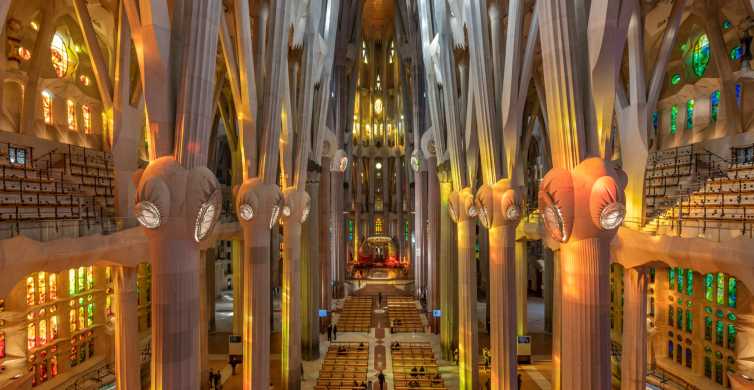
Barcelona: Sagrada Familia Entry Ticket with Audio Guide
4.6 (121,104 reviews)
from €33.80Check dates
The first half of December is Christmas at low-season prices — see the difference
December is two different trips on the same ticket. Until the 20th, Barcelona is decorated, quiet and still costs what it costs in November. From the 22nd it fills up, gets expensive, and enters the run of public holidays that trims museum and landmark hours. Here are the climate figures, the Catalan Christmas explained properly, and a table of exactly what closes on which day.
ⓘ Note: this is not the official website This is not the official website of any weather service or of the attractions mentioned. We are an independent guide: the climate figures are long-term averages (not a forecast) and opening hours come from each landmark's official site. Bookings are processed by authorised partners such as GetYourGuide.24 options · Prices checked on 18 October 2026
No options match these filters.
4.6 (121,104 reviews)
from €33.80Check dates
4.8 (15,271 reviews)
from €73.80Check dates
4.6 (9,388 reviews)
from €52.80Check dates
4.7 (7,100 reviews)
from €39Check dates
4.8 (5,535 reviews)
from €52.80Check dates
4.7 (5,268 reviews)
from €35Check dates
4.7 (8,286 reviews)
from €10.25Check dates
4.8 (4,382 reviews)
from €59.25Check dates
4.9 (3,170 reviews)
from €85Check dates
| Average high / low | 15 °C / 6 °C |
|---|---|
| Sea temperature | ~15 °C — winter swimmers only |
| Rain days | ~5 a month, in short showers |
| Daylight | ~9 h 20 min at the start of the month and ~9 h 10 min at the solstice (21 December); sunset around 17:25 all month |
| Crowds | Low from the 1st to the 20th; heavy occupancy from 22 December to 6 January |
| Prices | Low-season level in the first fortnight; annual peak at Christmas and New Year |
| Public holidays | 6 and 8 December (Spain), 25 (Nadal) and 26 (Sant Esteve, a holiday in Catalonia) |
Temperatures, sea and rain days: 1991-2020 reference-period climate averages compiled by climatestotravel.com from AEMET data, rounded — these are historical means, not a forecast. Check aemet.es or meteo.cat in the days before you travel. Daylight figures are astronomical calculations for Barcelona's latitude (41.4° N), rounded. Crowd levels and prices are our own estimate based on the city's seasonality.
December in Barcelona is not a northern winter. The average high is 15 °C and the average low 6 °C: on a clear, windless day in the sun you can walk around in a jumper. It rains about five days a month, almost always in short bursts. What separates it from a continental winter is the sea humidity: as soon as the sun sets — around 17:25 all month — the felt temperature drops several degrees at once, and the shaded side of a Gothic Quarter lane is never as warm as the pavement opposite.
A sensible bag holds a mid-weight jacket, two thin layers underneath, a scarf, comfortable shoes with grip and a packable rain shell. You do not need a winter coat, hat or gloves unless you feel the cold badly.
The cold you will actually notice is indoors. Many older flats in Ciutat Vella and the Eixample have weak central heating or none at all — the winter is short and it was never worth installing. With high humidity, a living room at 17 °C feels considerably worse than a sunny 14 °C street, and the same applies in some churches, small restaurants and neighbourhood shops. Two practical consequences: if you rent an apartment, look for the word "heating" in the listing and be sceptical of "air conditioning with heat pump", which in many buildings covers only the living room; and pack a thin thermal layer with indoors in mind, not the street.
The other constraint is light. The shortest day is 21 December, with a little over nine hours of daylight, and the earliest sunsets, a little before 17:25, fall in the first half of the month rather than at the solstice. That means running the day the opposite way to summer: landmarks and outdoors in the morning, interiors and Christmas lighting from late afternoon, when the illuminations start doing their job.
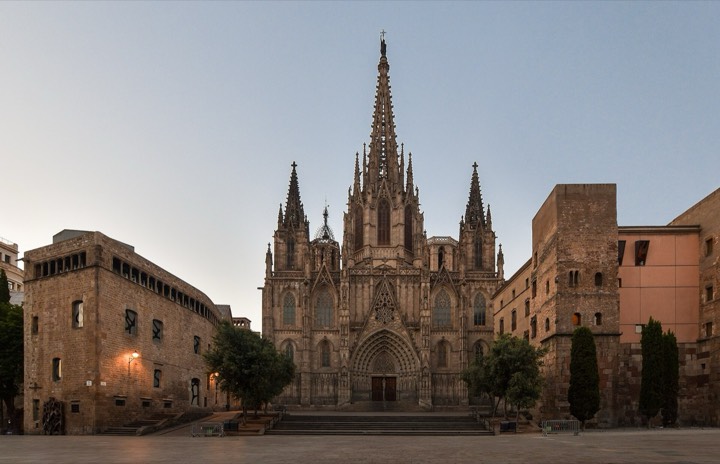
The Fira de Santa Llúcia fills Plaça de la Seu in front of the Cathedral, and it is one of the oldest Christmas markets in Europe: the 2025 edition was its 239th. It usually runs from late November to 23 December — in 2025, from 28 November to 23 December, 10:00-21:00, with around 300 stalls — and the exact dates of each edition are announced every autumn on barcelona.cat. Assume it closes on the 23rd and does not run through Christmas Eve.
Do not expect the German model of mulled wine and sausages. What is on sale here is nativity figures, moss and cork to build the crib with, fir trees, mistletoe, carol instruments and the two local oddities everyone ends up buying. It is worth understanding them before laughing at them, because they are serious tradition, not a gag:
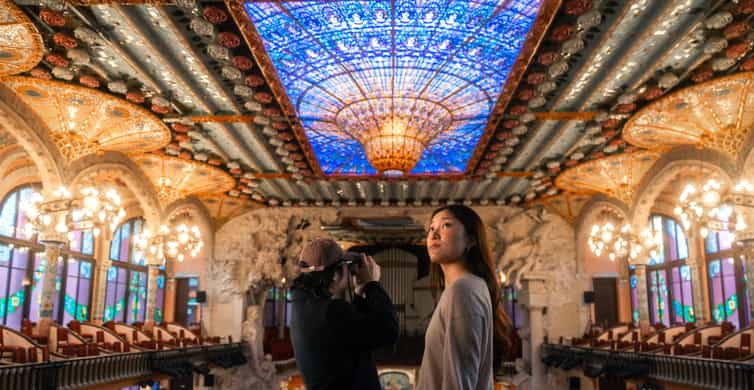
Beyond the market, the month is carried by the ornamental lighting, switched on from late November with Portal de l'Àngel, Passeig de Gràcia and Rambla de Catalunya as the showcase streets; the nativity scenes around the city, including the council's installation on Plaça Sant Jaume; and a season of Christmas concerts in venues such as the Palau de la Música, which sell out early.
New Year's Eve. The Spanish custom is twelve grapes, one for each chime of midnight, eaten at home, in a restaurant or on the street; choking on the last one is part of the ritual. The main public event takes place on Avinguda de la Reina Maria Cristina, beside the Magic Fountain on Montjuïc, with a light show and fireworks. If you want to eat out, note that restaurants work with fixed New Year's Eve menus, expensive and bookable weeks ahead. The full year's calendar is in our guide to Barcelona festivals and events.
With nine hours of daylight, how you split the day matters more than in any other month. The rule: outdoors from 9:00 to 15:00, interiors and lights from 16:00.
The gap between December's two halves is the most valuable thing on this page. From the 1st to the 20th, Barcelona is still in low season: hotels at November or January rates, landmark tickets available a few days out, restaurants you can get into — and the city already decorated, with the lights on and the market up since late November. Objectively, it is the best value of the whole winter.
From 22 December to 6 January the picture changes. European Christmas breaks and Spanish family travel arrive, hotels and apartments fill, and flight prices climb hard; New Year's Eve is the most expensive night of the year for both a bed and a table. Even so, it is nothing like August: the pressure concentrates on the centre and on the afternoons, and the museums still have room to breathe.
Two calendar details worth carrying in your head. 6 and 8 December are public holidays across Spain (Constitution Day and the Immaculate Conception) and often chain into a long weekend: more Spanish visitors, and small shops with the shutters down — though larger city-centre stores generally open during the Christmas trading season, and the commercial calendar is published annually, so do not simply assume. And 26 December, Sant Esteve, is a holiday in Catalonia but not in the rest of Spain, which catches a lot of visitors out: the city is still on holiday that day when Madrid is back at work.
This is the section that rescues the most December trips. No Barcelona landmark runs its normal timetable between 24 December and 6 January, and each applies its own rule: some close, some cut hours, some open as usual. There is no shared standard, so you have to check site by site. These are the verified cases:
| Date | Sagrada Família | Museu Picasso | The city |
|---|---|---|---|
| 24 Dec (Christmas Eve) | Check for reduced afternoon hours | Open (closed Mondays) | The Fira de Santa Llúcia has already closed (on the 23rd); shops shut early |
| 25 Dec (Nadal) | 9:00-14:00 | Closed | Shops closed; transport on a holiday timetable |
| 26 Dec (Sant Esteve) | 9:00-14:00 | Open (closed Mondays) | A holiday in Catalonia, not in the rest of Spain |
| 31 Dec / 1 Jan | 1 January, 9:00-14:00 | 1 January, closed | Grapes at midnight; the city starts late on the 1st |
| 6 Jan (Three Kings) | 9:00-14:00 | Open (closed Mondays) | Parade on the evening of the 5th; shops almost entirely shut on the 6th |
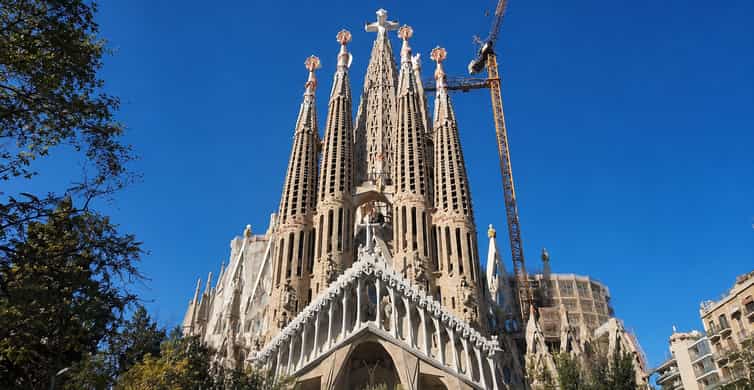
Sagrada Família hours per its official website (sagradafamilia.org): it does not close on those dates but cuts to 9:00-14:00 on 25 and 26 December and on 1 and 6 January; from November to February its normal closing time is 18:00. The Museu Picasso closes on Mondays and on 1 January, 1 May, 24 June and 25 December, per museupicassobcn.cat. Fira de Santa Llúcia dates: the 2025 edition ran 28 November to 23 December (barcelona.cat); each edition's dates are announced in the autumn. Always verify on the official site before you go.
Not properly cold. December averages a high of 15 °C and a low of 6 °C, with around 5 rainy days in the month. This is jacket weather, not overcoat weather, and on a clear day in the sun you can walk around in a jumper. What does get through is the sea humidity once the sun goes down and, above all, the cold inside poorly heated buildings. These are 1991-2020 climate averages, not a forecast.
Yes, if you are coming for the city rather than the beach. You get the Fira de Santa Llúcia beside the Cathedral, the city lights on from late November, nativity scenes all over town and a heavy cultural programme, with average highs of 15 °C. The drawbacks are specific: dark by about 17:25, a 15 °C sea, prices spiking from 22 December to 6 January, and several landmarks cutting hours or closing on 25-26 December and 1 and 6 January.
25 December is one of the four hard dates on the local calendar, along with 1 January, 1 May and 24 June. The Museu Picasso closes completely on all four, according to its official site (museupicassobcn.cat), and many municipal museums do the same. The Sagrada Família does not close: it cuts its hours to 9:00-14:00 on 25 and 26 December and on 1 and 6 January, per sagradafamilia.org. Shops shut almost entirely and public transport runs a holiday timetable. Always check the individual venue's own website.
The Fira de Santa Llúcia sets up in Plaça de la Seu, in front of the Cathedral, and usually runs from late November until 23 December. The 2025 edition ran from 28 November to 23 December, 10:00-21:00, with around 300 stalls. The exact dates of each edition are announced every autumn on barcelona.cat. Assume the market closes on the 23rd and does not run through Christmas Eve.
Two Catalan Christmas traditions that visitors mistake for a joke. The tió de Nadal is a log with stick legs, a painted face and a red barretina cap; children feed it every evening from early December and, on the 24th, sing to it and beat it with a stick so it "poops" nougat and small presents. The caganer is a nativity figurine, squatting with its trousers down, tucked into a far corner of the crib: documented from at least the 18th century, its meaning is agricultural — manure fertilises the soil and fertile soil means a good harvest. Both are sold by the hundred at the Fira de Santa Llúcia.
It depends entirely on the fortnight. From 1 to 20 December prices stay at low-season levels, close to November and January, with the city already decorated. From 22 December to 6 January flights, hotels and apartments spike, and New Year's Eve is the most expensive night of the year. If you can choose your dates, the first half of the month gives you Christmas at almost low-season prices.
With twelve grapes, one for each chime of midnight — the Spanish custom, followed at home, in restaurants or on the street. The main public event is held on Avinguda de la Reina Maria Cristina, beside the Magic Fountain on Montjuïc, with a light show and fireworks. Restaurants sell fixed, expensive New Year's Eve menus that need booking weeks ahead, and the metro usually extends its service that night — check tmb.cat.
A mid-weight jacket with layers underneath, a scarf, comfortable shoes with grip and a packable rain shell. You do not need a heavy winter coat, hat or gloves. What is worth packing is a thin thermal layer for indoors: Barcelona's cold is damp and many older flats have weak heating or none, so a living room at 17 °C feels worse than a sunny 14 °C street.
From 22 December to 6 January, Barcelona runs on high-season rules: timed tickets, fixed menus and trimmed holiday hours. Book before you travel. Free cancellation on most options.
See dates and prices