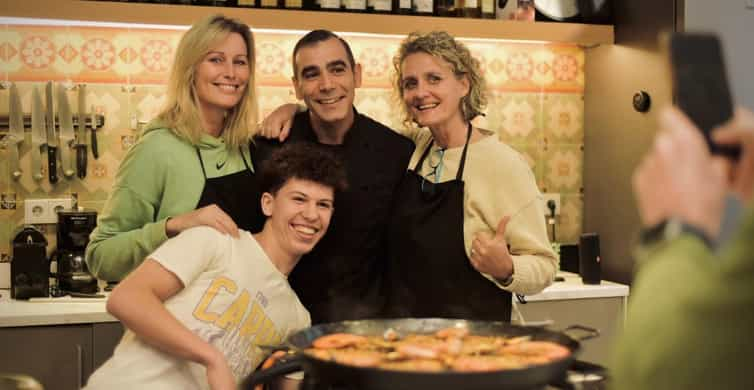
Barcelona: Paella Cooking Experience & Boqueria Market Tour
4.8 (4,382 reviews)
from €59.25Check dates
A class of 6-12 teaches you; a class of 25 supervises you — how to tell them apart before booking
Cut ceramic the way Gaudí's craftsmen did, stitch a pair of espadrilles, cook the paella you then eat, or blend your own perfume. Here are Barcelona's hands-on workshops compared by price, duration, difficulty and — the part nobody tells you — what you actually take home. We also tell you when not to book one.
ⓘ Note: this is not the official website This is not the official website of any workshop or school. We are an independent guide: prices quoted come from the studios themselves and from GetYourGuide, where bookings are processed.23 options · Prices checked on 18 October 2026
No options match these filters.
4.8 (4,382 reviews)
from €59.25Check dates
4.9 (438 reviews)
from €66.96Check dates
4.9 (103 reviews)
from €99.90Check dates
| Cheapest entry point | ~€15 to paint a ceramic piece; ~€48 for the two-hour trencadís mosaic class |
|---|---|
| Typical length | 1.5 to 4 hours; a cooking class with a market visit is a half day |
| Most "Barcelona" of them all | Trencadís mosaic: you leave with a piece made using Gaudí and Jujol's technique |
| Book ahead | 3-4 days in low season; a week or more from June to September |
| Group size | Look for a maximum of 6-12. Above 20 you stop learning |
| Where they are | Studios in El Born, Gràcia, the Raval and Poble-sec — nearly all walkable from the centre |
| Watch out for | "You keep your piece" is not always today: ceramics are fired and collected days later |
Indicative prices from the studios themselves and from GetYourGuide in August 2026. They vary by duration, group size and season — always confirm the amount for your date at the booking stage.
| Workshop | Approx. price | Duration | Difficulty | What you take home | Best for |
|---|---|---|---|---|---|
| Trencadís mosaic | ~€48 (2 h); less for the short session, more for 4 h | 1-4 h | Low, needs patience | Your piece: frame, mirror, place mat or box lid | The most city-specific class; a real gift |
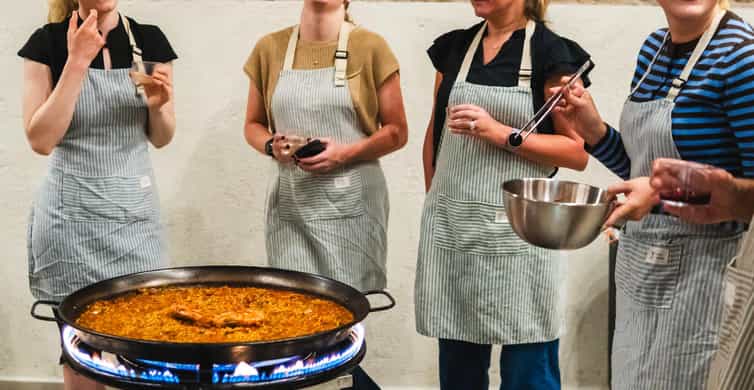
| Paella and tapas cooking | ~€69-120 depending on school and market visit | 3-4 h | Low | The recipes, plus a meal already eaten | Groups, couples, a rainy day |
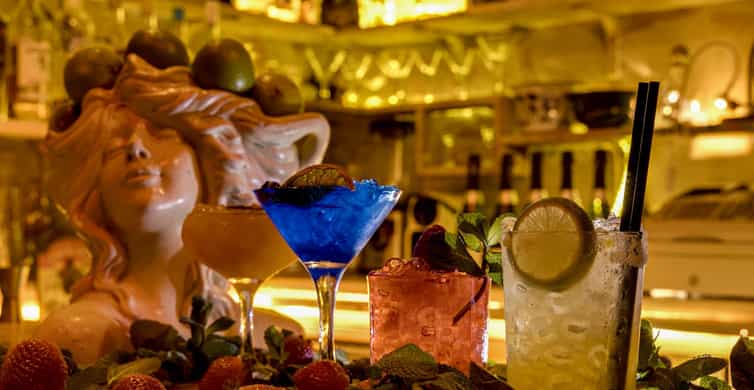
| Cocktail making with tapas | ~€50 | 2 h | Low | Four cocktails made and drunk | An early start to the evening; 18+ only |
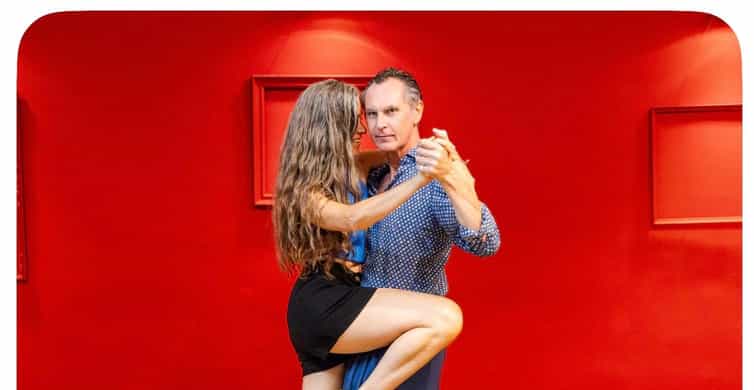
| Rooftop salsa with sangria | ~€50-60 | 2 h | Medium (physical) | The basic steps and your dignity, spent | Solo travellers and groups of friends |
| Espadrilles (espardenyes) | ~€30 flat pair; ~€50 with a wedge | ~2 h | Low | A bespoke pair, worn out of the door | A souvenir you actually use |
| Ceramics (painting or wheel) | ~€15-35 to paint; more for the wheel | 1.5-3 h | Medium on the wheel | A fired piece, collected days later or shipped | Families, teenagers, long stays |
| Perfume blending | ~€50 for The Perfumery's 4-hour course | 2-4 h | Low | A bottle of your own formula | Gifts, a slow day, couples |
Ranges observed on GetYourGuide and on the studios' own sites (Mosaiccos, The Perfumery Barcelona, La Pintoràmica and the central cooking schools) in August 2026. Every figure carries a "~" because prices shift with duration, headcount and the object you choose to make.
Start with the awkward part. If you are here for two days and it is your first visit, don't book a workshop. Four hours of mosaic is a quarter of your usable time, and no ceramic tile makes up for missing the towers of the Sagrada Família or the plaça de la Natura at Park Güell first thing in the morning. On a short trip the right order is to see the things that exist only here. The workshops will still be here next time.
Now the other side. From day three onwards, the ratio between what you pay and what you carry away flips: you have queued for three timed-entry monuments, walked fifteen kilometres, and every façade is starting to look like the last one. A workshop breaks that curve because it changes the verb — you stop looking and start making — and unlike a ticket it ends in an object that still exists when you get home.
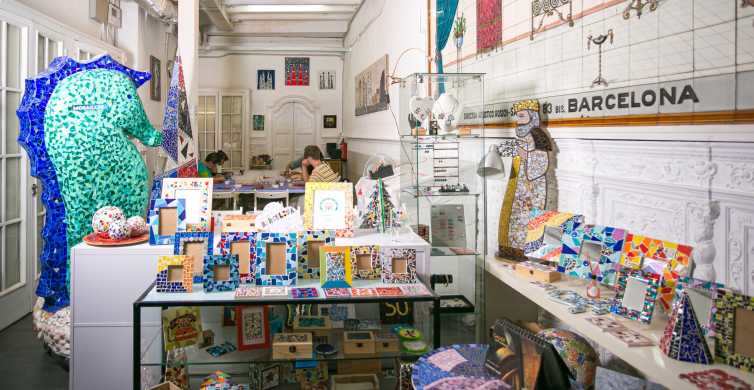
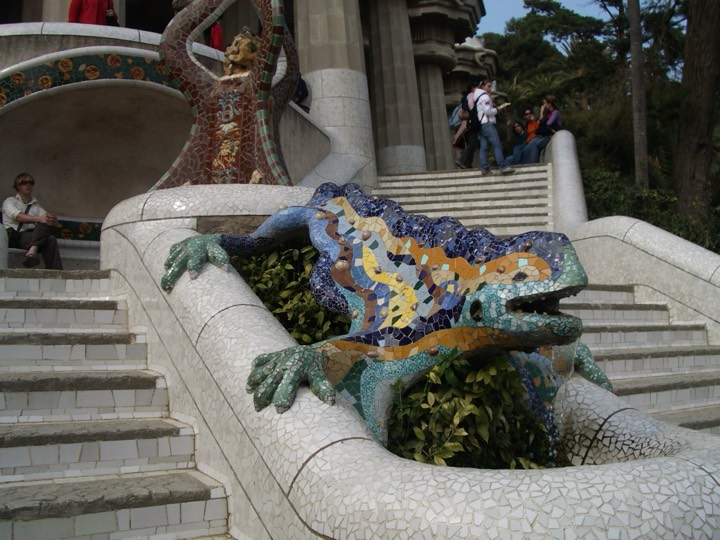
Trencadís — Catalan for "chopped up" — is the technique of cladding surfaces with irregular shards of ceramic and glass that Antoni Gaudí pushed to its limit and that Josep Maria Jujol turned into a work of his own on the serpentine bench at Park Güell, finished around 1914. It is not decorative whimsy: it grew out of using factory offcuts and out of a structural insight — only broken pieces will clad a curved surface without the tile popping off.
Barcelona's best-known mosaic workshop sits on Carrer dels Assaonadors, in the heart of El Born, two minutes from Jaume I metro (L4). You work with mosaic nippers, safety goggles and a wooden base, and you pick your object: photo frame or place mat for the short sessions, mirror or tray for the four-hour one. According to the studio's listing on the Barcelona Turisme shop, the standard session starts at around €48 including materials, tools, hands-on help and grouting, and it is taught in Spanish, Catalan, English and German.
The detail to understand: the piece does not leave your hands finished. It has to be grouted and left to set, so the studio completes it and you collect it that same afternoon or the following morning. Plan around that — if your flight leaves the next morning, do the class in the morning, not the afternoon.
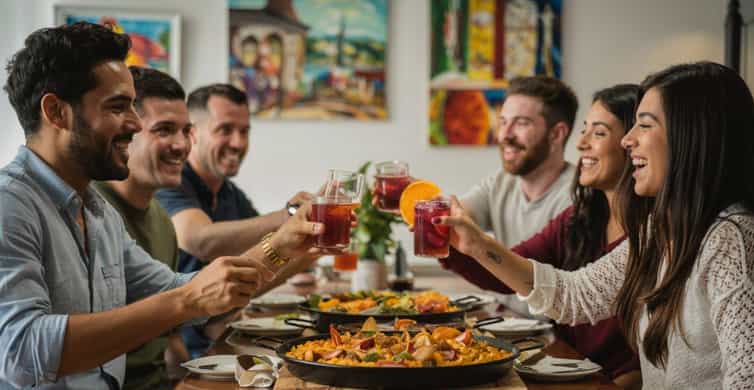
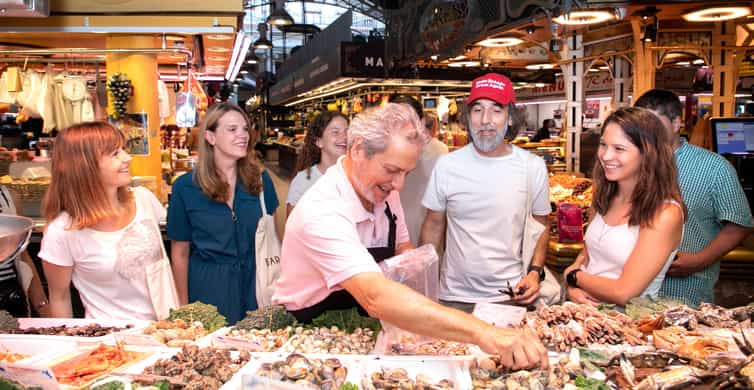
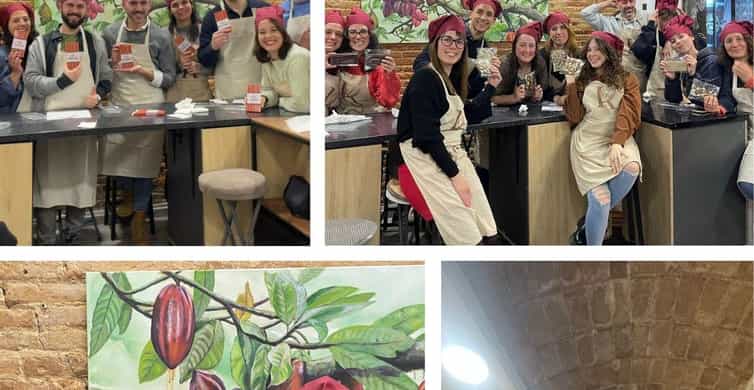
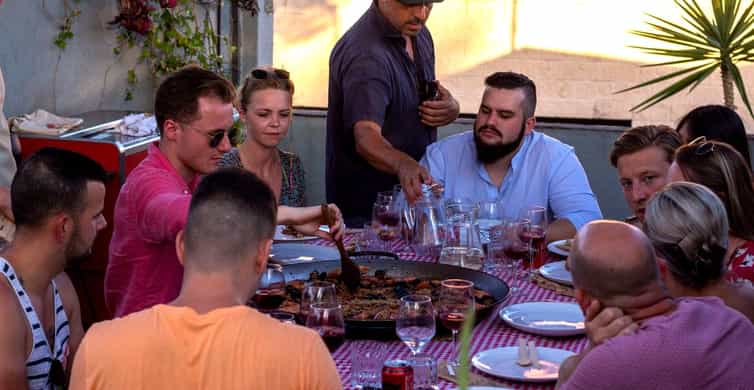
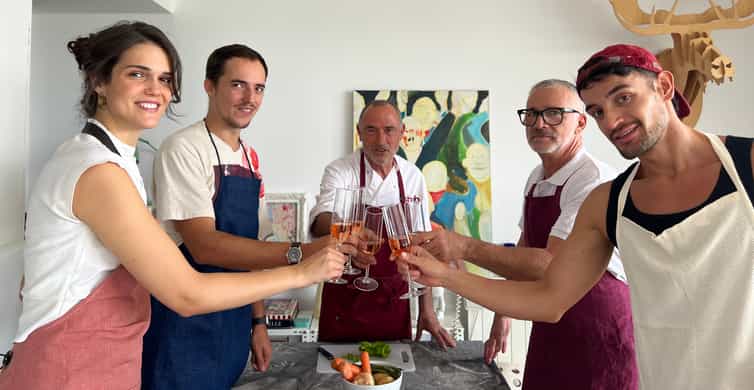
This is Barcelona's best-selling workshop and it earns its own page: the schools, the formats and the prices are set out on our food tours and cooking classes page. The short version: most start with shopping at a market — La Boqueria or Santa Caterina — then cook three or four dishes and finish sitting down with wine. Expect roughly €69 to €120 per person depending on the school, with evening sessions that skip the market coming in cheaper.
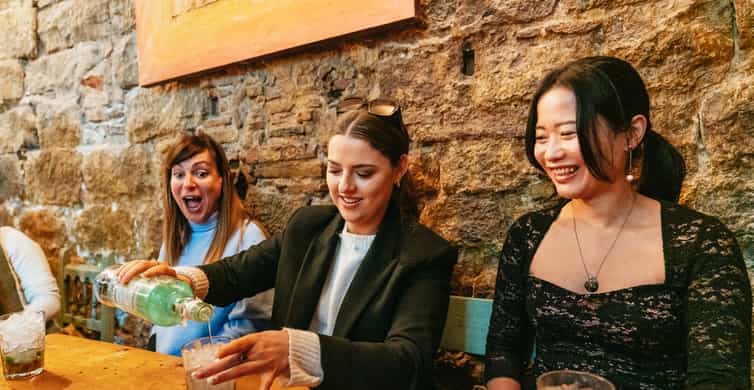
The cocktail making class with tapas runs in a Gothic Quarter bar with a working bartender: you learn four classics, shake them, drink them and pick at tapas in between. It costs around €50 all in and lasts two hours. It is a good 6pm-to-8pm plan before dinner and works especially well with a group of four to six. Over-18s only, and mind the arithmetic: four cocktails in two hours is four cocktails.
The rooftop salsa class with bottomless sangria is not trying to make you a dancer: two hours covers the basic step, the turn and not much more. What you are buying is a terrace with a view, an instructor who is good at coaxing people who have never danced, and a group that talks to itself. It runs around €50-60 with the sangria or cava and a charcuterie board, and it is the activity we recommend most often to solo travellers. If you would rather watch than dance, the alternative is a flamenco tablao — a different tradition with a different history.
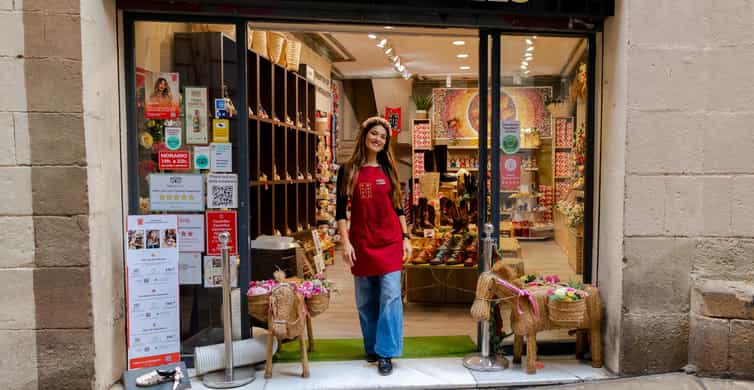
The espardenya, or espadrille, is the canvas shoe with a braided esparto sole that has been worn in Catalonia and around the Mediterranean for centuries, and which still has working artisan shops in Barcelona. At the espadrille-making workshop you pick sole, canvas colour and ribbon from around a hundred combinations and stitch the pair yourself alongside an artisan, in about two hours. The flat model runs around €30 per person and the wedge version around €50; many sessions include cava and something to nibble. You walk out wearing them, which is precisely what a souvenir ought to allow.
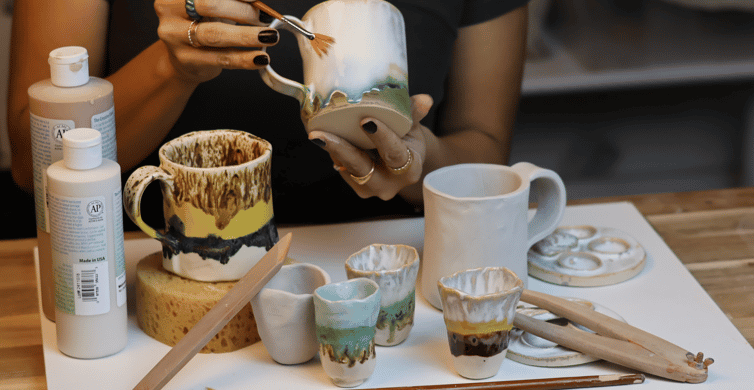
Ceramics comes in two very different versions. The easy one is painting a pre-fired piece: studios like La Pintoràmica, with locations in Gràcia and El Born, charge roughly €15-35 depending on the object and give you about an hour and forty minutes at the table. The serious one is the wheel or hand-building at studios such as those in Poble-sec, in two or three hour sessions. Either way the piece needs a kiln, so you do not take it away that day: collection is a week or two later, or they ship it and you pay the postage. If you fly out in three days, ask before you book.
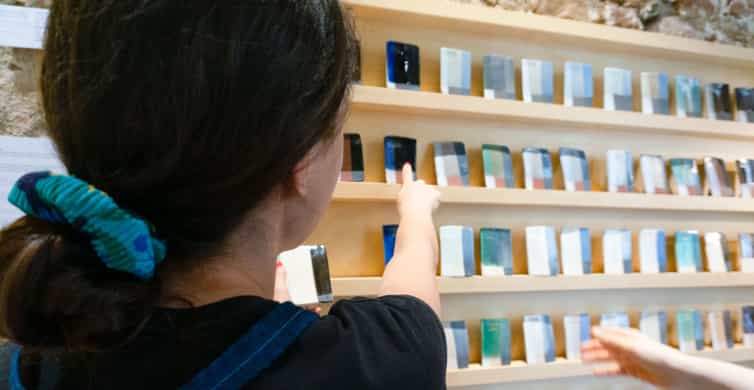
Perfume is the calmest thing on this list and the least known. The Perfumery, on Carrer de Sant Pere Més Alt, advertises a four-hour introductory course on Saturdays for around €50, and El Born has olfactory labs running shorter, more personal sessions. You smell, you learn how a fragrance pyramid is built, and you leave with a bottle of your own — in serious heat, when sitting down is the point, a better choice than it sounds.
If you want something hands-on but outdoors and with a camera, photo walks with a local photographer are the other format in the same family: you learn something, you leave with a result, and nobody has to sweep tile off the floor.
If you could check only one figure before booking, check the maximum number of participants. Between six and twelve, the teacher has time to correct your hand, show you how to angle the nippers and rescue your piece when it goes sideways at minute forty. Above twenty, the teacher isn't teaching: they hand out materials, demonstrate once from the front and work through raised hands. It costs less, and that is exactly where you feel it. If the listing doesn't state a maximum, email and ask before you pay — the answer, or the absence of one, is information in itself.
On a walking tour you can follow the thread even if the guide talks fast. In a three-hour workshop you need specific instructions: how much grout, which direction to cut, how long to leave it. Almost every Barcelona workshop runs in English and Spanish, many in Catalan and a few in German, but French and Italian are noticeably rarer than they are on tours. The language of your specific session is stated in the booking: check it before paying, and don't assume someone will translate as they go.
"You keep your piece" is a sentence with small print. In mosaic it means collecting it the next day, grouted. In ceramics it means waiting for the kiln, and that is days or weeks: some studios store the piece, others post it at your expense. In cooking it means the recipe and a meal. Before booking, ask three things: is the piece finished when I leave, when do I collect it, and do you ship internationally and for how much? This is the main source of disappointment in the whole category, and one email prevents it.
No. On a two-day first visit, a four-hour workshop eats a quarter of your usable time and costs you the Sagrada Família or Park Güell. Workshops come into their own from day three onwards, on long stays and on repeat visits, once you have seen the big things and what you want is to make something rather than look at something.
Around €48 for the standard two-hour session according to the Mosaiccos listing on the Barcelona Turisme shop, with materials, tools and grouting included. The one-hour version costs less and the four-hour session, which lets you make a mirror or a tray, costs proportionally more. Confirm the exact price for your date and duration when you book.
It depends on the material, and it is worth asking before you pay. Mosaic has to be grouted: the studio does that and you collect the piece the same afternoon or the next morning. Ceramics have to be fired, so they are collected several days later or shipped at extra cost. Espadrilles, cocktails and perfume you do take with you — worn, drunk or in your bag.
Spanish and English at almost all of them, plus Catalan at neighbourhood studios. Some, like the El Born mosaic studio, also run in German. French and Italian are far less common than on walking tours. Check the language of your specific session before paying: over three hours of instruction, understanding what you are told matters much more than it does on a guided walk.
Six to twelve is the point where the teacher can correct your grip, show you how to hold the tool and rescue your piece when it goes wrong. Above twenty, the teacher stops teaching and starts supervising: handing out materials, answering raised hands and little else. If the listing does not state the maximum, email and ask; it is the single figure that best predicts whether you will enjoy the class.
Mosaic works well from about six or seven in the short session, and studios usually run a roughly 60-minute children's version for ages four to ten. Ceramic painting is the easiest option with small children. Cooking classes take families but involve knives and hot pans, so check the minimum age. Cocktail classes are over-18s only, and the salsa-and-sangria class is sold as a bar product even though teenagers can dance.
For mosaic and ceramics, clothes you don't mind ruining and closed shoes: you are cutting tile, shards fly and clay and grout stick to everything. Nothing white. In a cooking class the apron is provided but tying your hair back is on you. For salsa, wear a smooth sole that pivots on the floor; strappy sandals and running trainers are the two worst choices.
Further ahead than you would expect. An eight-place workshop fills three or four days out in low season and a week or more from June to September and over public holidays. Bar-based formats like cocktail and salsa classes usually have space the next day. Most allow free cancellation up to 24 hours before, so book early and decide later.
Mosaic, cooking, cocktails, salsa or espadrilles: see which groups still have space on your dates.
See workshops and prices